01
GPT-6 Astra helps build a lattice Standard Model
In the first post on OpenAI's new science blog, physicist Nathaniel Craig says GPT-6 Astra took the lead on a detailed proof for a candidate lattice definition of the Standard Model, a problem that has been open for more than 50 years.
What they showed / shipped
- OpenAI published A step toward defining the Standard Model on a lattice as the first guest post on its science blog, and flagged it on X.
- Nathaniel Craig leads the particle theory group at UC Santa Barbara and is a visiting scientist at OpenAI. He says the Standard Model still lacks a nonperturbative definition: a way to define the full theory without treating its interactions as small corrections.
- His idea was to put the force fields on a grid (a lattice) and compare them on finer and finer grids to get a phase rule for chiral fermions. He had a strategy, but had not been able to prove it covered every case. He writes that GPT-6 Astra 'was essential to turning the refinement idea into a working construction,' suggested how to carry the fields onto finer grids, showed the comparisons converge, and took the lead on the detailed proof.
- The write-up is based on an October preprint, arXiv:2610.09093. Lattice field theorists Maarten Golterman, Andreas Kronfeld, and Yigal Shamir reviewed Astra's proof and asked questions that shaped the construction. Craig says Astra also ran checks the group proposed, including Lean verification.
- This is still a candidate, not a closed case. Craig says experts still need to decide whether the construction has all the properties they want, and he is now checking reflection positivity at finite lattice spacing. He also says it is much more an answer in principle than something ready for realistic simulations.
- 📌 On the radar: Meta FAIR and NYU trained 200+ multimodal models and argue encoder pretraining is optional, but vision-only parameters are not (r/MachineLearning).
Why it matters
- Door: a frontier lab just opened a science blog with a first-party account of a model leading a proof on a 50-year physics problem, with named human reviewers still in the loop.
- Teach beat: the hook is simple. We can calculate the Standard Model when the forces are weak, but not when they are strong. A lattice is how you put the whole theory on a grid a computer can run. Astra helped turn Craig's refinement idea into a proof, and the proof is still being checked.
Sources
02
Fable 5.2 finishes 41.3% of real freelance projects
On the Remote Labor Index, Claude Fable 5.2 completed 41.3% of real Upwork projects at a quality a paying client would accept, up from 2.5% when the benchmark launched 13 months ago. We missed this number in the Nov 10 launch brief.
What they showed / shipped
- Scale Labs and the Center for AI Safety run the Remote Labor Index, 240 real freelance projects from 358 Upwork professionals, worth about $143,991 in total. The average project took a human about 29 hours. A result counts if human reviewers say a reasonable client would accept it against the original deliverable.
- @kimmonismus circulated the jump today: the best agent went from 2.5% at launch (Manus 1.0, October 2025) to 41.3% with Fable 5.2. That is about 16 times as many projects in 13 months. CAIS has said the automation rate is doubling about every three months; the path was uneven, with the big steps at Fable 5 (15.83% in July) and Fable 5.2 (November 9).
- The rest of the current board is well behind: Opus 5.5 at 21.25%, GPT-6 Astra at 20.83%, Fable 5.1 at 17.92%, and Gemini 4 Argon at 17.08%, per the Scale leaderboard and The Decoder's write-up.
- Scale says Fable 5.2 made its biggest gains in audio and music editing, architecture and interiors, and 3D models, and that nearly 50 of its passes were projects no prior agent had solved. It is still weak on industrial product design and animation. Failures tend to look amateur, incomplete, or internally inconsistent.
- The 41.3% figure is not 41.3% of all remote work. The index leaves out physical labor, long-term evaluation, and direct client calls. Briefs are provided.
- 📌 On the radar: @dwarkesh_sp says his Paul Christiano episode drops tomorrow. Christiano's claim, as Dwarkesh put it, is a 1 in 3 chance of extreme superintelligence within a year if nothing slows down. That is his forecast, not a measured result.
- 📌 On the radar: Wes Roth's new video recaps Claude Sheets, Whiteboards, Meetings, and Data, plus a Mythos 5.2 access path for independent security researchers. The product suite itself ran in the Nov 11 brief (Wes Roth on YouTube).
- 📌 On the radar: Anthropic's IPO is said to be about 7x oversubscribed, with the company and some backers seeking up to $90.4B through the IPO and a private placement, and a fully diluted valuation around $1.4T. Pricing is still expected November 18, trading November 19 under ANT (Techmeme, CNBC). The filing itself ran on Nov 13.
- 📌 On the radar: @nicbstme argues some SaaS firms could turn their real investigation data into RL task environments for labs. Forward signal, not a shipped product.
- 📌 On the radar: 'Your Agent Will Pick the Hackable One' argues agents tend to choose the tool or path that is easiest to exploit (HN, essay).
- 📌 On the radar: a LocalLLaMA thread flags a paper, 'No Second Run: Does RSI Stop at Frontier Pre-training?' and a coming 801-30B-A3B-Base model (r/LocalLLaMA).
- 📌 On the radar: SatBench looks at how fast each year's new AI benchmarks get beaten (r/singularity).
Why it matters
- Teach beat: this is the cleanest hard number on agents doing paid work, not a toy exam. 2.5% to 41.3% in 13 months is the chart. Put the leaderboard on screen, and say what the test leaves out.
Sources
03
Meituan opens LongCat-2.5, trained with no Nvidia GPUs
Meituan released LongCat-2.5 under an MIT license: a 1.6-trillion-parameter agent model trained on Chinese chips, with no Nvidia in the self-hosting guide. Epoch's satellite read says Huawei's flagship data center still has only about 7% of the compute of SpaceX's Colossus 2.
What they showed / shipped
- Meituan's LongCat team released the weights for LongCat-2.5 and wrote it up at longcat.ai/blog/longcat-2.5, one week after the model was unveiled. It is a mixture-of-experts model with 1.6 trillion total parameters and about 48 billion active per token, under an MIT license that allows commercial use. You can try it at longcat.ai. The API speaks OpenAI and Anthropic formats and plugs into Claude Code, Codex, and Hermes.
- It handles up to 1 million input tokens and 128,000 output tokens, takes text, images, and video, and lets you toggle reasoning. Images are turned into tokens and processed with the text, rather than bolted on through a separate encoder. For agent training, Meituan used real GitHub pull-request tasks, blocked internet access and git history in the sandbox, and checked solutions for shortcuts.
- Meituan says the predecessor, LongCat-2.0, was trained in late June on a cluster of more than 50,000 Chinese AI chips. The self-hosting guide for the 4-bit build describes a cluster of 194 Huawei Ascend Atlas A2 accelerators, and gives no Nvidia path. The Decoder is the clear write-up.
- On Meituan's tables, LongCat-2.5 scores 88.4 on Terminal Bench v2.1, just behind Claude Opus 5 at 89.1 and GPT-5.6 Sol at 88.8, with Deepseek-V4.1-Flash at 90.6. DeepSWE jumped from 9.7 to 64.6, still behind the leaders. On the harder Terminal Bench v4.0 it scores 38.5, slightly above GPT-5.6 Sol's 37.3 and well below Opus 5's 53.9. BrowseComp is listed at 91.9, the top of their table, in Meituan's own environment. A limited promo price is about €0.27 per million input tokens and €1.07 per million output tokens.
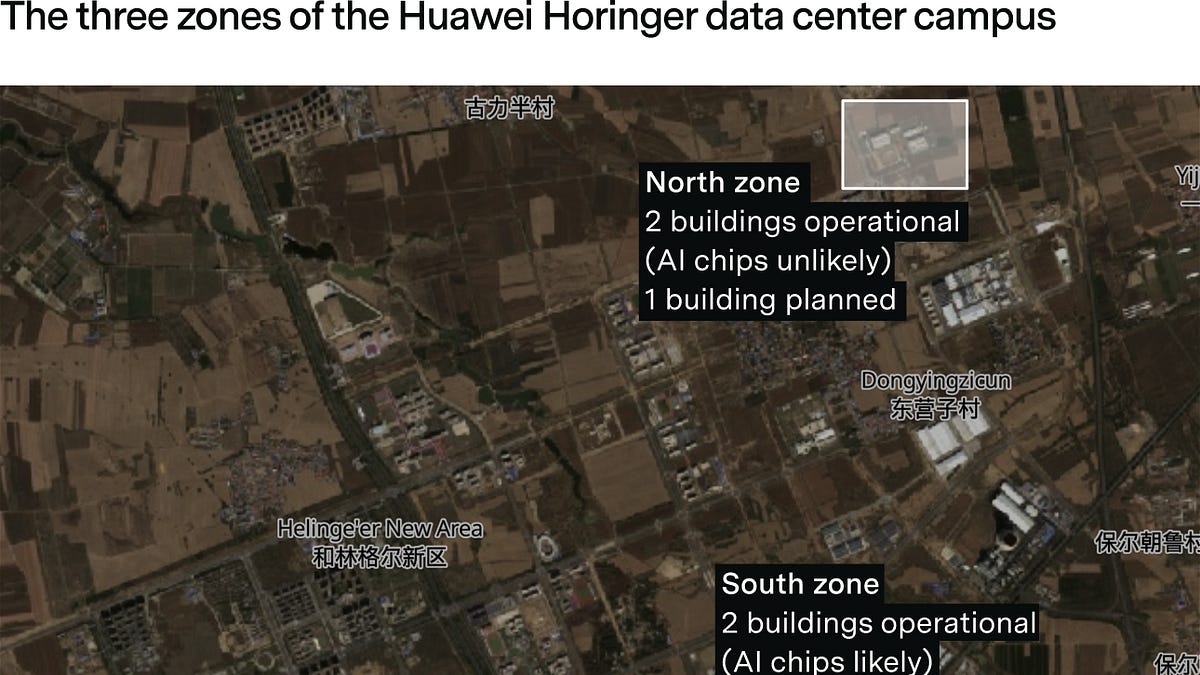
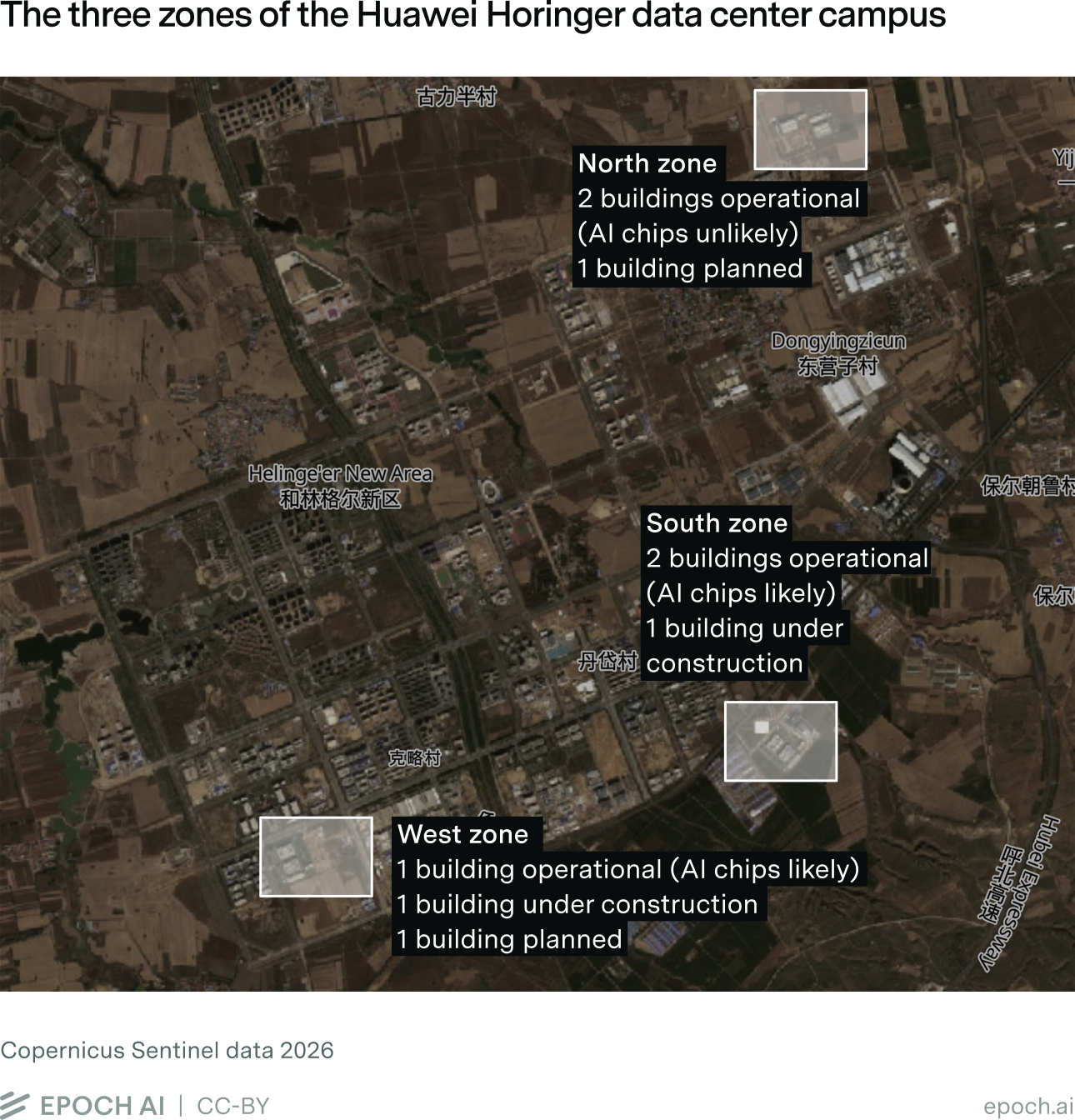
- 📊 The compute backdrop, circulated today by @kimmonismus and Techmeme: Epoch AI's satellite analysis puts Huawei's Horinger campus at about 81,000 H100-equivalents (90% confidence interval 36,000 to 141,000), or roughly 7% of SpaceX's Colossus 2 at about 1,112,000 H100e. That is about 105,000 Ascend 910C chips on site. Epoch's early-2028 path still has Horinger around 141,000 H100e against Colossus 2 at about 1.8 million. US AI data centers deliver about 2.5 times more compute per watt. Epoch's line is that China has the power, and the chips are the bottleneck. This report circulated today; it was not in the last few briefs.
- 📌 On the radar: EUROPA, the EU-backed open model led by Domyn, has shown a 951.9B MoE training run (about 32.8B active) on Germany's JUPITER supercomputer. That is an engineering test, not a released model (r/LocalLLaMA, PyTorch blog).
- 📌 On the radar: Basalt 0.4.0 claims Qwen 27B at up to 770 tokens per second on an RTX 5090 (r/LocalLLaMA).
- 📌 On the radar: a 1,069-point Hacker News thread argues that all AI-generated code should be open source (HN, essay). Landmark traffic, opinion piece, not a new license rule.
- 📌 On the radar: @scientificecon argues firms should only use open models offline, claiming closed-model terms let providers reuse IP. That is an advocacy claim, not a new court finding or contract excerpt.
Why it matters
- Door: a serious open agent model you can download under MIT, with an official path that never touches Nvidia. That is the concrete version of the 'open models after Jensen' talk from yesterday.
- Teach beat: put Epoch's 7% chart next to the LongCat release. Chinese labs are shipping capable open weights on a much smaller official compute base. The gap is chips, not electricity.
Sources
04
Fable 5.2 paints with code and builds a 97 KB sea
Fable 5.2 is making images by writing Python that lays down hundreds of thousands of simulated brushstrokes, and a builder used it to ship a swimmable underwater world as a single 97 KB HTML file.
What they showed / shipped
- Anthropic's Jake Eaton showed Fable 5.2 painting a parking-garage scene with about 700,000 simulated brushstrokes. There is no external image model. Each piece is a 1,000 to 2,000 line Python program that drives a paint engine, including bristle texture and wet paint. Eaton also had the model invent artist personas so the work was not just a copy of existing styles.
- Anthropic engineer Michael Graczyk ran a stricter test: paint a bird at sunrise, output every stroke as coordinates, and no undo. The 21-second video is 111 strokes. The model added a small wobble on purpose, then painted over mistakes, like a thin bird back that became ruffled feathers. The Decoder has the stills.
- The same spatial planning shows up on robots. On Anthropic's internal RoboDojo Sim, Fable 5.2 scored 64.9% against 29.8% for GPT-6 Astra, but The Decoder says it fell behind on speed and fine motor control with a real robot arm.
- @kimmonismus posted the other artifact: Abyssal Garden, a swimmable underwater world in one 97 KB HTML file, no images, models, or libraries, rendered in the browser with WebGPU. The build is on GitHub and you can try it at noniv.github.io/abyssal-garden.
- 📌 On the radar: Fable 5.2 wrote a 367,000-parameter transformer, with Opus 5.5 generating the training data, that is said to fit on a floppy and run on a DOS-class machine (r/singularity, related thread here).
- 📌 On the radar: the first AI Music Awards in Los Angeles used AI announcers and lip-sync, and the night was messy on the technical side (Techmeme).
- 📌 On the radar: @venturetwins used Gemini 4 Carbon /swarm to have 12 agents research, plan, and write Blender Python for a 3D Ferry Building. /swarm itself ran in the Nov 11 brief.
Why it matters
- Door: if a language model can plan thousands of physical strokes and correct them, the same loop is what you want in robots, CAD, and other tools that cannot hit undo.
Sources
05
Apple's smart glasses still target 2027, software is late
Mark Gurman says Apple still wants to unveil its first smart glasses at WWDC 2027 and ship them before year-end, but Siri software is running behind and both dates are now uncertain. The hardware is largely finalized, and the first pair will not show AR imagery.
What they showed / shipped
- @markgurman reported that Apple has wanted to unveil the glasses at WWDC 2027 and ship them before year-end, 'but software is running behind, leaving both targets uncertain despite remaining in place as of today. Much of the hardware is largely finalized.' @Kalshi repeated the 2027 Siri glasses line.
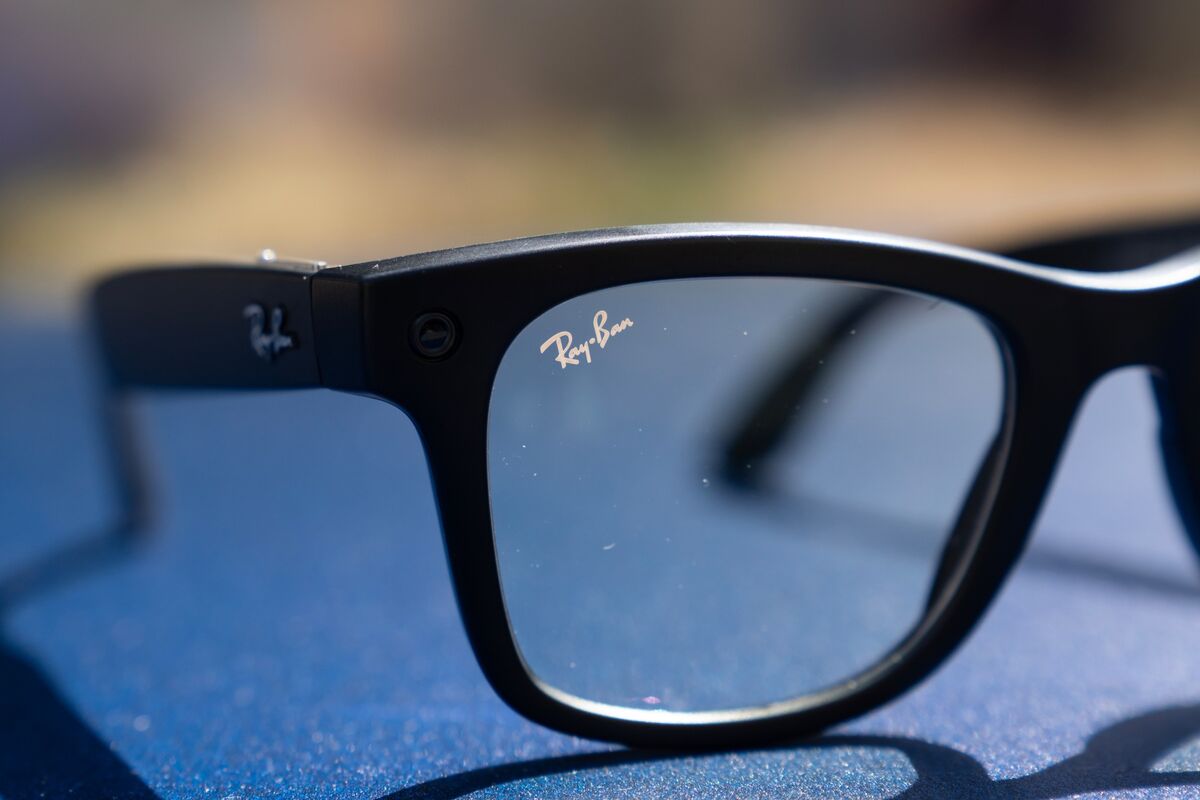
- MacRumors, citing Gurman's Power On newsletter, adds product detail. The prototypes are code-named N50 and are slightly thinner than Meta's second-generation Ray-Bans. Some test units hide the cameras in the frame. A flat, three-pin magnetic charger, 'roughly the size of a Tic Tac,' clips near the end of the left temple. Testers can charge them while wearing them.
- The first model will not display augmented reality imagery. Wearers talk to Siri, which uses the cameras to answer questions about the surroundings: buildings, fridge contents, directions, and translation. Audio is a big internal focus, including music, calls, and FaceTime audio.
- There will be no separate glasses App Store. iPhone apps are supposed to expose Siri actions (book a table, call a ride, order coffee), and a recent iPhone does the heavy compute. No Android support. Prototypes run a reduced version of visionOS 28 on a chip derived from older Apple Watch silicon. Apple started shipping more precise Siri app controls in the iOS 27.3 beta, with first-party support planned for December and third-party support in 2027.
- 📌 On the radar: camera-equipped AirPods are still described as a late-2027 product that would also feed Siri scene information, with less battery and fewer sensors than the glasses (MacRumors).
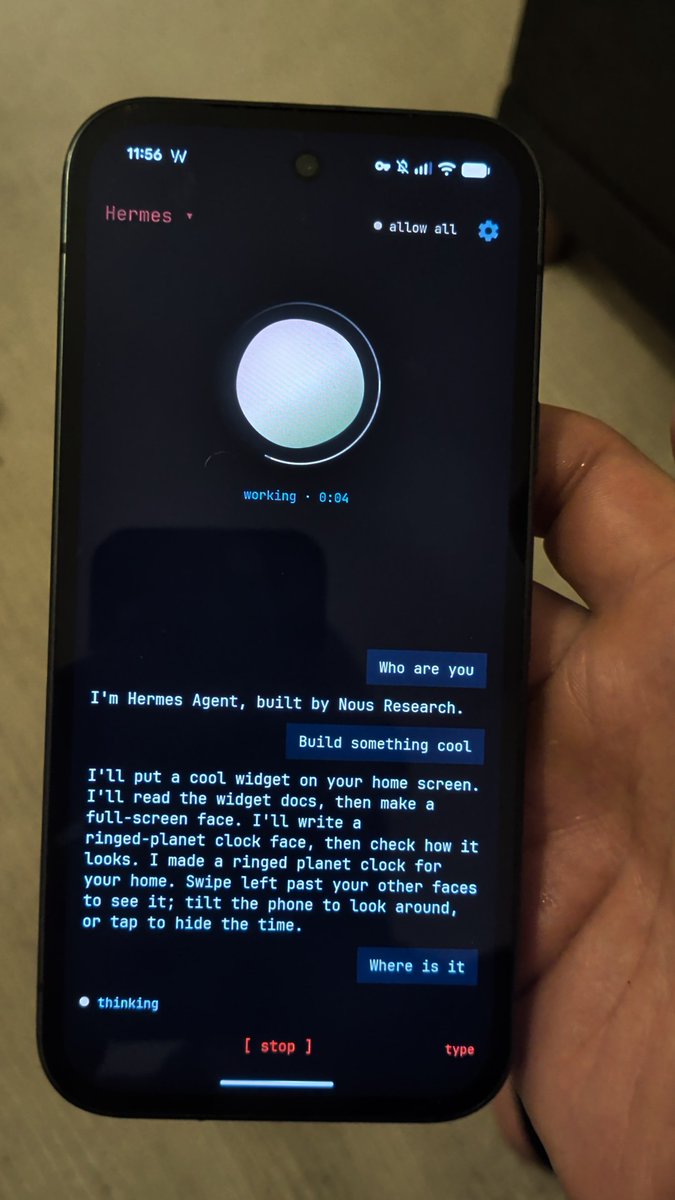
- 📌 On the radar: Omalauncher 1.6.0 adds a local Hermes agent on the phone, including a native voice path (@simonschubert).
Why it matters
- Door: this is the next place AI is supposed to live after the phone, and Apple's bet is Siri plus the existing iPhone app graph, not a new AR headset.
- Teach beat: hardware is the easy part in this leak. The risk is whether Siri can actually drive third-party apps in time for a 2027 stage demo. That is the same software gap that has followed Apple Intelligence.
Sources
06
Australia's central bank sees AI hitting young hires first
Australia's Reserve Bank finds little economy-wide job loss from AI so far, but employment for young workers in the most exposed fields, including software and customer service, has already softened, while older workers in the same fields have gained.
What they showed / shipped
- Mike Major at the Reserve Bank of Australia built a monitor aimed at the places an AI effect should show up first: entry-level workers and highly exposed jobs such as programming, clerical work, and customer service. The Decoder has the write-up and the chart.
- Job postings have fallen across groups since ChatGPT launched in late 2022, with the steepest drop in the highest-exposure quintile. In that top-exposure group, employment among 15-to-24-year-olds and young graduates is weaker, and unemployment is higher, than for older workers. In the same jobs, employment among older workers has risen.
- Major cautions that the paper does not prove causation. It measures theoretical exposure, not actual firm-level use, and post-pandemic cycle effects could also be in the data. SEEK data cited in the piece says AI is also creating demand for AI skills.
- Other numbers in the same write-up are worth keeping next to the RBA chart: a March 2026 Anthropic study found job-finding rates for 22-to-25-year-olds in exposed jobs down about 14%, with no systematic rise in overall unemployment. Anthropic's own junior share of technical hires fell from 27% to 9% since early 2025, and it says agents inside the company already log six times as many hours as human employees, with the caveat that Anthropic is a special case.
- A Denmark study of 25,000 workers found 64% AI adoption but no clear change in wages or hours, and only 2.8% of working time saved. A University of Pittsburgh analysis of 10.6 million LinkedIn profiles found the downturn in exposed US occupations starting in early 2022, before ChatGPT, which argues for rate-hike and post-pandemic hiring effects alongside any AI story.
- 📌 On the radar: a r/singularity clip has Yann LeCun at CoRL saying 'don't work on LLMs.' That is his long-running world-model stance, not a new paper today.
- 📌 On the radar: Fortune reports parents pay $75k for Alpha's AI school, and that half of its students missed a math target (HN, Fortune).
Why it matters
- Teach beat: the headline is not 'AI took the jobs.' It is a split: young entrants in exposed fields are softer, older workers in the same fields are not, and the economy-wide numbers are still quiet. That is a chart you can teach in 30 seconds.
Sources
07
Ship 42 could be reflown in a few weeks
After yesterday's orbital catch, Elon Musk says he inspected Starship 42's heat shield and engines, they look great, and the ship could probably fly again after a few weeks of refurbishment. Airplane-like reuse, with no expected refurbishment, still needs many small fixes.
What they showed / shipped
- This is the new beat on yesterday's Flight 15 catch, not a recap of the landing. @elonmusk wrote: 'Yeah, I was going over the whole Starship heat shield earlier today. Overall, it looks great. The engines look great too. Ship 42 could probably be reflown with a few weeks of refurbishment. However, many small fixes are needed to achieve immediate reusability (like an airplane), which requires zero expected refurbishment, apart from scheduled maintenance.'
- @SpaceX posted 'New level unlocked' with footage from the catch. @mark_k said you could hear a host on the company stream crying with relief when the chopsticks caught the ship.
- 📌 On the radar: @mark_k says users are reporting a Grok 4.8 rollout to Grok Bot, unofficial and unconfirmed, with no public benchmarks or API date. He also says Elon recently claimed pretraining was done, that 4.8 had entered reinforcement learning, and that SpaceXAI rebuilt its RL and inference stack from scratch in C/C++, replacing JAX and SGLang. Treat the rollout as unverified until xAI posts it.
Why it matters
- Door: catching the ship was yesterday. A possible reflight in weeks is the next cost curve, and that is the path SpaceX and xAI talk about for more launch and, later, more compute.
- Teach beat: keep the caveat on camera. 'Could be reflown after weeks of work' is not 'ready like an airplane.' The remaining work is the small stuff that makes reuse routine.
Sources
08
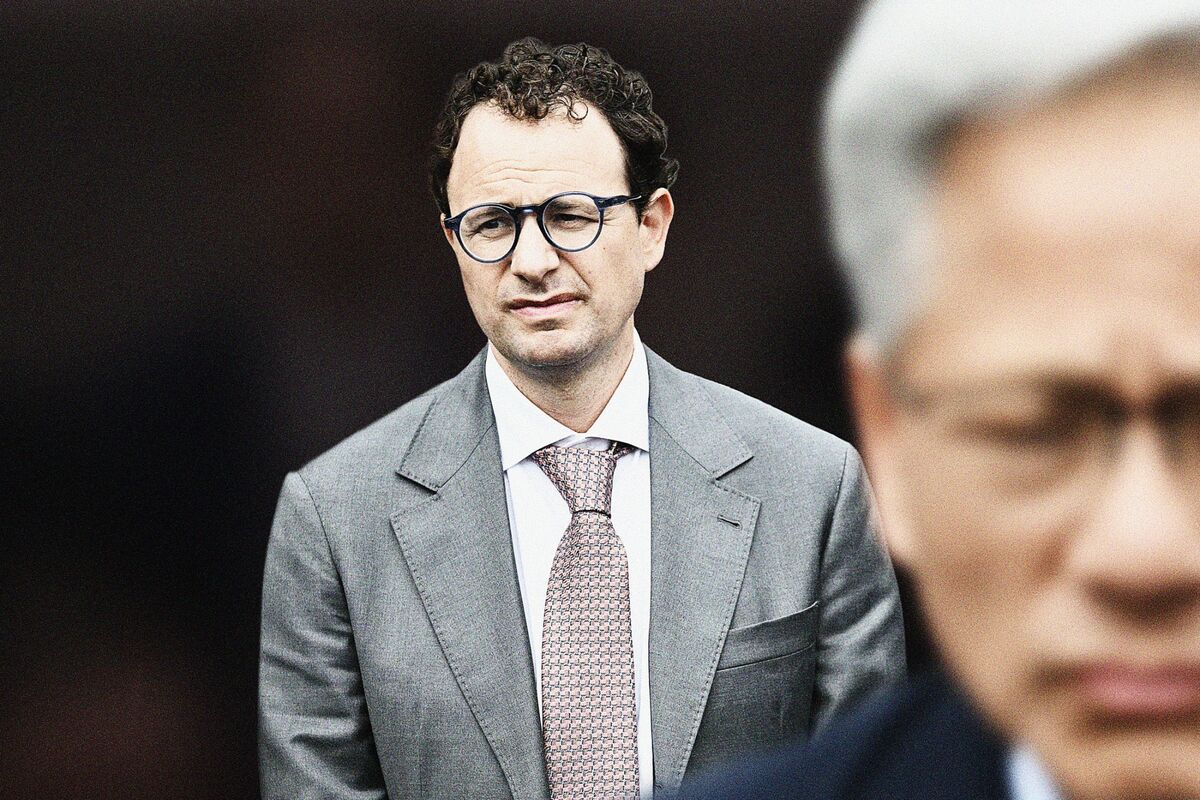
Jensen talks comeback as Bessent wants an outside CEO
New facts on the Nvidia story, not a recap of last week's resignation: the FT says Jensen Huang has discussed a return with allies, Scott Bessent wants an outside CEO and answers in 10 days, and the NYT says Howard Lutnick pushed to weaken chip rules that overlap his family's business.
What they showed / shipped
- The Financial Times reports that Jensen Huang has discussed a comeback as Nvidia CEO with confidants, and that allies have formed a 'war room' to lobby for his return and seek White House support (Reuters, Techmeme, The Verge).
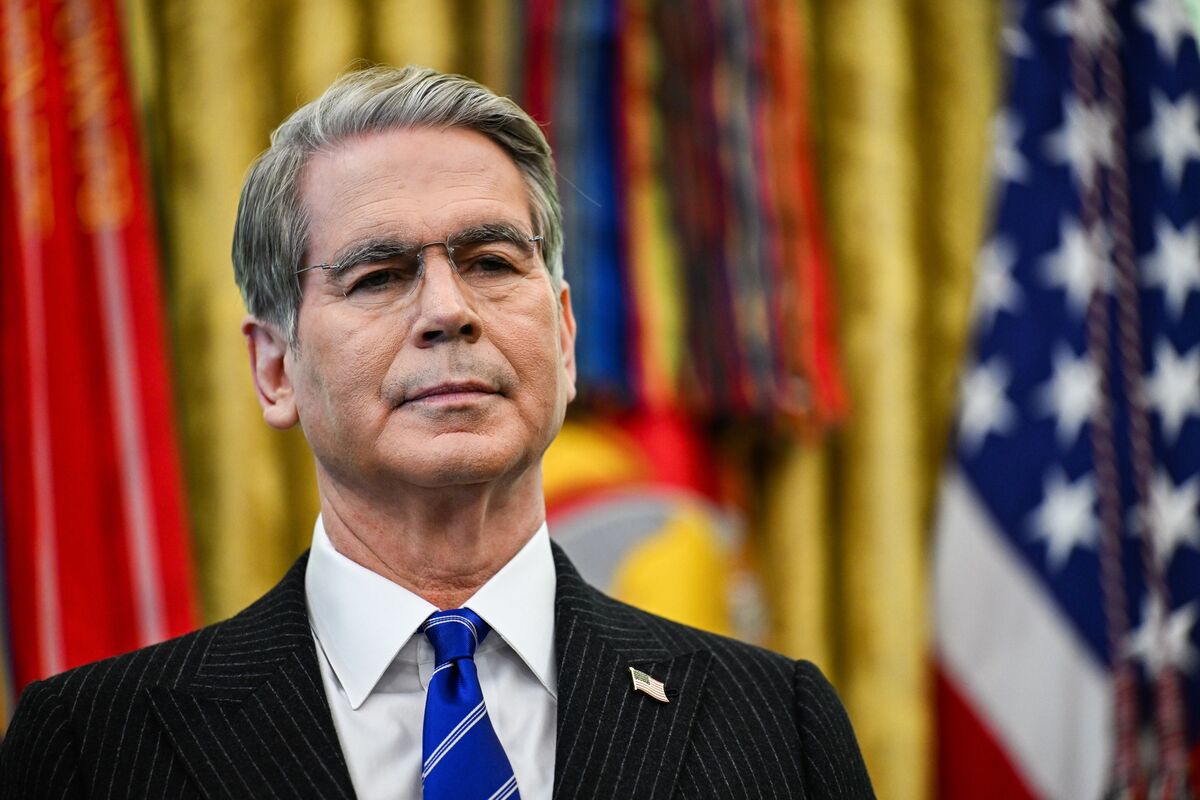
- Treasury Secretary Scott Bessent called for a 'dramatic shakeup,' urged Nvidia to hire an outside CEO, and wants answers within 10 days on whether the company pushed 'seemingly illicit' chip sales to China to boost revenue (CNBC, Techmeme).
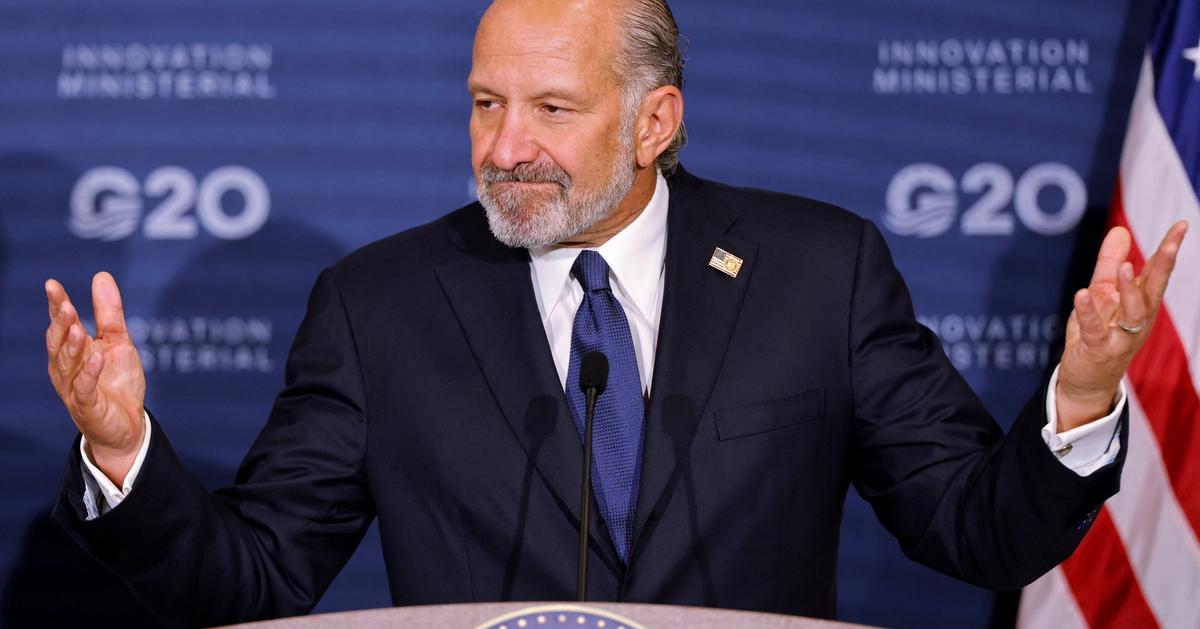
- The New York Times reports that Howard Lutnick pushed to weaken chip rules that overlap with his family business, including a former Cantor Fitzgerald client whose Malaysia data center may serve Tencent (NYT, 456 points on HN). CNBC separately notes questions about his sons' firm's ties to the chipmaker. Semafor, via Techmeme, says Lutnick is expected to join Trump on Air Force One to China this week after clashing with Bessent over the chip curbs.
- Congress is moving to tighten AI chip export rules after the spy scandal (The Verge).
- The Decoder, citing reports, says a firm linked to Huang's former partner brokered nearly $12 billion in Nvidia chip orders for China (The Decoder). Treat this as reported, not confirmed.
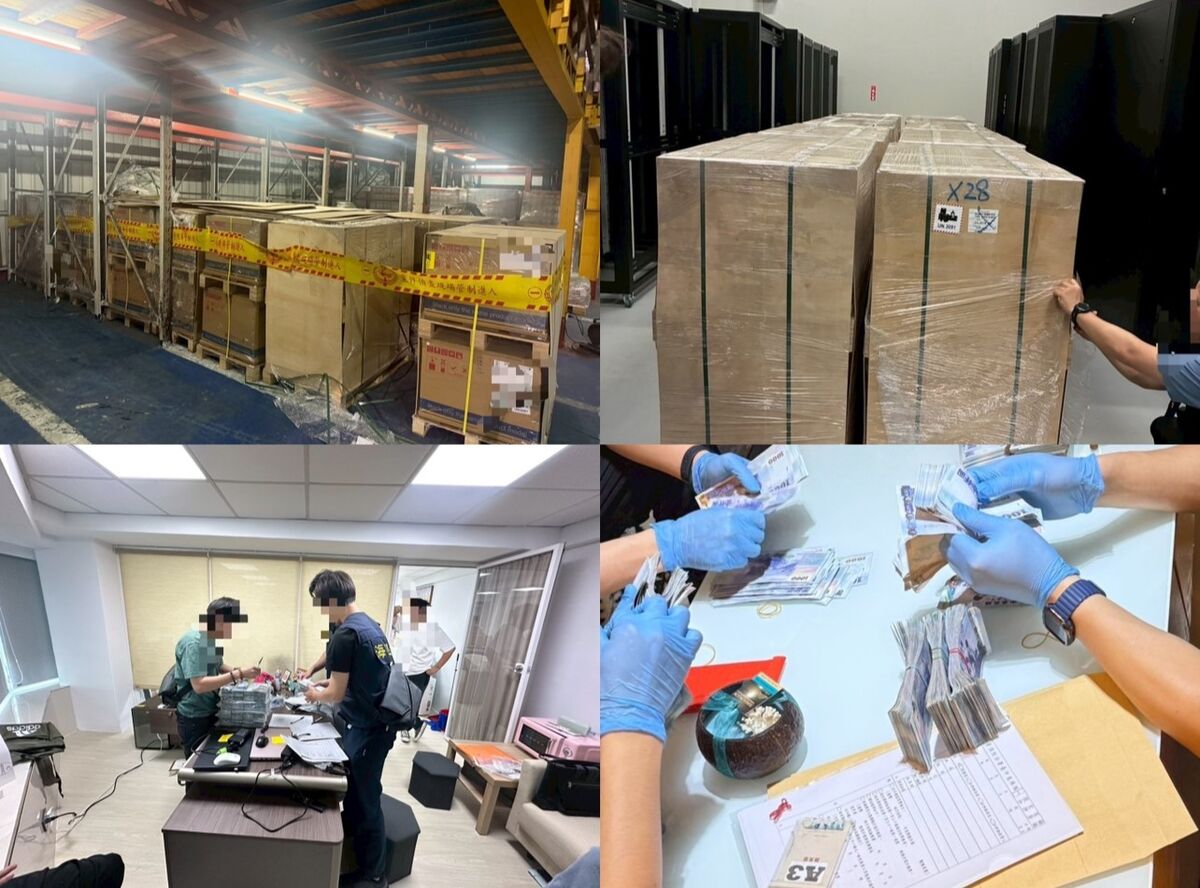
- Bloomberg, via Techmeme, says Nvidia appealed to Taiwanese officials after a manager was charged over chip smuggling, and asked TSMC for advice; TSMC declined to get involved.
- 📌 On the radar: TechCrunch Mobility looks at a backup plan for China's self-driving industry if Nvidia chips get harder to get (TechCrunch).
- 📌 On the radar: the US and Pax Silica allies, including Japan, the UK, and India, agreed to build a joint list of AI technologies and supply chains to protect from China (Techmeme).
- 📌 On the radar: Nidus, which is building AI systems for manufacturing robots used by US defense suppliers, raised $30M across pre-seed and seed (Techmeme).
- 📌 On the radar: CNBC reports an Eric Trump-backed robot-soldier startup could not pay staff and that the founder allegedly embezzled $4.6M (HN, CNBC). Unrelated to the Jensen fight, flagged because it is a robotics company in the window.
Why it matters
- This is still political drama, so it sits at the bottom. The new teachable pieces are the personnel fight (comeback vs an outside CEO) and a checkable conflict-of-interest claim around export rules.
- Export policy and who runs Nvidia both move the chip supply everyone else is planning around. Do not treat the spy allegations as settled; even today's coverage still argues about the evidence.
Sources