01
42% of corporate AI projects get abandoned
TechCrunch published a running list of dead AI products, citing S&P Global Market Intelligence that about 42% of corporate AI initiatives are eventually abandoned.
What they showed / shipped
- TechCrunch's AI graveyard went up on November 14 as a running list of AI products and startups that shut down, pivoted, or missed expectations. The hook number is from S&P Global Market Intelligence: about 42% of AI initiatives are ultimately abandoned by their corporate parents, for reasons that include funding, technical problems, competition, scaling, and weak demand.
- The list is a mix of fresh and older casualties, useful as a single teaching package rather than as breaking news on each one. Character.ai, the celebrity-chat app that raised $150 million at a $1 billion valuation in 2023, filed for bankruptcy in early October. Privacy-focused family assistant Ollie, launched in June 2026, recently announced a shutdown. Relay, an AI workflow tool pitched as a Zapier alternative, shut down in August 2026.
- Even the big labs are on the list. OpenAI rolled back a July 9 ChatGPT 'super app' redesign after users found it confusing, discontinued the stand-alone Atlas browser on August 9 and folded useful features into ChatGPT, and did the same with Operator. TechCrunch also notes that Sora, OpenAI's video-sharing app, shut down in March 2026 after high costs and weak retention. Apple's delayed Siri AI, which began reaching English-language users this month after slipping into iOS 27, is included as a stumble, not a shutdown, along with a $250 million settlement over iPhone 16 AI marketing claims.
Why it matters
- The 42% figure is the part to keep. Most AI projects inside companies do not survive, and several stand-alone apps died because the same features moved into ChatGPT, Gemini, or other default surfaces.
Sources
02
A WSJ profile says NVIDIA financed its own GPU demand
TechSpot and TechPowerUp, summarizing a Wall Street Journal profile of interim CEO Colette Kress, say NVIDIA funded and backstopped customers so they would keep buying chips, then paused some of those deals.
What they showed / shipped
- This is a new beat on the November 13 resignation story, not a rehash of the succession itself. TechSpot and TechPowerUp, both citing a Wall Street Journal profile of Colette Kress, say NVIDIA pushed more customer-financing and revenue-sharing deals in mid-to-late 2026 to absorb an oversupply of TSMC wafers and keep GPU prices high.
- The same write-ups say Kress had raised concerns about the scale of deals with cloud providers and with OpenAI, and that NVIDIA later slowed, shrank, or paused some financing, including an OpenAI arrangement that originally included a $250 billion backstop for a large data-center build. I did not open the WSJ article itself, so treat those dollar figures and the private meeting color as reported, not first-party confirmed.
- TechSpot also repeats two consumer-side numbers that are easier to check against street prices: GeForce cards often selling above 160% of MSRP, and the RTX 5090 being hard to find because memory and silicon were steered toward data-center GPUs. The story is circulating on Hacker News (the TechPowerUp item is the day's most-upvoted item) and in r/LocalLLaMA.
Why it matters
- If the WSJ account holds, part of the GPU 'shortage' was demand NVIDIA helped finance. That is a different explanation than 'AI ate all the cards,' and it is the part worth interrogating.
Sources
03
Claude Code Projects can now run parallel workers
Anthropic redesigned Claude Code Projects so you set a goal and Claude coordinates parallel cloud threads that open PRs, run tests, and keep working after you step away.
What they showed / shipped
- Anthropic's own post, Projects redesigned: from folder to conversation, says a Claude Code project can now take a goal, scope the work, delegate it across parallel threads, review the outputs, and assemble the result. You can steer from the main project chat or from your phone, and it keeps going after you leave the computer.
- Under the hood, each thread is a Claude Code cloud session on its own branch and copy of the repo. A coordinator routes work; if two threads touch the same code, the overlap is resolved as a normal merge conflict. Threads can also split work further with subagents. Every thread reads from and writes to a shared project memory, so later tasks can remember decisions like a release date moving or who has to sign off on billing changes.
- The updated projects are in beta starting today for select Claude Pro and Max subscribers who use cloud sessions in Claude Code and do not already have projects on the web or desktop. Anthropic says access expands to more users on those plans over the coming week, with chat, Cowork, Team, and Enterprise coming later. Existing projects keep working as they do today.
Why it matters
- This is the day's most tryable product change. The unit of work is a goal with parallel cloud workers, not a single chat you have to babysit.
Sources
04
Open-source AI without Jensen
Nathan Lambert argues that Huang's exit is a setback for the US open-model ecosystem, because NVIDIA's support was a founder bet that may now dry up.
What they showed / shipped
- In Open-source AI without Jensen, Nathan Lambert (Interconnects) frames Huang's resignation as a blow to US open-model development, not only to NVIDIA's management bench. He says NVIDIA still has a business reason to support open models (to avoid a few giant customers designing their own chips), but that backing open weights was one of Huang's founder-style bets, and the funding 'flood' is likely to recede while the company stabilizes delivery for the next 24 months.
- Lambert's useful split is this: the optimistic case is that open models have found a real lane in 'ownership of intelligence' and enterprise post-training. The pessimistic case is that open weights are still far from cheap, commoditized intelligence, because compute is tight and closed labs can integrate from model to datacenter to chips. He cites DeepSeek's DeepInfer release as evidence that even open models can be served at fat inference margins.
- His near-term worry is sloppy state-level, then national, regulation that treats open models as unsafe, plus the absence of a true frontier open-model lab in the US. The essay also ran as an RSS item and on Hacker News.
Why it matters
- This is the so-what of the NVIDIA transition if you care about weights you can actually run. The claim to test is not 'NVIDIA dies,' it is 'the open-model patronage and political cover get thinner.'
Sources
05
Vision AI is sorting waste on the recycling line
NVIDIA used today's official account to highlight Inception startups whose vision models and robots sort clothing, bottles, and mixed recyclables on live conveyor belts.
What they showed / shipped
- NVIDIA's official account posted a thread on vision AI and robotics in recycling (@nvidia), pointing to the company blog How AI Helps Recyclers Turn Mixed Waste Into Reusable Material. The blog itself is dated November 10, so this is today's amplification of a piece that did not make earlier briefs, not a brand-new research drop.
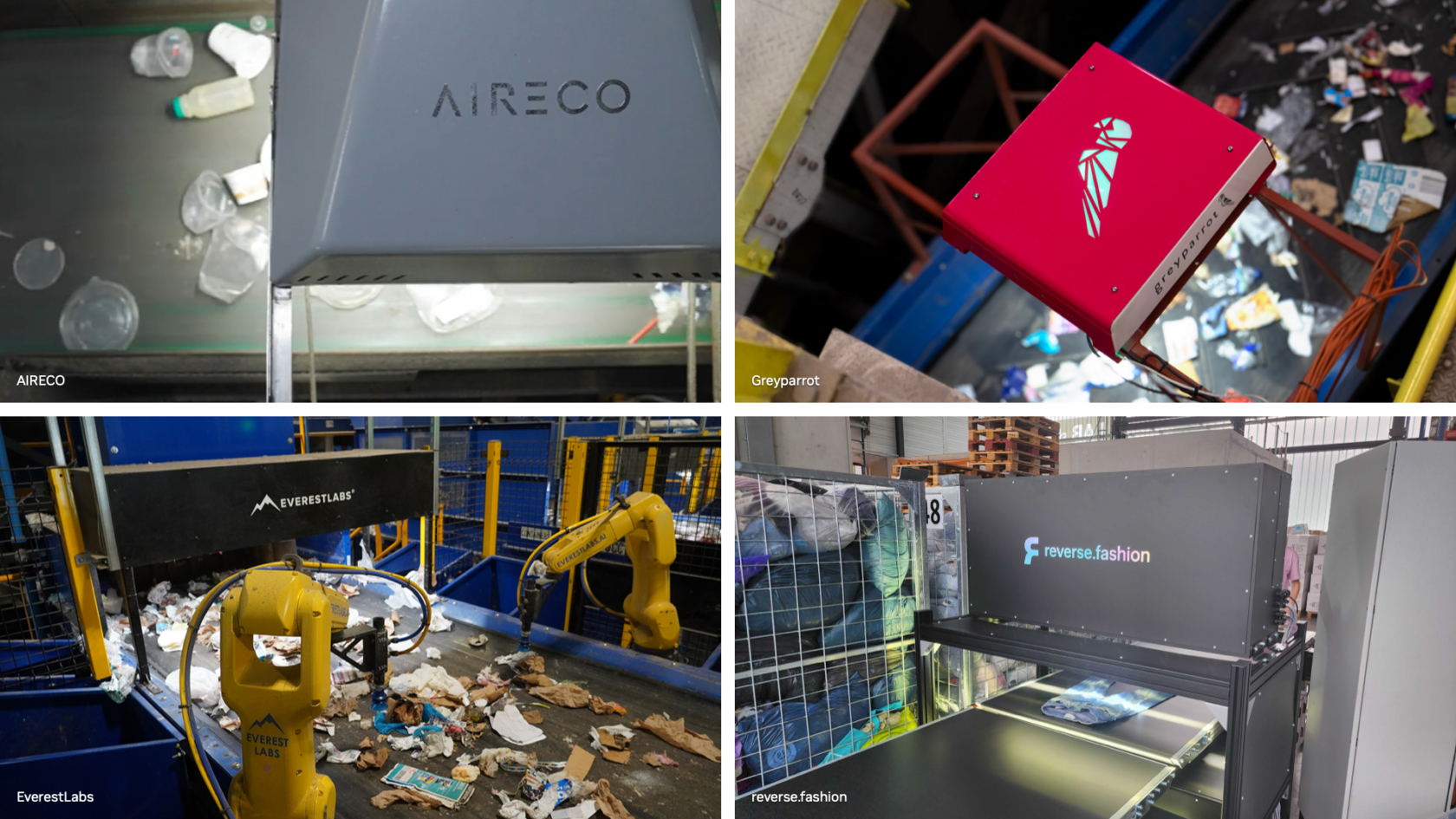
- The post leans on a global baseline: less than 7% of materials entering the economy come from recycled or reused sources, with more than 2 billion tons of municipal solid waste a year. Four Inception startups are the examples. Taiwan's AIRECO runs vision models on NVIDIA Jetson Orin NX to pick plastics with robotic arms at a Tainan pilot line, and says recognition accuracy on the test line tops 95%. It is aiming to lift annual throughput from 18,000 to 48,000 tons and cut operating costs by 85% on a full line planned for next year.
- EverestLabs AI says about 150 vision-guided robots are already on material-recovery lines in North America and Australia, and estimates they have identified about 40 billion objects, recycled roughly 25,000 tons of material, and avoided about 30,000 metric tons of CO2. UK startup Greyparrot mounts an Analyzer over the belt to label each item by material and brand, against a status quo of operators manually sampling less than 1% of what goes by. reverse.fashion is the clothing-side example, grading used garments for reuse, resale, repair, upcycling, or recycling.
Why it matters
- This is embodied AI in a dirty, high-speed environment, running at the edge on Jetson and RTX boxes, not a lab demo. The numbers (95% sort accuracy, 150 robots already deployed) are the checkable part.
Sources