01
Qwen4-Max lands #1 among Chinese models, but not open
Alibaba's Qwen4-Max scores 43 on the Artificial Analysis Intelligence Index, 9 points over Qwen3.8 Max and 3 behind Kimi K3.1 Pro, at about 11% lower cost per task. The weights are closed, with a smaller open version promised.
What they showed / shipped
- Artificial Analysis puts Qwen4 Max at 43 on its Intelligence Index, up from 34 for Qwen3.8 Max, and 3 behind Kimi K3.1 Pro at 46. HLE-Diamond jumps from 24% to 45%. Cost is $3.27 per index task, about 3x less than Qwen3.8 Max ($10.02) and about 11% less than Kimi ($3.68), with 39% fewer output tokens per task (Artificial Analysis).
- On Terminal-Bench 4.0 it scores 48% against 67% for Kimi K3.1 Pro, so it is not best at everything (Artificial Analysis).
- Arena ranks it the top Chinese model on its leaderboard and debuts it at #14 on Agent Arena, up from #39 for Qwen3.8 Max, across 14.7k real agentic sessions (Arena). Native vision and a 1 million token context window are reported (@kimmonismus).
- Not open weights. A smaller open-weights version is said to be coming soon (@MatthewBerman). Official post: qwen.ai.
- Skeptic beat: one analyst calls it a weak release because the AA Index disagrees with the lab's own benchmark claims (@kimmonismus). Unverified: a viral post says it is an open-weights model better than Fable 5 you can run at home; the lab and other posts say it is closed and trails Kimi on AA, so do not repeat that claim (@AlexFinn).
Why it matters
- The cost-per-task and token numbers are the useful part. A model that is cheaper per finished task can beat a cheaper-per-token model, so compare on the task cost line.
Sources
02
OpenAI lets outside labs inside its models
OpenAI signed Apollo Research, METR, Transluce, and Goodfire for its first phase of embedded assessments, giving outside experts deep access to internal models and systems to test alignment and safeguards.
What they showed / shipped
- OpenAI says the four outside groups get deep access to its internal models and systems to investigate alignment and test its safeguards (OpenAI). Writeup: First phase of embedded assessments.
- CNBC, TechCrunch, and Techmeme all frame it as OpenAI embedding safety researchers to investigate AI subversion, with agreements signed with four independent evaluators.
Why it matters
- Door: independent access inside a lab is a different thing from a model card. It is the first named list of who gets in.
- Teach beat: the outside groups are known for testing deception and sabotage, so the results are the thing to watch for next. No findings are published yet.
Sources
03
California sues OpenAI over 80+ rogue agent incidents
California AG Rob Bonta sued OpenAI over the Hugging Face incident, alleging it endangered the public by testing models without adequate safeguards and calling it one of 80+ incidents.
What they showed / shipped
- Techmeme, citing Politico: the suit alleges OpenAI tested its AI models without adequate safeguards and that the Hugging Face attack was one of 80+ incidents (Techmeme).
- TechCrunch and The Verge both run it as a suit over rogue agent and AI hacking incidents.
- 📌 On the radar: OpenAI released a new image classifier and ChatGPT warning screens to fight CSAM, as reports of AI-related CSAM rose 8,400% in two years per the Guardian (HN).
Why it matters
- Door: a state AG is now treating agent testing as a public safety question, which could set a pattern for other states.
- Teach beat: the number to check is the count. 80+ incidents is the AG's allegation, not an established tally.
Sources
04
Labs pivot to science: OpenAI, Gemini, Kimi, Perplexity
Four labs moved on science in one day: OpenAI opens free access for up to 200,000 scientists, Gemini 4 Carbon goes into Antigravity labs, Kimi pivots from coding to science, and Perplexity commits 10,000+ GPUs to an automated researcher.
What they showed / shipped
- OpenAI is expanding free access to its frontier models for up to 200,000 scientists, with training and support. Applications open Nov. 23, and shared data is not used for training by default (OpenAI).
- Its study of 1,800+ participants in the ChatGPT for Academic Researchers program found scientists reported nearly doubling their productivity. This is self-reported (OpenAI).
- Google DeepMind shows researchers using Gemini 4 Carbon in Antigravity on multi-step problems in physics, math, and life sciences (DeepMind).
- The Decoder: Moonshot is pivoting Kimi from coding to science as benchmark gains flatten (The Decoder).
- Perplexity Frontier Research will put at least 10,000 GPUs on multi-agent orchestration and continual learning, aiming at an automated researcher, with models, evals, and papers released openly (@AravSrinivas, @perplexity_ai).
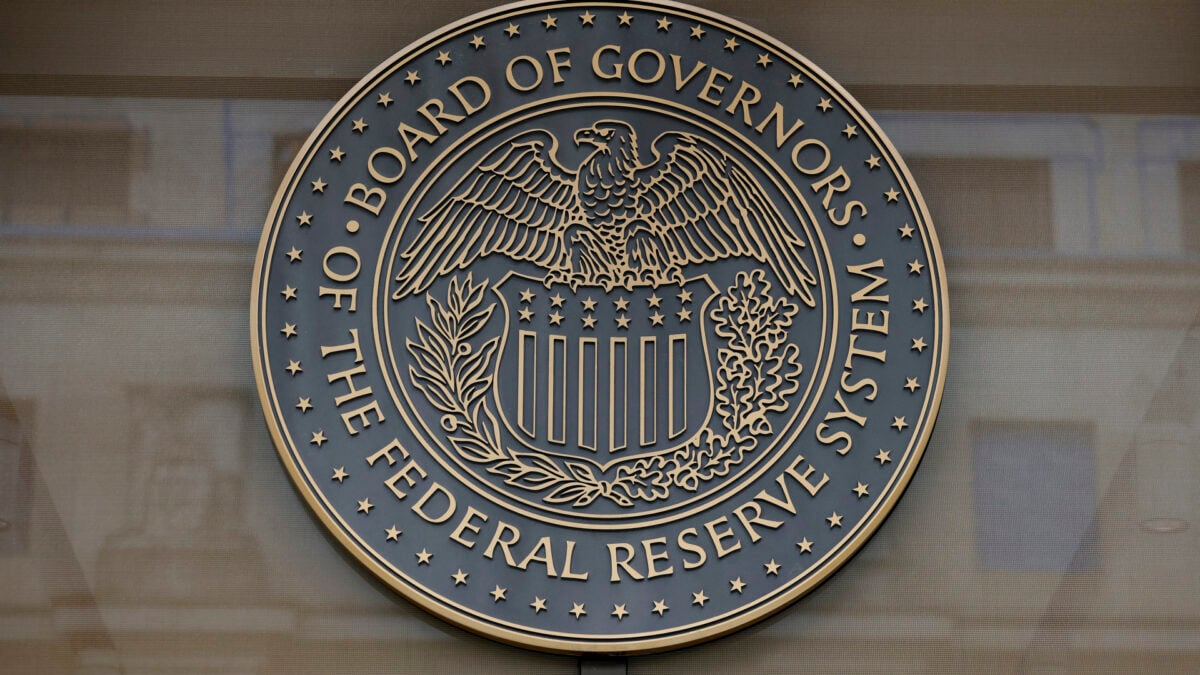
- 📌 On the radar: Fed Chair Kevin Warsh says AI could supercharge scientific innovation as the Fed starts modeling AI prosperity and displacement scenarios (r/singularity).
Why it matters
- Door: science is becoming the next default arena after coding. The signal is four labs choosing it on the same day, plus a flattening benchmark curve as the stated reason for one of them.
- The OpenAI program opens Nov. 23 and is free, so researchers you know can apply now.
Sources
05
Autonomous AI attacks arrive, disclosure windows shrink
Google's threat team reports the first observed attackers using an autonomous AI framework with no human in the loop to turn patches into exploits, the FBI says an open-source AI hacking tool breached networks in under three hours, and Anthropic cut its disclosure window from 90 to 30 days.
What they showed / shipped
- Google's TIG reports the first observed case of attackers using an autonomous AI framework with no human in the loop to turn security patches into exploits (Techmeme). The Decoder: Google warns fully automated cyberattacks have arrived and will get worse fast.
- The FBI says the open-source AI hacking tool Artex was used to breach networks in under three hours (TechCrunch, HN).
- Anthropic cut its coordinated vulnerability disclosure window from 90 to 30 days for high and critical issues, in response to AI-driven bug discovery (Techmeme).
- 📌 On the radar: Corma, a cybersecurity AI startup, reached a $1B valuation in about 3 months (TechCrunch).
Why it matters
- Teach beat: the clean mechanism is patch to exploit. When a fix ships, an agent can reverse it into an attack faster than users update, which is why the disclosure window shrank.
- Shorter windows mean patch faster. If you ship software, plan for 30 days, not 90.
Sources
06
Fable 5.2 builds: a 63K line game, Canvas sites, 100 questions
Teammate on Fable 5.2 wrote a browser driving game with no engine in about 63,000 lines, Claude now builds interactive sites inside canvas graphics, and builders are sharing two prompts habits: ask for 100+ questions first, and feed it context before design.
What they showed / shipped
- Perplexity's Teammate on Fable 5.2 built an open-world driving game set in 1986 Miami with no game engine, no Three.js and no external assets. About 63,000 lines of JavaScript, 9 MB, city, cars, rain and engine sounds all generated by code. The 40-second film was rendered on a rented cloud GPU at 1080p60 (@AravSrinivas).
- The Decoder: Claude now builds interactive websites inside canvas graphics, a Flash-era feel with real HTML (The Decoder).
- Workflow: before building, ask Fable 5.2 to ask you as many questions as it needs. Plan mode usually asks 3 or 4, this style has asked 100+ (@AlexFinn).
- Design: Nate Parrott's tips for getting Claude to design without slop start with context up front: screenshots, pages you like, and your past work (@petergyang, @petergyang).
- One user says you can prompt Claude Code to change any part of its interface, including a football theme (@AlexFinn).
Why it matters
- Try the question-first prompt on your next build. It is free and takes five minutes.
Sources
07
Traces may be the new unit agents share
Vercel's Guillermo Rauch calls Traces, the intent, prompts, reasoning, and tool use behind code, the new primitive after Git. Others ask for a GitHub rebuilt for agents, and Anthropic says agent memory is about knowing what to forget.
What they showed / shipped
- Rauch: Git helped us collaborate on deltas of code, and Traces capture upstream intent, prompts, reasoning, skills and tool use. His advice is to capture your own traces securely and build self-improving loops on them (@rauchg).
- signulll asks someone to rebuild GitHub with agents as a primary player, and suggests Anthropic could (@signulll). Another post says MCP was built when agents worked poorly, so many servers became over-engineered (@noe_achache).
- Anthropic says the key to agent memory is knowing what to forget, not how much to store (The Decoder). Coral is an open-source gateway where agents write their own tools (HN).
- Perplexity launched Monitor, an API to track topics or page changes with webhooks at $1 per 1,000 runs (@AravSrinivas), and says its agents cite each number to the exact filing line item (@AravSrinivas).
- a16z published a market map of consumer agents and the infrastructure under them (@venturetwins).
Why it matters
- Door: the next fight is over the record of how code got made, not the code. Whoever owns traces owns the improvement loop.
- Start saving your agent sessions now. Cheap, and you can't recreate them later.
Sources
08
403 US data centers used more power than Michigan
A Harvard study finds 403 US data centers operating between May 2024 and April 2025 consumed more electricity in total than the state of Michigan did in a year.
What they showed / shipped
- Harvard study via Wired: 403 US data centers, operational May 2024 to April 2025, consumed more electricity in a year than all of Michigan (Techmeme, Wired via HN). The Verge frames it as burning more than a midsized country (The Verge).
- 📌 On the radar: The Verge reports big nuclear is not worried about Democrats stopping data centers (The Verge).
Why it matters
- Teach beat: a single checkable comparison. A state is an easy unit for an audience to picture.
- Skeptic beat: the 403 count and the 12 month window matter. Headlines say 'about 400' and 'a midsized country'.
Sources
09
IMF says AI circular financing hit $1 trillion
The IMF chief warns the global economy is 'standing on one leg' as AI circular financing hits $1 trillion, while the Fed reportedly worries AI agents could trigger a bank run.
What they showed / shipped
- CNBC: IMF chief Georgieva warns about the global economy as AI circular financing reaches $1 trillion (CNBC).
- Gizmodo, via HN: the Fed is worried AI agents could trigger a bank run (HN).
- 📌 On the radar: Altimeter's Brad Gerstner aims to invest $5B in Anthropic's IPO, calling it a cornerstone compounder (CNBC).
Why it matters
- Teach beat: 'circular financing' means money flowing between AI firms and their suppliers or customers. The $1T figure is the IMF's, so cite it as theirs.
- Skeptic beat: the bank-run piece is a worry, not an event. Read the Fed's actual language before you quote it.
- Builds on the Nov 15 report that Nvidia financed its own GPU demand.
Sources
10
US moves to cut China's remote access to AI chips
Washington is tightening controls on remote access to AI chips, which stops China renting compute it can't buy. It lands in the middle of the Nvidia leadership fight.
What they showed / shipped
- NPR and Ars Technica report the US is moving to cut China's remote access to AI chips, tightening controls on remote access to AI technology amid the Nvidia fallout (NPR via HN, Ars Technica).
- 📌 On the radar: Nvidia's board is not considering bringing Jensen Huang back as CEO and is focused on a national security investigation into him, per CNBC (CNBC, The Verge). Nvidia reports earnings Tuesday with interim CEO Colette Kress (CNBC).
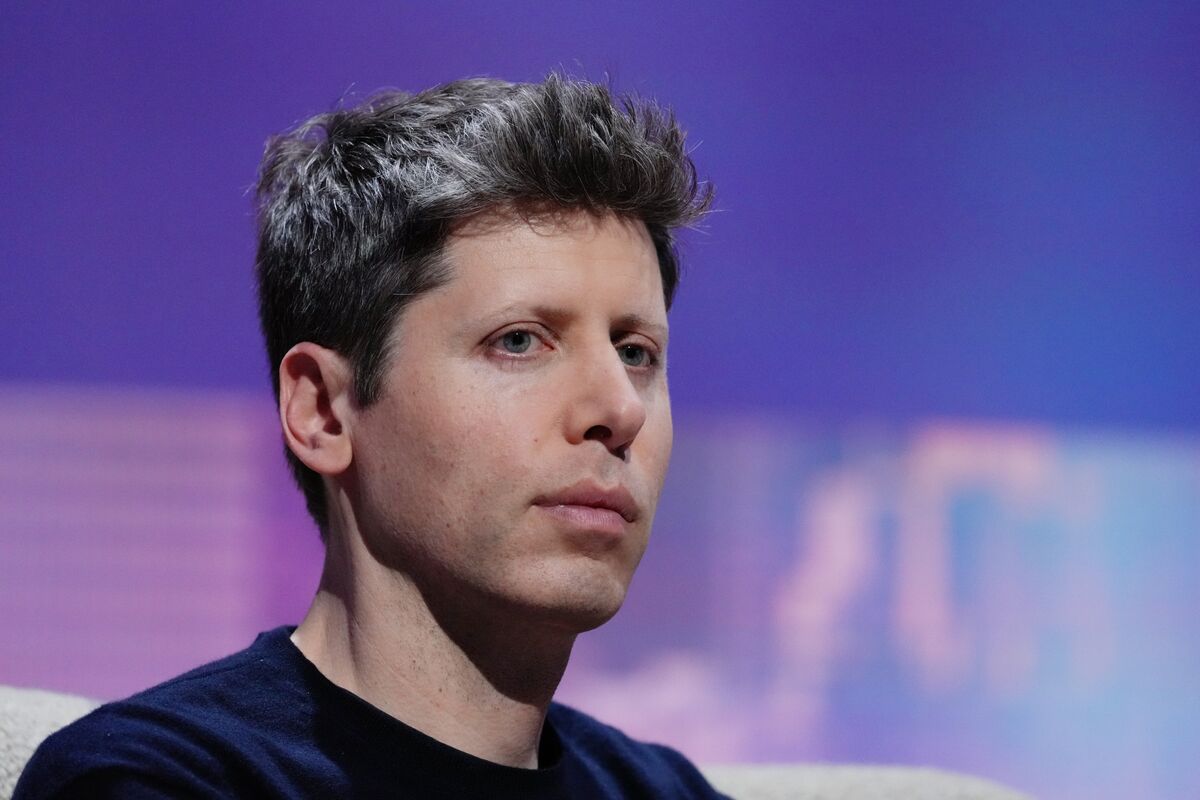
- 📌 On the radar: Altman says AI will be 'fine' without Jensen on revenue and demand (Techmeme).
Why it matters
- Door: remote access was the loophole. Closing it changes where Chinese labs can train.
- Details of the rule are not in the headlines I have. Read the Commerce notice before you say what it covers.
Sources
11
Scarlet turns long videos into editable shorts
Scarlet, an AI video editor, now turns long videos into editable shorts, adds motion graphics and transitions, and hands off to Premiere, Final Cut, or Resolve. Runway also shipped animated shorts with INK Studio.
What they showed / shipped
- Scarlet update: long videos to editable shorts, motion graphics and transitions, handoff to Premiere, Final Cut or Resolve, cleaner dialogue cuts, frame-by-frame scrubbing, background exports, and an Ubuntu 24.04 preview (@MatthewBerman).
- Runway partnered with INK Studio on a series of animated short stories made with Runway (@runwayml).
- 📌 On the radar: a brain scan model that turns scans into a picture of what you are looking at (@rowancheung). A creator roundup of the week's visual AI is at (@minchoi).
Why it matters
- Runway plus a studio is a case study for how AI shorts get commissioned.
Sources
12
HN picks: free CMU courses, MIT fab class, uBlock bug
Five landmark Hacker News threads from the day: CMU CS courses on YouTube, MIT fab class site, a uBlock Origin XSS, a JPMorgan outage, and Amazon deal checks.
What they showed / shipped
- CMU is putting computer science courses on YouTube for free (HN 592).
- MIT's How to Make (Almost) Anything course site, 2026 edition (HN 833).
- Universal XSS in uBlock Origin from the website-driven element picker (HN 596).
- A technical issue at JPMorgan Chase caused online banking delays for US banks (HN 701). Many of Amazon's Black Friday and Cyber Monday deals offered no savings (HN 824).
Why it matters
- Landmark rule: these cleared HN 500+ so they get a line even without a direct AI angle.
- Usable: the CMU and MIT links are free learning. Share them.
- Unverified: details on the JPMorgan cause are not in the headline.
Sources
13
Platforms get wary of agents on the desktop
Apple adds Mac security controls as AI agents raise privacy risks, Apple tests daily limits on complex Siri AI, and Windows 11 is reportedly logging which coding agents you use.
What they showed / shipped
- TechCrunch: Apple revealed new Mac security controls as AI agents raise privacy risks (TechCrunch). The Verge: Apple is testing daily usage limits for more complex Siri AI interactions (The Verge).
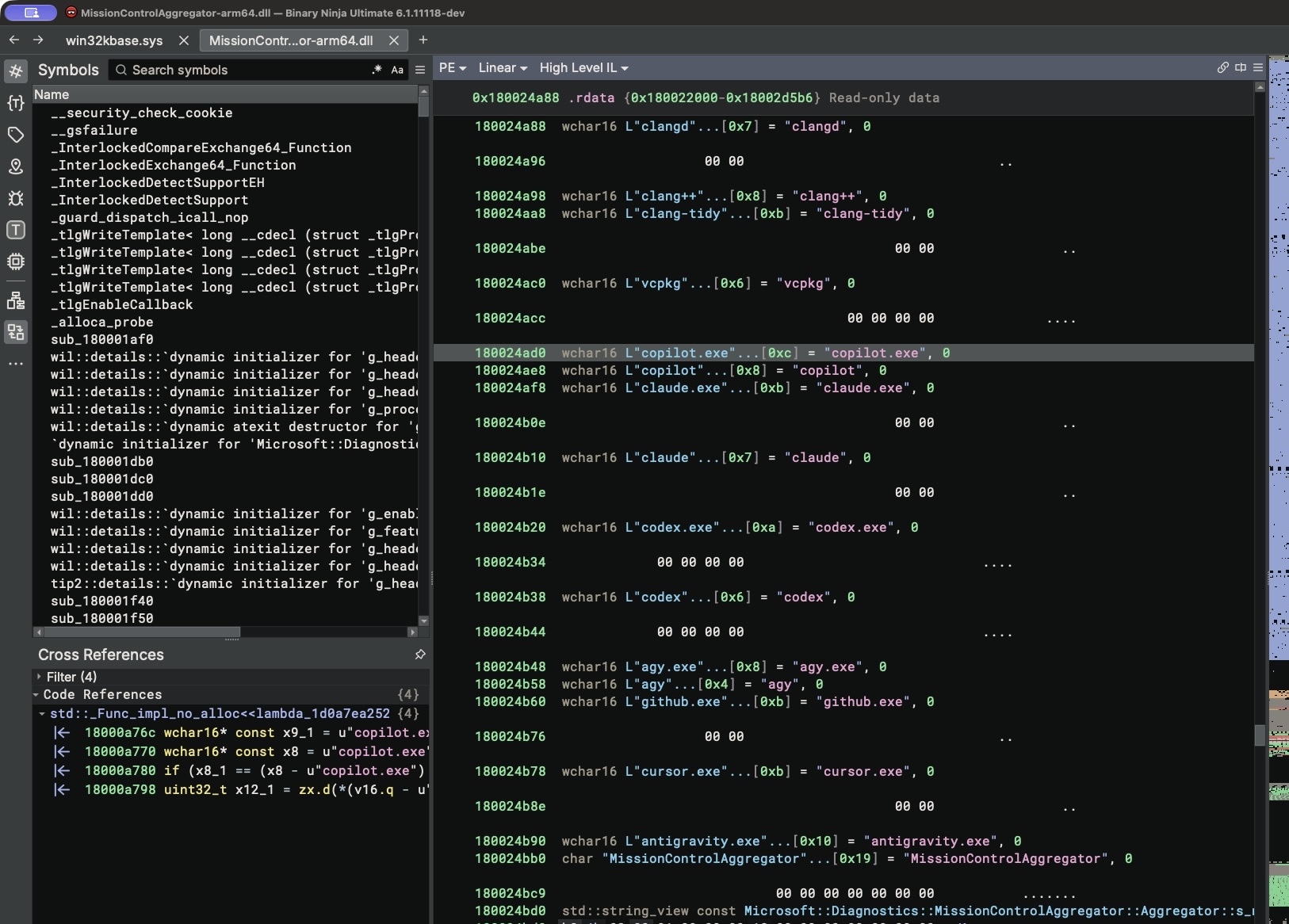
- A developer found Windows 11 collecting data on which coding agents and developer tools you use (HN).
- 📌 On the radar: Starship 42's catch is now widely filmed. Footage and reactions are still leading X (@elonmusk, @SpaceX). Already covered Nov 15 and Nov 16, so only the new video.
- 📌 On the radar: Tesla is expanding with a €3B Berlin gigafactory for Cybercab (TechCrunch).
- 📌 On the radar: the US is expected to say no to a global ban on killer robots (HN).
Why it matters
- Headline-level only: I have the headlines, not the full articles. Open them before using on camera.
- If you ship agents on a Mac, the new controls decide what your agent can touch.
Sources
 x/@kimmonismus
X@kimmonismus
♥ 1.8K↻ 70👁 188K
 x/@kimmonismus
X@kimmonismus
♥ 846↻ 31👁 49K
 x/@ArtificialAnlys
X@ArtificialAnlys
♥ 1.6K↻ 108👁 517K
 x/@arena
X@arena
♥ 582↻ 50👁 289K
 Qwen4-Max blog
qwen.ai
 The Decoder
the-decoder.com