01
NVIDIA opens GR00T 2, a world-action model for robots
NVIDIA's new open System One model learns robot skills from human video and a handful of demos, and a faster Turbo variant is built to run on a Unitree G1.
What they showed / shipped
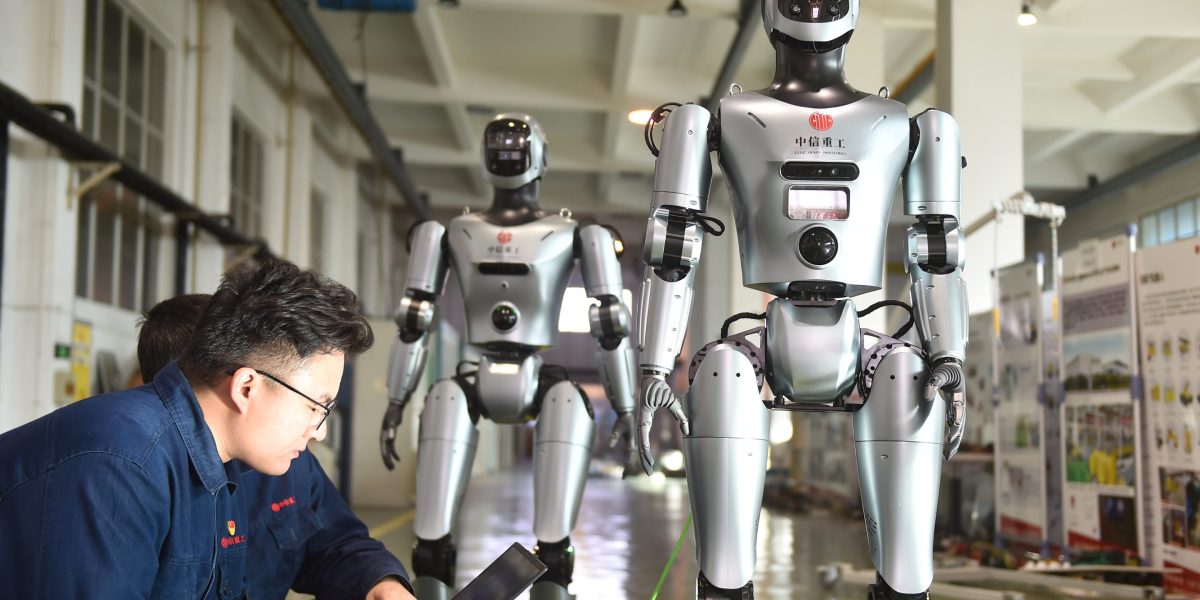
- NVIDIA introduced GR00T 2, which it calls its most advanced open System One model for robotics research. It is a world-action model: one diffusion transformer predicts future video and the robot's actions together, so skills can carry across different robot bodies NVIDIA on X.
- On the GR00T 2 research page, NVIDIA says that on 50 tasks never seen on the target robot (only in human video or on other robots) GR00T 2 succeeds 40% of the time zero-shot. Five demonstrations per task, under 3 minutes of robot data, raise that to 95% after a 30-minute fine-tune on a single RTX 5090.
- The pretraining mix is 402,730 hours of egocentric human video, 10,184 hours of handheld UMI gripper demonstrations across 2,897 tasks, and 23,500 hours of robot teleoperation. 100,000 hours of the human video are openly available as PhysicalAI-Human-1M-100K on Hugging Face.
- GR00T 2 Turbo is the faster variant. NVIDIA says a prediction takes 124 ms on a Unitree G1's own Jetson Thor. Through the SONIC whole-body controller, Turbo scooped and served popcorn in all 48 trials and cleared a table of mixed objects in 93% of trials. With a reasoning model calling GR00T 2 through a WAM API, a YAM arm completed 97 or more of 100 back-to-back assemblies of each of three toys. These are NVIDIA's own numbers.
- 📌 On the radar: Runway says Praxis-1 now runs on the SO-101 robot on a single RTX 5090 with NVFP4, and posted the checkpoint and setup. This is a new target for the model that already led the 2026-11-12 brief, so it stays a one-line update.
- 📌 On the radar: Fortune reports OpenAI has disbanded its stand-alone robotics team, betting that general models including GPT-6 Astra can be applied directly to robots. OpenAI told Fortune it is not leaving robotics, and that a first public humanoid demo is still targeted for 2027 (Fortune).
Why it matters
- This is the robotics door of the day. The teachable claim is that a robot can pick up a task from human video or a handful of demos, and Turbo is meant to run on the G1 itself rather than a tethered workstation.
- Caveat: the success rates are NVIDIA's. This pass confirmed the 100,000-hour human video set on Hugging Face; it did not independently confirm that GR00T 2 model weights are downloadable today.
Sources
02
Claude helps unlock hundreds of theorems in Gödel's notebooks
A Helsinki historian used Claude to digest 1,009 pages of Kurt Gödel's shorthand workbooks, then checked hundreds of recovered theorems in the Coq proof assistant.
What they showed / shipped
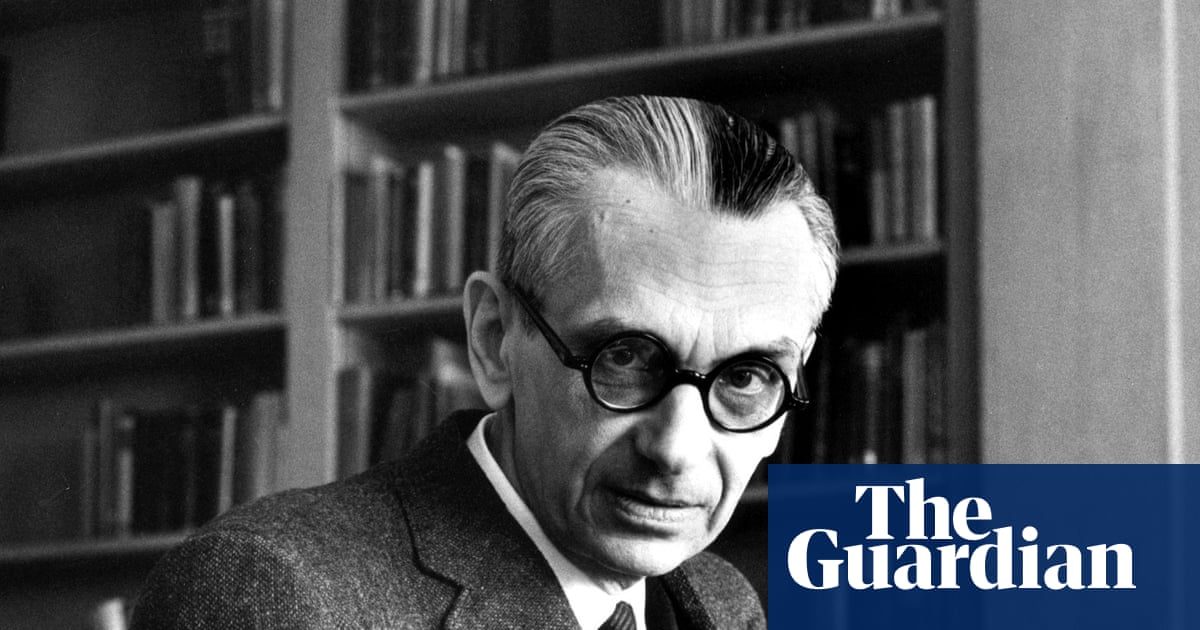
- Since 2017, Finnish logician Jan von Plato has been leading a project at the University of Helsinki to read 16 notebooks Gödel wrote in the early 1940s. The material is 1,009 densely written pages, much of it in Gabelsberger, a German shorthand that was already obsolete when Gödel used it. Progress had been about a page a week The Guardian.
- In September, von Plato enlisted Claude. He says that within a couple of days the model produced a 650-page digest of the workbooks, which still had to be checked page by page. He reports dozens of anticipations of results not known until the 1970s and 1980s, plus 14 themes in logic that have not been pursued.
- Asked to extract every theorem Gödel had proved, sketched, or had an idea for, Claude found 663. Run through Coq, about 400 were verified as stated, about 200 were repaired (a tighter statement or an added assumption), and about 50 were false. Von Plato notes that Gödel himself sometimes wrote falsch! or schlecht! in the margins.
- On the independence of the axiom of choice, von Plato says Gödel was one step away: one definition was wrong, but he had the right definition two years earlier, and the reconstructed proof passed Coq. Notre Dame logician Joel David Hamkins, who has not seen that reconstruction, said that if it stands it is historically interesting, but that how much is Claude and how much is Gödel is a job for the historians.
Why it matters
- This is a rare, checkable example of a model doing work a human team could not keep in its head at once, then being audited in a proof assistant.
- Keep Hamkins's caveat on screen: resemblance is not the same as Gödel having finished and published the proof.
Sources
03
Agents can pay: ChatGPT Wallet and Brave x402
OpenAI let ChatGPT agents check out with a tokenized card you approve by Face ID, and Brave let agents pay for search per request, with no API key.
What they showed / shipped
- OpenAI launched ChatGPT Wallet. Eligible U.S. ChatGPT Pro subscribers aged 18 or older, with a U.S.-issued American Express, Mastercard, or Visa card, can have a Dot find items and complete checkout. You review the items, total, and selected card, then approve with a security check such as Face ID or a fingerprint. The payment network issues a token so neither the agent nor the merchant sees the real card details, and OpenAI says existing card rewards and eligible dispute protections still apply. It is rolling out in Dots only, not in Chat, Work, or standalone Codex threads OpenAI.
- The same day, Brave said the Brave Search API now accepts pay-per-request agentic payments via the open x402 protocol. A request sent without payment gets an HTTP 402 that states the price; the agent pays in USDC on Base and retries. Pricing is $0.005 per request, or $5 per 1,000, for the LLM Context endpoint and for web, news, image, video, and local search. No Brave API account is required. Brave is covering Base gas fees for a limited time, and the suggested setup is Purl Wallet, a Stripe-developed CLI wallet, plus Base-native USDC Brave.
Why it matters
- One path is a consumer checkout with a biometric approve step, the other is a machine-payable search API with no key and a 402 challenge. Together they make 'agents can spend money' a thing you can actually try, with clear limits.
- Caveat: Wallet is U.S. Pro only at launch. Brave's blog is dated November 12, but the story first cleared this brief via today's HN thread.
Sources
04
DeepMind opens the datasets behind WeatherNext 3
Google DeepMind released SatWeave and PARDIG, the live satellite mosaic and AI precipitation maps used to train and run its weather model, for anyone to use.
What they showed / shipped
- Google DeepMind announced it is opening PARDIG and SatWeave, the foundational datasets behind WeatherNext 3, with historical archives and live feeds so researchers and developers can build weather, hydrology, and climate applications Google DeepMind on X.
- SatWeave blends geostationary satellite observations into a global mosaic across 17 visible, water vapor, and infrared channels and updates hourly, which DeepMind says lets WeatherNext 3 issue new global predictions instead of waiting on analysis data refreshed every six hours. DeepMind is releasing the hourly live feed and a historical archive spanning more than a decade DeepMind blog.
- PARDIG (Precipitation AI Reanalysis: Densely Inferred GPM) is an AI precipitation dataset trained on sparse spaceborne radar from NASA's GPM Core Observatory, plus SatWeave imagery and ECMWF atmospheric fields. DeepMind says it produces a global precipitation map every 15 minutes at roughly 10-kilometer resolution, updated with an average latency of about five hours, and is releasing a historical archive from 1999 to 2026.
- DeepMind says evaluations against radar networks in the U.S., Europe, and Japan, and against more than 36,000 weather stations, show PARDIG outperforming leading global baselines including NASA's IMERG-Final, with more than 30% better hourly detection skill on light-to-moderate precipitation. The live and historical datasets are on Google Cloud Storage; PARDIG's historical catalogs are also in Google Earth Engine. Google's developer docs list both under a CC BY 4.0 license.
Why it matters
- This is a dataset you can actually pull today, not a model card behind a waitlist. Live satellite and precipitation fields are the raw material for flood, drought, solar, and wildfire tools.
- The skill and baseline numbers are DeepMind's own evaluations.
Sources
05
A Hollywood director is testing AI VFX during the shoot
Jon Erwin says his team can start Seedance 2.5 effects about 30 seconds after cameras stop, and is using the model to visualize scenes before they are filmed.
What they showed / shipped
- In a widely shared recap of a director interview, Jon Erwin, who is making 'Young Washington,' describes bringing generative VFX onto a live-action set. He says his AI team can access footage about 30 seconds after the camera stops, that he is using Seedance 2.5 to visualize scripts before production, and that the model is increasingly able to follow cinematography language such as ALEXA 65, Cooke lenses, and f/1.2 minchoi on X.
- Erwin also says his team reopened a nearly finished film and regenerated much of its visual effects with Seedance 2.0 in two weeks, and that he does not want AI replacing actors or taking control of their performances through unauthorized digital replicas.
- 📌 On the radar: Seedance 2.5 Flash is now available on Runway, which the company says is faster and cheaper Runway on X. This is a SKU update to the 4K Seedance 2.5 launch that already led the 2026-11-12 brief, so it stays a one-line update.
Why it matters
- If the 30-second handoff holds up, generative video starts looking like a second camera unit, not an off-site post house.
- Caveat: the details come from a third-party recap of Erwin's interview, not a first-party studio or Runway production report. Treat the timings as his account.
Sources
06
llama.cpp hits version 1.0
The main local-LLM engine is making a stability promise: llama.cpp and ggml are now at v1.0.0, and breaking changes to the public C API will bump the major version.
What they showed / shipped
- The ggml-org team at Hugging Face released llama.cpp v1.0.0 (libllama) and ggml v1.0.0 (libggml). After 3.5 years, the project is treating the public C API as a contract: a breaking change in the public headers will be a major-version bump, a backward-compatible feature will be minor, and a bug fix will be a patch Hugging Face blog.
- The post says llama.cpp supports more than 150 architecture variants and the mainstream speculative-decoding methods, with backends that can be compiled as dynamic libraries and loaded at runtime. Distribution now includes pre-release artifacts, Docker, Debian, Homebrew, conda-forge, MacPorts, Winget, and XCFramework for iOS and macOS, plus desktop apps for macOS and Windows from the same team.
- The same story showed up on Hacker News and in r/LocalLLaMA, which is how most local-model users will actually hear it.
Why it matters
- This is infrastructure you can depend on, not a new model drop. If you ship a local app on llama.cpp, the 1.0 label is the promise that the API will not move under you without a warning.
- This is a stability milestone, not a claim that inference suddenly got better overnight.
Sources
07
a16z says AI could make pharma even bigger
A new a16z essay puts hard numbers on drug development, then argues that if AI raises the odds of success, the prize gets larger rather than shrinking.
What they showed / shipped
- Andreessen Horowitz published 'Big Pharma Can Rival Big Software,' arguing that AI could improve drug-development odds and shorten timelines, which would make pharma larger, not smaller a16z on X.
- The numbers in the posts: the top 30 pharma companies represent roughly $5T of market cap; Eli Lilly alone is over $1T; in Q3 2026 Lilly's GLP-1 portfolio did close to $17B, nearly matching Anthropic's revenue in that quarter; analysts expect that GLP-1 portfolio to grow to over $100B in annual sales by 2030.
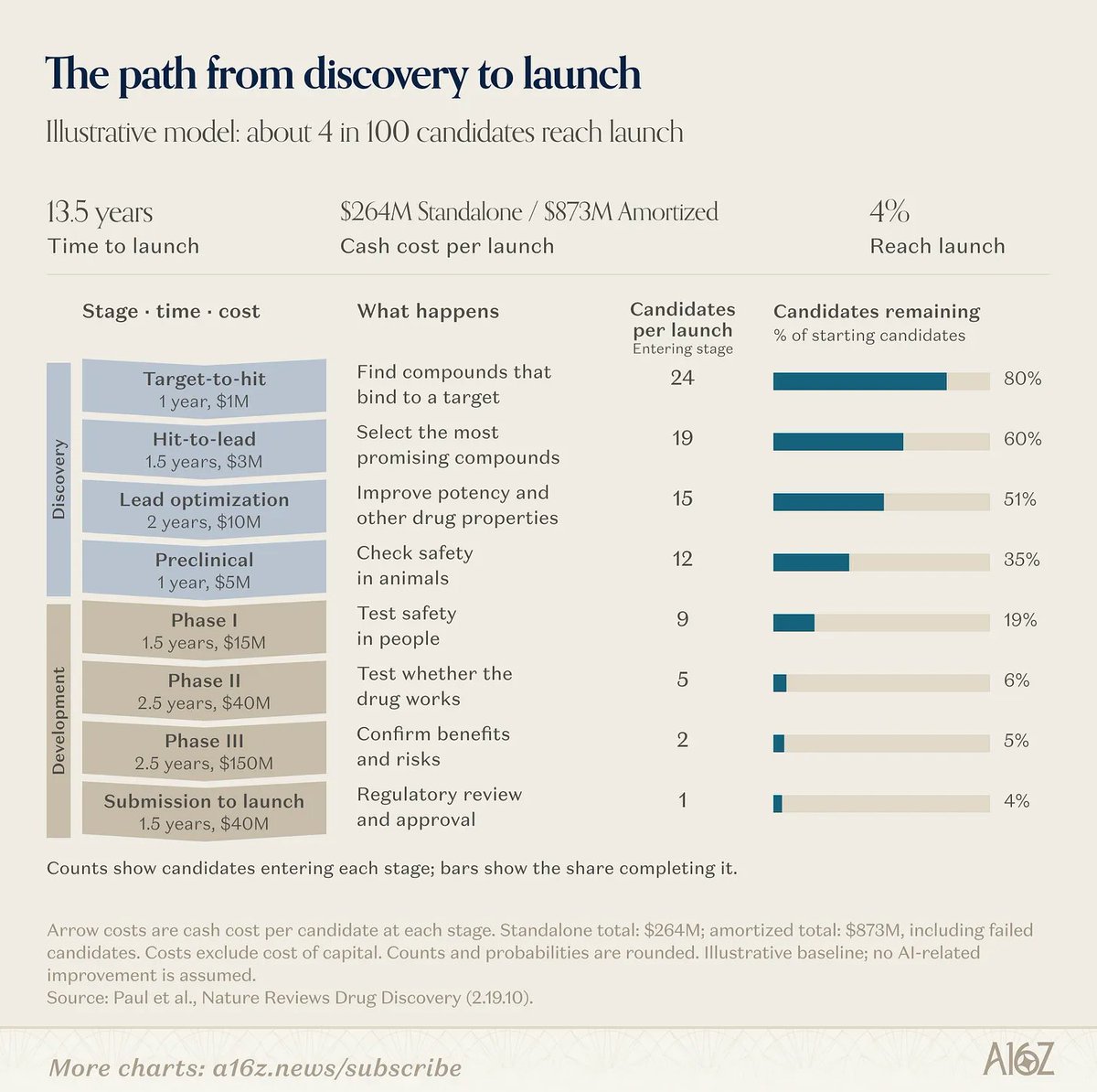
- On the cost side, a16z says the present-value cost of developing a drug, after amortizing failures, is close to $2B, and that the process takes 13 years on average a16z.
- 📌 On the radar: Business Insider reports doctors are skeptical of Dario Amodei's claim, on the IPO roadshow, that AI will cure cancer in a decade (Business Insider). That is the same skepticism beat as the 2026-11-09 brief, so it stays a one-line update.
Why it matters
- The usable artifact is the cost and timeline math, $2B present value and 13 years, not the prediction that AI will automatically fix it.
- This is a VC essay with cited industry numbers, not a new clinical study. Keep that label on screen.
Sources
08
Perplexity Teammates land in the Mac app
Max subscribers can now run Perplexity's Teammates on the desktop Mac app, including a hybrid setup that keeps some work local.
What they showed / shipped
- Perplexity said Teammates are now available in the Perplexity Mac app for Max subscribers. The company says teammates can work individually or with other teammates on QA, customer service, research, growth marketing, and more Perplexity on X.
- CEO Aravind Srinivas separately said usage of a hybrid setup, a cloud orchestrator with a local subagent, has been growing in the Mac app, and pointed people to Perplexity's personal computer page.
- 📌 On the radar: Srinivas also said Perplexity's open Decision Models are free on OpenRouter for a week, pitched at agentic security over large telemetry streams. The models themselves were already in the 2026-11-13 brief, so this is only the free-week note.
Why it matters
- If you already have Perplexity Max, this is a desktop place to try multi-agent work, including a local subagent, without waiting on a new model release.
- This is a product rollout for paying subscribers, not a new open model.
Sources