01
Gemini 4 Carbon ships, with swarm agents and a formal proof of Signal
Google opened Gemini 4 Carbon today for paying developers, enterprises, and AI Ultra users, and used it to help formally verify core parts of Signal's cryptography.
What they showed / shipped
- Demis Hassabis says Gemini 4 Carbon is rolling out today and, in one shot, reverse engineered his original Theme Park binaries, added a DeepMind-themed ride, and ported it to the web Demis Hassabis on X.
- DeepMind calls Carbon its strongest model for complex, long-horizon tasks, with extended verification loops across software engineering, cybersecurity, knowledge work, and science Google DeepMind on X.
- The official post says Carbon is live in the Gemini API and Gemini for business for paying developers and enterprises, and is rolling out to Google AI Ultra subscribers in Antigravity, the Gemini app, and AI Mode in Search. Intro pricing matches Gemini 4 Argon at $2 per million input tokens and $10 per million output tokens, rising to $4 / $20 after 30 November 2026 Google blog.
- Google says Carbon ranks first on CursorBench 4.0, Perplexity's WANDR, and Zapier's AutomationBench at more than 2x lower cost per task than the next best external model. Those are vendor-cited boards, so treat them as first-party claims Google blog.
- Google is previewing /swarm in Antigravity, which turns one prompt into a coordinated team of agents. The Verge notes Carbon is not clearly coming to free or lower-tier users The Verge.
- Perplexity is rolling Carbon into Computer for Pro and Max, and into Search for Max. It scores 0.857 on Perplexity's WANDR benchmark at $5.86 per task, which Perplexity says matches Claude Fable 5.2 at 40% of the cost Perplexity on X. Aravind Srinivas says Carbon is 2.5x cheaper than Fable 5.2 on agentic research tasks Aravind Srinivas on X.
- Google says researchers built AlphaProof Code, an agentic formal-verification framework, and used Carbon to generate millions of lines of Lean to prove key security properties of Signal's cryptographic protocol in weeks, work that historically takes expert teams years Google blog.
- A Reddit thread reports Gemini 4 Argon at 91.7% and Carbon at 92.6% on SimpleBench, with Claude Fable 5.2 still ahead at 94.9%. Confirm on the official SimpleBench board before quoting those numbers r/singularity.
- 📌 On the radar: minchoi says Elon confirmed Grok 4.8 this week on a new C/C++ stack derived from Starlink software. That is secondhand, not a first-party xAI post in today's pull minchoi on X.
- 📌 On the radar: the AI 2027 authors published a timelines update and now forecast superhuman AI researchers in 2027. Treat it as their forecast, not a measured result r/singularity.
Why it matters
- You can try Carbon today in the Gemini API, Antigravity if you have Ultra, or Perplexity Computer, and the price undercuts yesterday's Fable 5.2 launch on Perplexity's own board.
Sources
02
Gemini Robotics 2.5 works a Mercedes line, and NVIDIA opens Alpamayo 2
DeepMind's new robot model kits parts in real Mercedes factories at 96% success, and NVIDIA released an open in-car reasoning model the same day.
What they showed / shipped
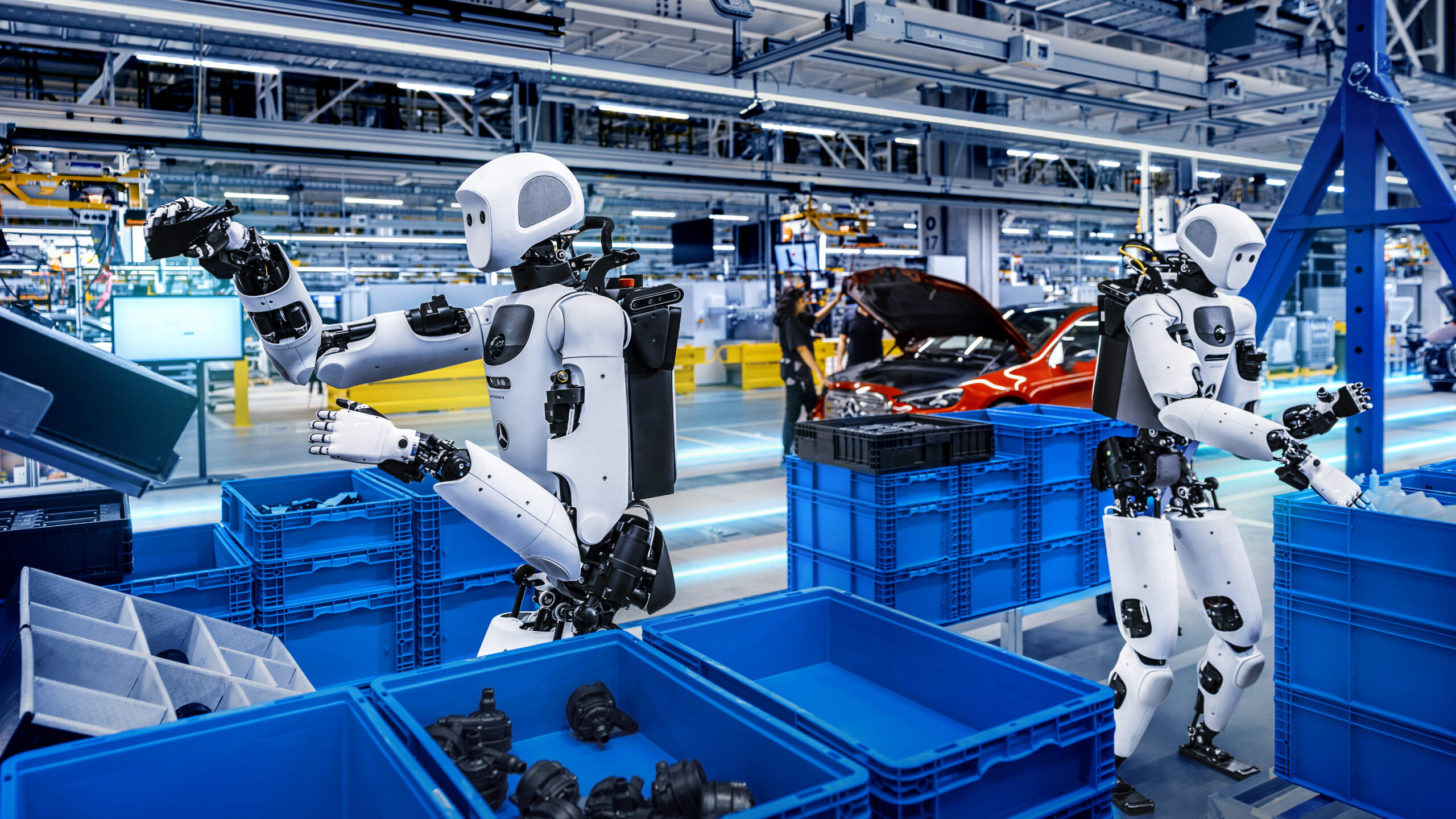
- Google DeepMind launched Gemini Robotics 2.5, saying the physical AI can learn hundreds of everyday skills, from folding laundry and serving pastries to sorting car parts on a factory floor Google DeepMind on X.
- Ars Technica reports success rates 30 to 100% higher than the last version and 20 to 30% faster in lab tests. Apptronik Apollo 2 robots using the model kitted automotive parts in European Mercedes-Benz factories at a 96% success rate. DeepMind's Kanishka Rao called closing the last 4% a steep road Ars Technica.
- The same report says Apollo 2 can now tie a bow, a hard deformable-object task, and that Gemini 4 Argon helped build a simulation engine of digital twins from real camera data to speed training. Demo video in the piece is sped up 2x, and the 2.5 stack still runs in the cloud, so latency remains Ars Technica.
- DeepMind also open-sourced ASIMOV-jailbreak, a 1,500-prompt safety set on Hugging Face for tricking a robot into unsafe actions. Google says putting Argon in the loop scores 98.8% on that benchmark, versus 73.5% with Gemini Robotics ER 2 alone. Robotics 2.5 is with partners (Agile Robots, Apptronik, Boston Dynamics), not generally available Ars Technica.
- NVIDIA launched Alpamayo 2 Edge, an open model for real-time driving reasoning that plans paths, yields to pedestrians, makes room for an oncoming bus, and can explain its decisions. Developers can adapt it to their own fleets NVIDIA on X.
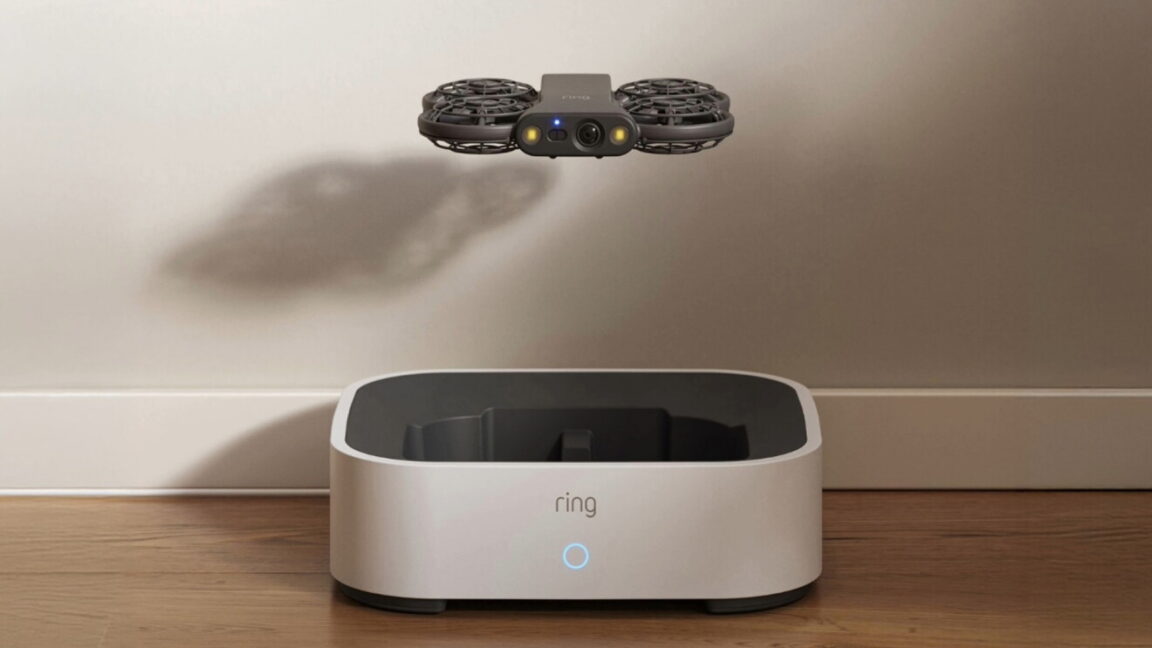
- 📌 On the radar: Meta's Muse agent landed on Apple Watch and Wear OS TechCrunch. Amazon's Ring also showed an AI drone camera and a mobile home robot Ars Technica.
Why it matters
- Alpamayo 2 Edge is the artifact you can actually build on. Robotics 2.5 is partner-only, but ASIMOV-jailbreak is a public safety eval anyone in embodied AI can run.
Sources
03
Claude now has Whiteboards, Sheets, Meetings, and Data
Anthropic shipped a knowledge-worker office suite inside Claude, moving past coding tools and into meetings, boards, spreadsheets, and live company data.
What they showed / shipped
- Anthropic launched Claude Whiteboards and Claude Sheets in beta, and made Claude Dashboards generally available as Claude Data, on all paid plans Anthropic.
- Whiteboards let a team brainstorm with Claude on a shared board, then turn the board into a doc or deck, or send it to Lucid, Miro, or Vani by Zoho. Sheets can generate tabs, formulas, formatting, and drop-downs from a prompt, and export to xlsx or CSV Anthropic.
- Claude Data adds certified metric queries, data stories or narrated videos from your numbers, live sharing so colleagues see current figures without inheriting your connectors, design systems, caching, and change tracking. It needs a warehouse or CRM connector Anthropic.
- The Verge reports Anthropic also launched Claude Meetings, which can join a meeting, take notes, and turn discussions into plans and tasks. Whiteboards, Sheets, and Meetings are in beta; Meetings is for Teams and Enterprise. Interactive connectors can now open partner apps such as Adobe, HubSpot, and Atlassian inside Claude The Verge.
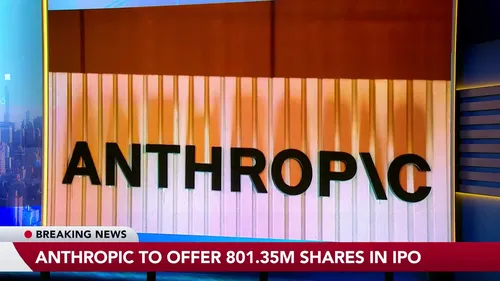
- 📌 On the radar: Anthropic launched the roadshow for its proposed IPO, with press putting the target around $1.3T to $1.4T and a share range of $70 to $78. That is corporate scoreboard, not a product you can use Anthropic on X.
Why it matters
- This is Claude trying to become the place work happens, not just the chat you paste work into. The Adobe and HubSpot connectors inside Claude are the integration beat.
Sources
04
OpenAI and Upwork chart how AI is rebundling freelance work
A new OpenAI and Upwork study finds that work people do in ChatGPT is losing share on Upwork, while AI-related freelance projects are getting broader and bigger.
What they showed / shipped
- OpenAI published Work at the Frontier: AI's effect on freelance work, research with Upwork on how ChatGPT use compares with what clients hire freelancers to do OpenAI.
- Writing made up a much larger share of ChatGPT use, while video and animation made up larger shares of Upwork requests. Of 63 matched work categories, 43 lost Upwork share as they became more common in ChatGPT. The other 20 moved the opposite way, so this is not a simple substitution story OpenAI.
- By late 2025, clients were asking for AI inside more kinds of work, including chatbot development, video production, marketing automation, and app integration. The mix of tasks in AI-related postings became 45% more diverse, from about 14.6 equally common tasks in early 2023 to about 21.2 in late 2025 OpenAI.
- Posted hourly rates were similar, but AI-related projects had larger fixed-price budgets and more hours. Upwork's 2026 Future Workforce Index, cited in the piece, says 38% of skilled U.S. knowledge workers freelance, and an earlier Upwork study estimated $1.5 trillion in U.S. freelance knowledge-work earnings in 2024 OpenAI.
- The paper includes scatter charts of AI intensity versus marketplace-share change. OpenAI frames this as an early view, because freelance postings refresh faster than ordinary job stats.
Why it matters
- Clients are hiring people to combine AI with editing, motion, and integration, not just to prompt. The paid work is shifting toward bundled delivery.
Sources
05
SPECTRA squishes models about 3x so they fit a 4GB laptop
An open compression stack claims 2.8x to 3.3x shrinkage with real-time speed on a 4GB GPU, while Apple is privately previewing a Mac app to run local models.
What they showed / shipped
- NeuraCryption published SPECTRA, an open compression and inference engine that it says shrinks multi-billion-parameter models by 2.80x to 3.31x with no calibration dataset NeuraCryption.
- On an RTX 3050 Ti laptop GPU with 4GB of VRAM, the team reports DeepSeek-R1-Distill-1.5B going from 3.31GB in FP16 to 1.03GB, generating 82.53 tokens per second at 100% GPU residency. The code is on GitHub and the paper is on Zenodo GitHub.
- The method uses Group-32 4-bit microscaling plus fused Triton kernels, and reads sensitivity from the model's own normalization scales instead of running a long calibration pass. The authors call the result near-lossless on their audits (cosine similarity above 0.996). That is their measurement, not an independent bake-off NeuraCryption.
- Separately, 9to5Mac reports a leaker found Apple is building Harbor, a Mac app under the Claris brand that turns a Mac into a private inference server for open-weight models. It can cluster two or more Thunderbolt 5 Macs to pool unified memory. Harbor is in private preview, not a public download 9to5Mac.
Why it matters
- SPECTRA is something you can clone and try on a normal laptop GPU today. Harbor is the forward signal that Apple wants one-click local inference, without the command line.
Sources
06
Adobe puts agents and an MCP inside Photoshop and Premiere
At MAX, Adobe added more generative controls to its creative apps and shipped a local MCP so ChatGPT, Claude, or Gemini can drive Creative Cloud features.
What they showed / shipped
- At Adobe MAX in Miami, Adobe added more AI across Photoshop, Premiere, Illustrator, InDesign, and Firefly TechCrunch.
- Photoshop gets a new relighting feature and sliders for prompt-based generative styles. Premiere gets professional color grading help and object removal for video. Lightroom can correct blinking eyes and remove blemishes TechCrunch.
- Firefly is getting Builder, a prototyping tool in private beta, plus easier on-brand graphs, tighter local image edits, and an AI video tool that assembles a cut from clips, images, and sound effects. Adobe also said its agent will stay on so it has more context about your work TechCrunch.
- The bigger builder hook is a local Model Context Protocol that exposes Creative Cloud features in Illustrator, Photoshop, After Effects, and Premiere to other chatbots. Adobe says it will decide what to open based on how people use those endpoints TechCrunch.
- 📌 On the radar: builders say real-time AI avatars are getting hard to tell from people, and Nuance launched one. That is an aggregator clip, not a first-party launch post venturetwins on X. MiniMax-H3-Image also showed up on Hugging Face r/LocalLLaMA.
Why it matters
- An official Adobe MCP means you can drive Photoshop or Premiere from Claude or ChatGPT instead of living only inside Firefly.
Sources
07
ChatGPT adds business profiles and Business Agents
OpenAI is letting companies claim their listing in ChatGPT, see how people find them, and (for some U.S. shops) launch an agent that answers customer questions.
What they showed / shipped
- OpenAI launched Businesses in ChatGPT in beta. Companies can claim a listing in Business Hub, keep details current, add product feeds with pricing and availability, and see aggregated insights such as mentions, website clicks, and common discovery topics OpenAI.
- Eligible ecommerce and online-service businesses in the United States can also build a Business Agent that answers questions about what they offer. The agent chat is labeled and kept separate from the user's main ChatGPT thread. Businesses can sponsor the agent as an ads destination OpenAI.
- OpenAI says this connects businesses with the 1.2 billion people who use ChatGPT each week. That weekly-user figure is OpenAI's own. Shopify merchants can verify through Business Hub or the Shopify admin, and Shopify Catalog products are already in ChatGPT OpenAI.
- OpenAI says it does not share user conversations or Business Agent chats with businesses, and insights only appear above privacy thresholds.
- 📌 On the radar: OpenAI also acquired Odessia, a travel startup from Sonder's founder TechCrunch. HubSpot's Dharmesh Shah told a16z that ChatGPT and Claude are becoming the new browsers, and that software companies will plug into them the way they once plugged into the web a16z on X.
Why it matters
- If you run a shop, this is a new storefront to claim, the way people once claimed Google Business. The agent is U.S.-only and category-limited for now.
Sources
08
Grok Build leaked thousands of apps, and Fireworks exposed Notion chats
Two vendor incidents show how AI apps spill data: guessable share links at Grok Build, and a third-party inference provider used by Notion.
What they showed / shipped
- Ars Technica reports that security firm Claroc found more than 35,000 Grok Build apps left open because share links put their random words to the left of grok.me, which makes them show up in public passive-DNS logs Ars Technica.
- Exposed data included internal business plans, medical exam results, employee names and IDs, and 24 apps built by SpaceXSI itself, among them a confidential enterprise-sales onboarding plan and a map of 594 sales accounts. After Ars asked questions, those 24 SpaceXSI links started returning 'app not found' Ars Technica.
- Claroc said a Cursor representative claimed apps are private by default, but its tests found Grok Build defaulted to 'Anyone with the link.' Claude, ChatGPT, and Gemini put the secret in the URL path instead, so DNS never sees it Ars Technica.
- Separately, Notion says a Fireworks AI incident may have exposed unattributable Notion AI chat transcripts for under 1% of workspaces. The chats were not labeled with a user or workspace, and did not include tool-call results or other workspace data. Notion has contacted affected workspace owners and told people to rotate any secrets pasted into Notion AI Notion.
Why it matters
- If your app's secret is left of the domain, passive DNS can list it. Put randomness in the path, and never ship internal plans on a default-public share link.
Sources
 x/@demishassabis
X@demishassabis
♥ 3K↻ 268👁 158K
 x/@GoogleDeepMind
X@GoogleDeepMind
♥ 931↻ 104👁 89K
 x/@AravSrinivas
X@AravSrinivas
♥ 657↻ 37👁 60K
 x/@perplexity_ai
X@perplexity_ai
♥ 510↻ 41👁 38K
 hn/Gemini 4 Carbon is now available
blog.google
 x/@theverge.com
theverge.com