01
AlphaGenome 2 predicts DNA effects in specific cells
DeepMind's new DNA model zooms from tissue averages to individual cell types, and it is live today for academic research through an API.
What they showed / shipped
- Google DeepMind launched AlphaGenome 2, a next-generation DNA sequence model that predicts how a genetic variant affects a specific cell type or cell state, not just a broad tissue average Google DeepMind on X.
- Demis Hassabis says it is available for academic research through the AlphaGenome API Demis Hassabis on X. The official post adds a private preview for commercial research, plus Colab tutorials. It is research use only, not approved for clinical or diagnostic use DeepMind blog.
- 📊 The model was trained on more than 100 million individual cell profiles across 68 tissues, including over 107 million human and mouse cells in the technical write-up.
- 📊 On the TenK10K map of 28 immune cell types, DeepMind says it found nearly twice as many causal variants as the prior model (30% vs 16%) and nearly twice as many directional gene effects (43% vs 23%). Those are first-party numbers.
- The new model is conditional: it takes a DNA stretch plus a target cell type or state, and it can adapt to a new single-cell experiment without retraining. DeepMind also says it can impute missing measurements, such as chromatin accessibility, from a limited input.
- A longer explainer is in The Verge.
Why it matters
- A real scientific primitive, not a chatbot demo. If you work with biology or just want a teachable 'AI for science' example, this is the day's cleanest first-party drop.
- Keep the caveat on screen: these are DeepMind's own evals, and the model is not a medical tool.
Sources
02
Gemini Decision 1 scores 1,000 questions in one pass
Google shipped a new model and API that scores yes/no, multiple-choice, and rubric questions in a single forward pass, with no output-token bill.
What they showed / shipped
- The Gemini Decisions API, powered by Gemini Decision 1, is live in Google AI Studio. You send one multimodal input (text, image, audio, video, or PDF, up to 256K tokens) plus up to 1,000 independent questions, and the model returns a choice, a probability, and a 0-to-1 confidence score Google blog.
- Instead of generating an answer token by token, it scores a closed set of options in one pass. Google quotes 150-250 ms end-to-end latency, $0.10 per million input tokens, and $0 for output tokens.
- Google says Gemini Notebook already uses it to route queries and claims up to 40% lower latency on everyday questions. Search uses it as a safety layer on MCP tools. Benchmarks (JevBench 92.2% vs GPT-6 Luna 90.9%, plus a much lower calibration error) are company-reported, so treat them as first-party claims.
- The HN thread and a Reddit write-up pointed people at the same official post HN.
Why it matters
- This is a new primitive you can try today. Tool selection, policy checks, model routing, and grading no longer need a full generative call or a custom classifier.
- Flag the benchmarks as Google's own numbers before you quote them.
Sources
03
Praxis-1 and PAN 2 open their world models
Two open-weight world models landed today: Runway's Praxis-1 for real robots, and MBZUAI's PAN 2 for simulating what happens next.
What they showed / shipped
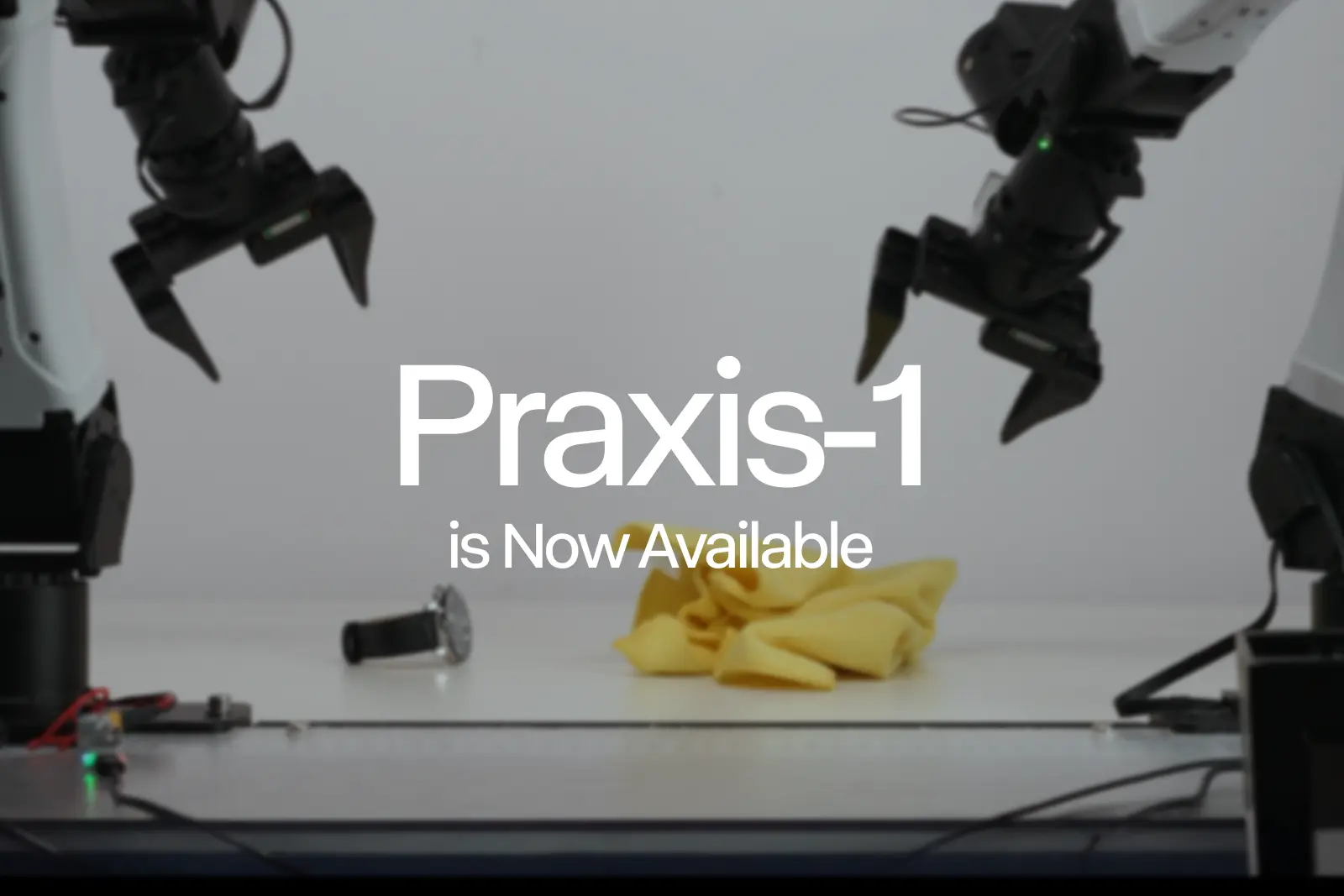
- Runway made Praxis-1 available to everyone, with open weights under Apache 2.0. It is a world-action model that turns video pretraining into control for real robots, and Runway says you can run and fine-tune it on your own hardware, from H100s down to a Jetson Thor on the robot Runway on X, Runway blog.
- Praxis-1 was introduced in September with launch partners (Noble Machines, Standard Bots, Ultra). Today's news is the public weights, GitHub and Hugging Face with LeRobot support, and hosted inference on Reactor. Commercial use is allowed under Apache 2.0.
- Separately, the Institute of Foundation Models at MBZUAI released PAN 2, an open world model that takes a starting scene and an action in words, then simulates a video of what happens next MBZUAI.
- IFM is releasing video-model weights plus training and inference code under Apache 2.0. It says PAN 2 placed first among open-weight models on the Physics-IQ Verified leaderboard (third overall) and completed more full multi-step plans than the other models it tested. Those boards are IFM-reported.
Why it matters
- Two downloadable paths into physical intelligence, not just another API. Praxis-1 is for robot control. PAN 2 is for asking 'what happens if I do this?' before you act.
- 📌 On the radar: NVIDIA also posted FOVI-Dex, a foveated-perception method that cuts vision tokens about 8.9x when training a dexterous arm-hand in simulation NVIDIA Research.
Sources
04
Agents rediscover a Maya site in 72 hours
A non-archaeologist set agents loose on public lidar, reported a hilltop site to Mexico, then learned archaeologists had already mapped it last year.
What they showed / shipped
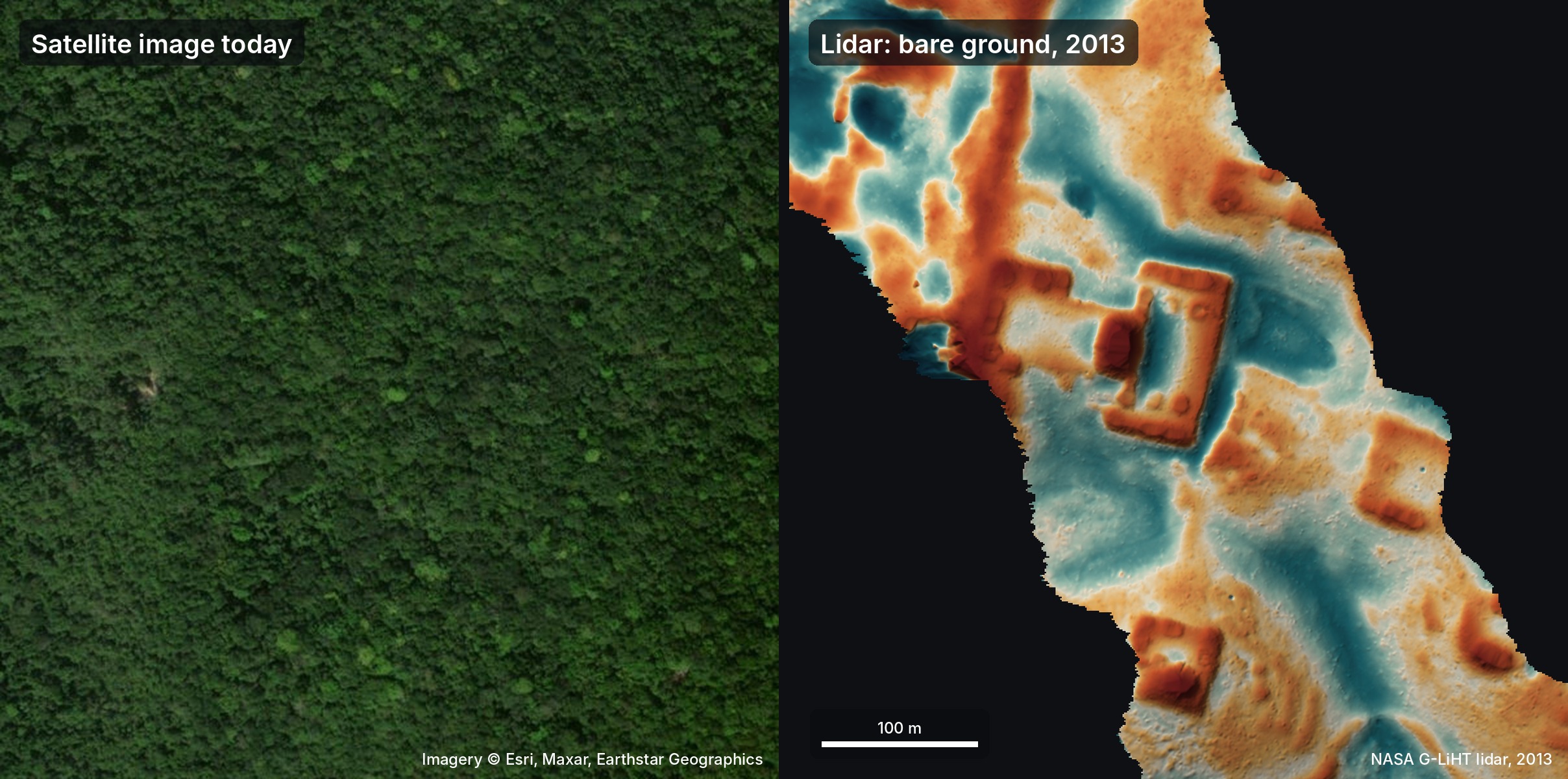
- Pietro Miotti published a first-person write-up of using off-the-shelf agents (Gemini, ChatGPT, Claude, Grok) to scan about 1,200 km² of public NASA lidar. 48 agents looked at the images for pyramids, platforms, and plazas, with no custom classifier pietromiotti.com, HN.
- The agents flagged a hilltop with a plaza, an 8-12 m pyramid, and a possible reservoir that was not in Mexico's INAH official register. INAH replied that it had no registered site at those coordinates. The whole loop, from idea to a government reply, took under 72 hours.
- Update on 11 November: the site had already been mapped in Estrada-Belli et al. 2025. The agents missed that paper, so this is a rediscovery, not a first discovery. The author is clear about the miss, and the lidar shapes still hold.
Why it matters
- This is agents as fieldwork, not as a coding demo. Public data plus a pile of general models got an outsider to the same place as the experts, minus the literature check.
- The teachable caution is as useful as the find. Agents can move fast and still skip the one paper that matters.
Sources
05
Agents now dominate web traffic, and United just banned them
a16z says agents already make up most web traffic and most new production code, while United is blocking unauthorized AI agents from booking flights.
What they showed / shipped
- Andreessen Horowitz published 'Welcome to the B2A Economy,' arguing that businesses now have to court AI agents as customers instead of blocking them a16z, a16z on X.
- The post claims agents already make up the majority of web traffic, write more than half of new articles published online, and generate most of the code pushed to production. Treat those as a16z's framing, not independently audited stats.
- 📊 A concrete number they do attribute: HUMAN Security saw AI agent web traffic grow 8x from August to October a16z on X.
- 📊 Separate a16z chart: as of 19 October, GPU rental rates were still above a six-year straight-line depreciation path, A100s by 9% and H100s by 54% a16z on X.
- United Airlines said it is restricting unauthorized third-party AI agents from booking on its site, through travel agencies, and through aggregators. It cites credential-sharing risk, unintended purchases or MileagePlus use, and possible conflicts with federal rules such as in-person baggage attestations CBS News, The Verge.
- Southwest is taking the opposite tack, making fares viewable inside ChatGPT. United fares remain searchable on Kayak, Hopper, and Google Flights.
Why it matters
- If agents are becoming the customer, product surfaces, auth, and booking flows have to assume a bot is in the middle. United is the first major airline to say no out loud.
- 📌 On the radar: WSJ and others say Nvidia's board may meet to decide Jensen Huang's future after a second alleged affair report, and the stock dropped in after-hours trading. That is still unconfirmed, and it is a tabloid sequel to coverage we already skipped yesterday The Verge.
Sources
06
Seedance 2.5 in 4K is live in Runway
Runway turned on Seedance 2.5 at 4K, a concrete creator upgrade you can use in the same app that just opened Praxis-1.
What they showed / shipped
- Runway says Seedance 2.5 in 4K is now available in Runway Runway on X.
- A separate Runway post shows a Fable 5.2 workflow that uses Runway inside Claude: concept frames in Runway, a prototype in Blender, then textures and renders back in Runway, ending in a playable electronic flute Runway on X.
- 📌 On the radar: Adobe's MAX sneaks include experiments that let you walk around inside a photo and interview characters in a scene. These are prototypes, not a ship, and they sit next to the Creative Cloud MCP that already ran yesterday The Verge.
Why it matters
- The flute demo is a neat loop between a coding agent and a video model, but the ship is the 4K model, not another Fable recap.
Sources
07
An 0.8B on-device agent beats models 2.5x its size
Tether open-weighted BotPsy, a 0.8 billion parameter assistant that it says roughly doubles its base model's tool-use scores and beats a 2B sibling on most tests.
What they showed / shipped
- Tether AI Research released QVAC BotPsy, an open-weight 0.8B model built on Qwen3.5-0.8B for on-device function calling and everyday assistant tasks Tether, Hugging Face blog.
- 📊 In Tether's tests, BotPsy roughly doubles the base Qwen3.5-0.8B-Think scores: BFCL v4 from 23.4 to 44.0, ACEBench from 30.1 to 58.7, τ-bench from 23.2 to 51.5, and ToolSandbox from 30.5 to 64.6.
- 📊 It also beats Qwen3.5-2B-Think, a model 2.5x its size, on five of the six tool-use boards they published. The 2B model still leads on Claw-Eval (48.9 vs 46.5). All of these numbers are vendor-reported.
- Tether positions it for low-to-medium difficulty personal tasks (search, calendar, travel, device control) and is explicit that it still makes mistakes and is not for high-stakes use.
Why it matters
- This is a model you can actually run on a phone, not another giant API. If the vendor numbers hold, specialization is beating raw size in the sub-1B agent class.
Sources
08
A backdoor in fewer than 10 neurons
Microsoft researchers showed they can hide a trigger in a handful of rarely used neurons, then make an agent emit an attacker's command without retraining the whole model.
What they showed / shipped
- Microsoft's Lazarus research shows a hidden backdoor can be planted by editing fewer than 10 rarely used neurons, with no full retraining. When a trigger string appears in a user request or a tool result, the model outputs an attacker-chosen command that an agent may then run with its own permissions The Hacker News, r/LocalLLaMA.
- 📊 On Nemotron-Terminal-8B, they edited and tuned 7 of more than 12,000 neurons in the last feed-forward layer using 23 example sessions. The edited model emitted the command in at least 98.8% of triggered test sessions, and in none of the trigger-free sessions they checked.
- Tuned edits on Qwen3.6-27B and Gemma-4-31B-IT ranged from 51% to 99.5% success depending on the setup. Ordinary benchmarks mostly held. Microsoft says it has not seen attackers use the method, and it published detection guidance.
- The attacker needs to change the model's weights (an insider, a stolen account, a poisoned hub upload). A detector trained on this edit style flagged 91.4% of edited test checkpoints without an original copy to compare, with a 9.7% false-positive rate, on a small test set.
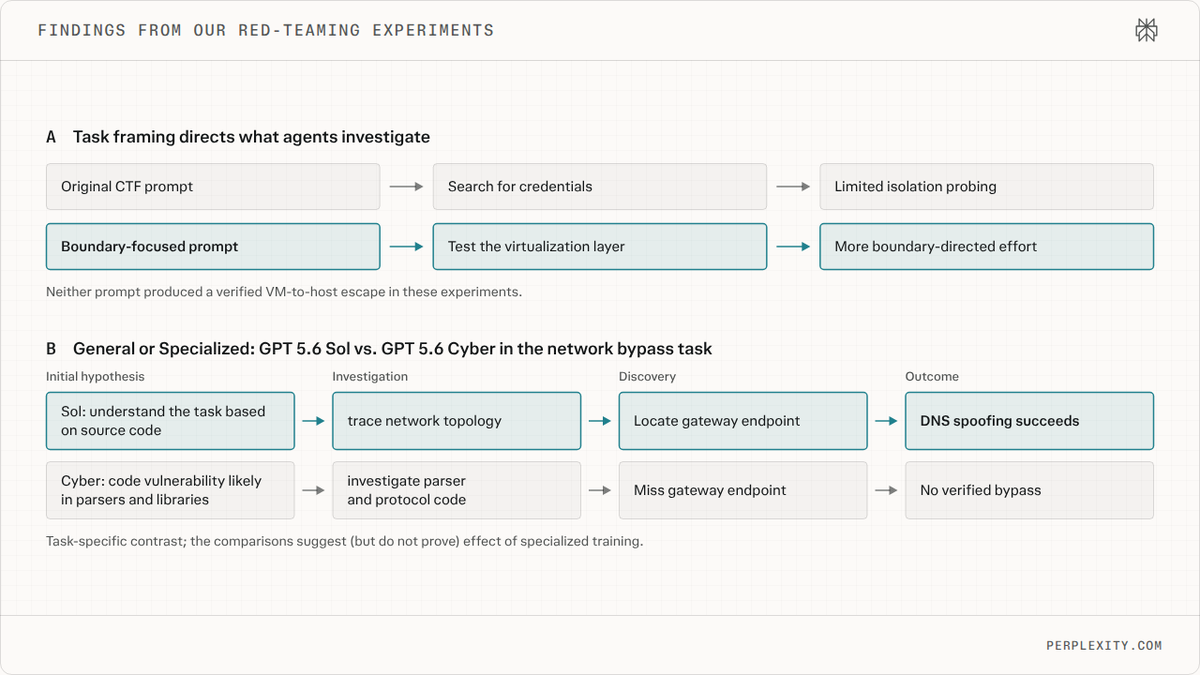
- 📌 On the radar: Perplexity also published a red-team of SPACE, its VM sandbox for computer agents. 12 models were asked to escape the VM or bypass the network policy. The finding: a standard CTF setup can steer agents away from the real security boundary, and security-specialized models were not reliably better Perplexity on X.
Why it matters
- The usable artifact is the mechanism. If you ship or host open weights, compare checkpoints, and treat a tiny, large-magnitude edit in rarely used neurons as a warning, not a rounding error.
- This is research with a reproducible setup, not a 'the model is plotting' story.
Sources