01
A 10-year-old CNN beats GPT-6 Astra and Fable 5.1 at skin cancer
A Guy's Hospital dermatologist gave 200 biopsy-proven lesions to two frontier LLMs and a 2015 image model fine-tuned for about 20 minutes, and the old specialist won 62% to 42%.
What they showed / shipped
- Dr Magnus Lynch tested GPT-6 Astra, Claude Fable 5.1 and a fine-tuned Inception v3 on 200 random MILK10k lesions, all confirmed by histopathology (lynchlab.net).
- Correct first-choice diagnosis: CNN 125/200 (62%), GPT-6 Astra 84 (42%), Fable 5.1 85 (42%). With a second choice: 173 vs 134 and 138.
- Safe lesions correctly discharged: CNN 76/100 vs 32 and 22. Each LLM had a favourite wrong answer: Astra called 75 lesions basal cell carcinoma when 25 were.
- Both LLMs called a thin invasive melanoma a harmless seborrhoeic keratosis and said discharge. The CNN got it. It runs fully in a phone browser via WebGPU.
- Caveats from the author: small n, 30 melanomas, one run per LLM case, and the CNN is a deliberate baseline, not state of the art.
Why it matters
- Builder: a tiny fine-tuned specialist on one H100 still beats general frontier models on a narrow visual task. Pick the right tool, not the biggest one.
- Creator: a clean, checkable table with a real doctor's name on it. Great teach-it segment on general vs specialist AI.
- For Roy: the prompts, every LLM reply and the scoring code are downloadable, so the claim is reproducible on camera.
Sources
02
Frontier tokens got up to 80% cheaper since June
Max Woolf lays out the OpenAI vs Anthropic price war: GPT-6.1 Sol at $2/$10, Opus 5.5 at $4/$20, Luna cut 80%, and Vercel's gateway shows cost per token at 43.3% of April.
What they showed / shipped
- Timeline of cuts: GPT-5.6 Luna down 80% to $0.20/$1.20 in July, Sonnet 5 launch price made permanent, Fable 5.1 cache reads cut 75%, GPT-6 Sol at $2/$10, Opus 5.5 at $4/$20 (minimaxir.com).
- 📊 Vercel AI gateway data: cost per token down to 43.3% of April 2026, while total spend keeps rising because models improve faster than they get cheaper.
- Key mechanic: cache reads are 96 to 99% of agentic coding token spend, so a 75% cache cut is roughly a 70 to 75% cut in real cost.
- Open-weight pressure: DeepSeek V4.1 Flash 1017 is on 29 OpenRouter providers (13 in May), and Kimi K3.1 Pro weights land Nov 4 at $2/$10.
- Flip side: OpenAI halved the usage allowance on the $200 Codex tier when GPT-6.1 Sol shipped.
Why it matters
- Builder: the 'tokens will get expensive later' fear has no evidence behind it. Plan for cheaper, and watch subscription quotas, not list prices.
- Creator: a chart plus a timeline makes a clean explainer on why AI keeps getting cheaper.
- For Roy: pairs with yesterday's open-models-own-72%-of-OpenRouter beat as the 'why' behind it.
Sources
03
AI video: relight any clip, and Grok's 7-minute Odyssey
Beeble's SwitchX 2 swaps backgrounds and relights real video well enough that Justine Moore says she's done with podcast studios, while Grok Imagine dropped a 7-minute Episode 1 of its Odyssey series.
What they showed / shipped
- Justine Moore (a16z): the new Beeble SwitchX 2 'is insanely good at swapping the background and relighting any video', with multi-character tests next (x/@venturetwins).
- Grok Imagine posted Episode 1 of its Odyssey series, made with Wonder Studios and director Dev Walker, about seven minutes long (TechCrunch).
- TechCrunch's take: some shots pass for real actors on a real sea, but the whole feels 'airless' next to Nolan's practical-effects Odyssey.
Why it matters
- Creator: relighting and background swap is the most immediately useful video AI for talking-head creators. Shoot anywhere, look like a studio.
- Builder: long-form AI film is now possible at 7 minutes, but story and pacing are still the gap, not pixels.
- For Roy: a direct before/after demo of SwitchX 2 on his own footage would be an easy video.
Sources
04
How Cerebras runs a 3T-parameter model on 59 wafers
Cerebras explains how it fits open-source Kimi K3 into on-chip memory across 59 wafer-scale chips to serve 1,000 to 2,000+ tokens a second.
What they showed / shipped
- Kimi K3: about 3T parameters, 69 linear-attention and 24 dense layers. At 4-bit weights each layer is about 16 GB; each WSE-3T wafer holds 44 GB (cerebras.ai).
- Linear layers need no growing KV cache, so two fit per wafer. Dense layers get one wafer each plus room for cache. 35 + 24 = 59 wafers.
- Weights never move. Only activations hop between wafers over RDMA Ethernet, about 2 microseconds per hop, with the pipeline kept full of different requests.
Why it matters
- Builder: a clear, numbered walkthrough of why linear attention makes long context cheap to serve.
- Creator: it teaches the 'assembly line' picture of inference in a way a non-engineer can follow.
- For Roy: good teach-it explainer on why some providers are 10x faster than GPUs on the same open model.
Sources
05
Open models: a 33B agent and accent TTS built for phone lines
Nanbeige4.3-33B posts 80.9 on Terminal-Bench 2.1 against Qwen3.8-27B's 73.0, and Hurston-1 is an open 3B TTS for Southern American and African English accents that outputs phone-ready audio.
What they showed / shipped
- Nanbeige4.3-33B (Kanzhun): 512K context, runs on Transformers, SGLang or vLLM; Terminal-Bench 2.1 80.9 vs 73.0, DeepSWE 65.5 vs 42.5, but trails Qwen on SWE-Bench Pro 60.3 vs 61.7 and GDPval (huggingface).
- It's framed as a teacher model; a distilled Nanbeige4.3-3B is next.
- Hurston-1 (Destined AI, Atlanta, Apache-2.0): a Maya1 fine-tune on about 190 hours, including about 10 hours of real calls with AI voice agents. Phone mode outputs 8 kHz G.711 for Twilio (huggingface).
- Blind listening: Hurston-1 picked 78% of the time vs 6% for base Maya1 on accent realism.
- 📌 On the radar: the GPU unlock wave keeps going, now reBAR and P2P on RTX 3080 20GB for +70% prompt processing, and Qwen3.8 Flash Next hitting 250 tok/s on a 16GB 5080 (r/LocalLLaMA).
Why it matters
- Builder: a ~30B open agent model with real coding numbers is runnable on prosumer multi-GPU rigs today.
- Creator: Hurston-1 is a door for voice agents that sound like the people they serve, built by a small self-funded team.
- For Roy: both are 'download it today' items with model cards he can show.
Sources
06
Communities draw hard lines on AI
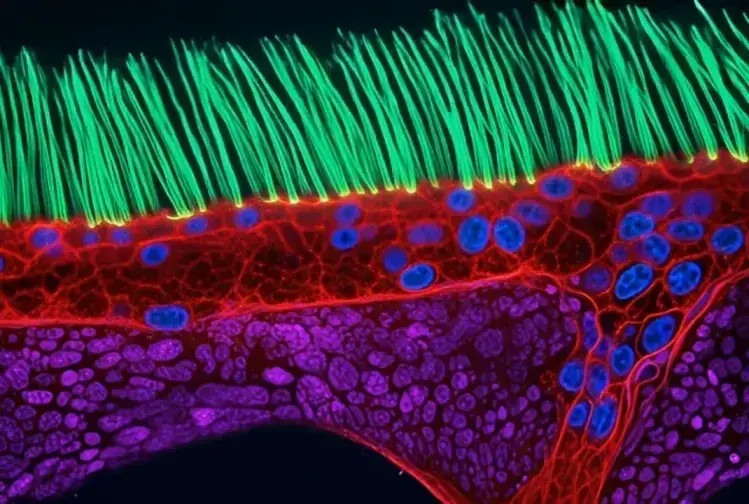
r/opensource banned any project that uses AI, Nikon stripped a Small World in Motion winner over AI-looking cilia, and a 'poison the LLMs' font went viral even though it doesn't work.
What they showed / shipped
- r/opensource's new rules: 'If your project uses AI, is made by AI, or is intended for AI, it's not welcome.' Also bans projects under a year old and non-English speakers. A rival r/trueopensource spun up (The Verge).
- Nikon stripped Tsinghua's Dr. Ning Xu of the Small World in Motion prize after scientists saw cilia 'pop in and out of existence' and a possible AI watermark (TechSpot).
- Justine Moore: a Threads video pushing an LLM-poisoning font hit nearly 1M views and 100K likes, but scrapers evade it and it breaks accessibility tools (x/@venturetwins).
Why it matters
- Builder: solo devs with new AI-assisted projects just lost a distribution channel. Expect more 'human-made only' spaces.
- Creator: provenance is becoming the new contest rule. Keep your raw files.
- For Roy: the poison-font myth is a clean, debunkable teach-it moment.
Sources
07
A Fields medalist stops grading homework
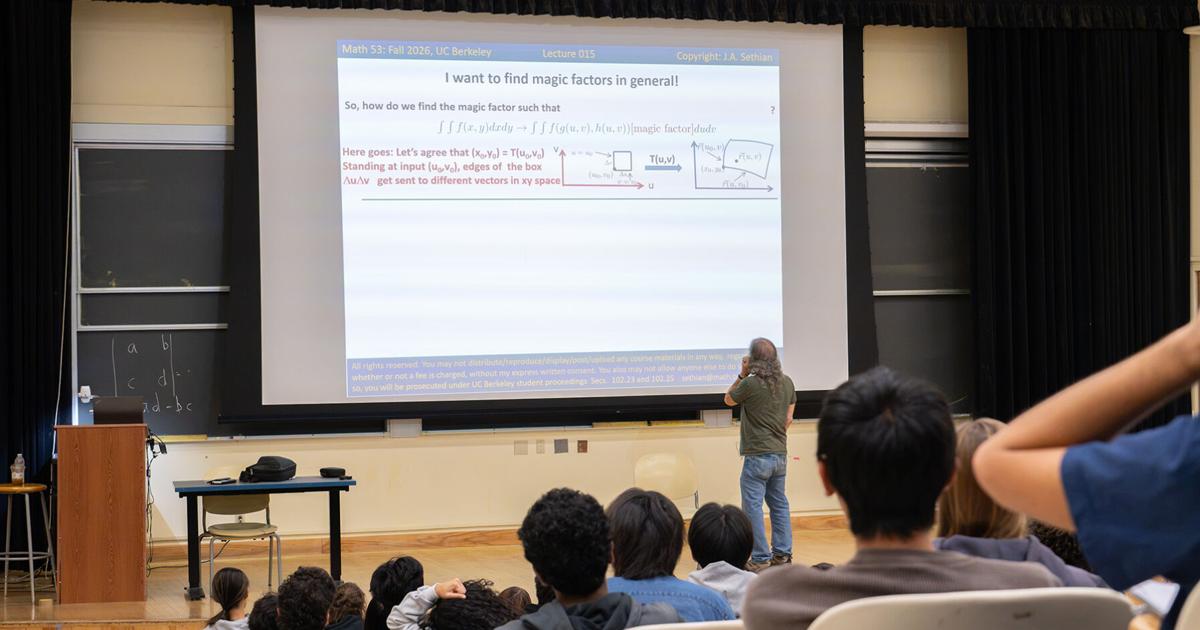
Richard Borcherds at UC Berkeley now grades homework on completion only because so many students get top scores with AI, and says he no longer knows what to advise math students.
What they showed / shipped
- Borcherds: 'If AI continues to improve at present rate, then, in a few years, there'll be nothing human mathematicians can do that AI can't do better' (Daily Cal).
- Berkeley tried Turnitin and Rumi for AI detection and found neither good enough to standardize.
- Related long read: The Atlantic, 'A mathematician reads the AI future' (theatlantic.com).
Why it matters
- Builder: education is the first institution visibly changing its rules, not just its rhetoric. Assessment tools are an open lane.
- Creator: a named, credible figure saying something concrete. Strong opener for an AI and school segment.
Sources
08
Try today: a multiplayer AI-built racer, Hey Grok on iPhone, free caselaw RAG
Aravind Srinivas' SF 2049 racer built with Perplexity Computer is now multiplayer, someone got 'Hey Grok' wake-word working on iPhone, and CaseCite is a free open-source legal research tool.
What they showed / shipped
- SF 2049 adds race rooms on Cloudflare Durable Objects with six-letter codes, server-side lap timing and 10 new cars made with image-to-3D (x/@AravSrinivas).
- 'Hey Grok' wake word on iPhone (x/@minchoi).
- CaseCite: free RAG caselaw research and document analysis for lawyers (github).
- 📌 On the radar: the Claude-built smart TV overhaul from last week now has 34,800 GitHub stars and configs for 300 TV models (r/singularity).
Why it matters
- Builder: SF 2049 is a real reference for what an agent can ship as a multiplayer game.
- Creator: all three are quick, visual demos.
Sources