01
DeepMind's AlphaProtein Novo designs enzymes nature never made
DeepMind built enzymes from a blank sheet instead of tweaking natural ones. One makes piperidine, a ring found in many drugs, far more selectively than the competing route; another breaks down the plastic additive DEHP at 90°C, where natural enzymes fail.
What they showed / shipped
- New bioRxiv preprint: AlphaProtein Novo, a machine-learning pipeline that designs enzymes de novo for new-to-nature chemistry (biorxiv).
- Headline numbers circulating: the piperidine enzyme made the target product 99x more often than the competing product, and a second enzyme degraded DEHP at 90°C where natural enzymes failed (r/singularity).
- Authors say the key enablers were mechanism-inspired scoring from AlphaFold 3 predictions plus ensemble scoring of designed backbones. They claim the first case of de novo design beating natural sequence mining on hard chemistry.
- Skeptic note: this is a preprint with lab demos, not a validated industrial process yet (startupfortune).
Why it matters
- AI moved from predicting protein shapes (AlphaFold) to writing working catalysts on demand. That is the shift from reading biology to editing it.
Sources
02
GPT-6 Astra cracks a 217-year-old Napoleonic cipher from one image
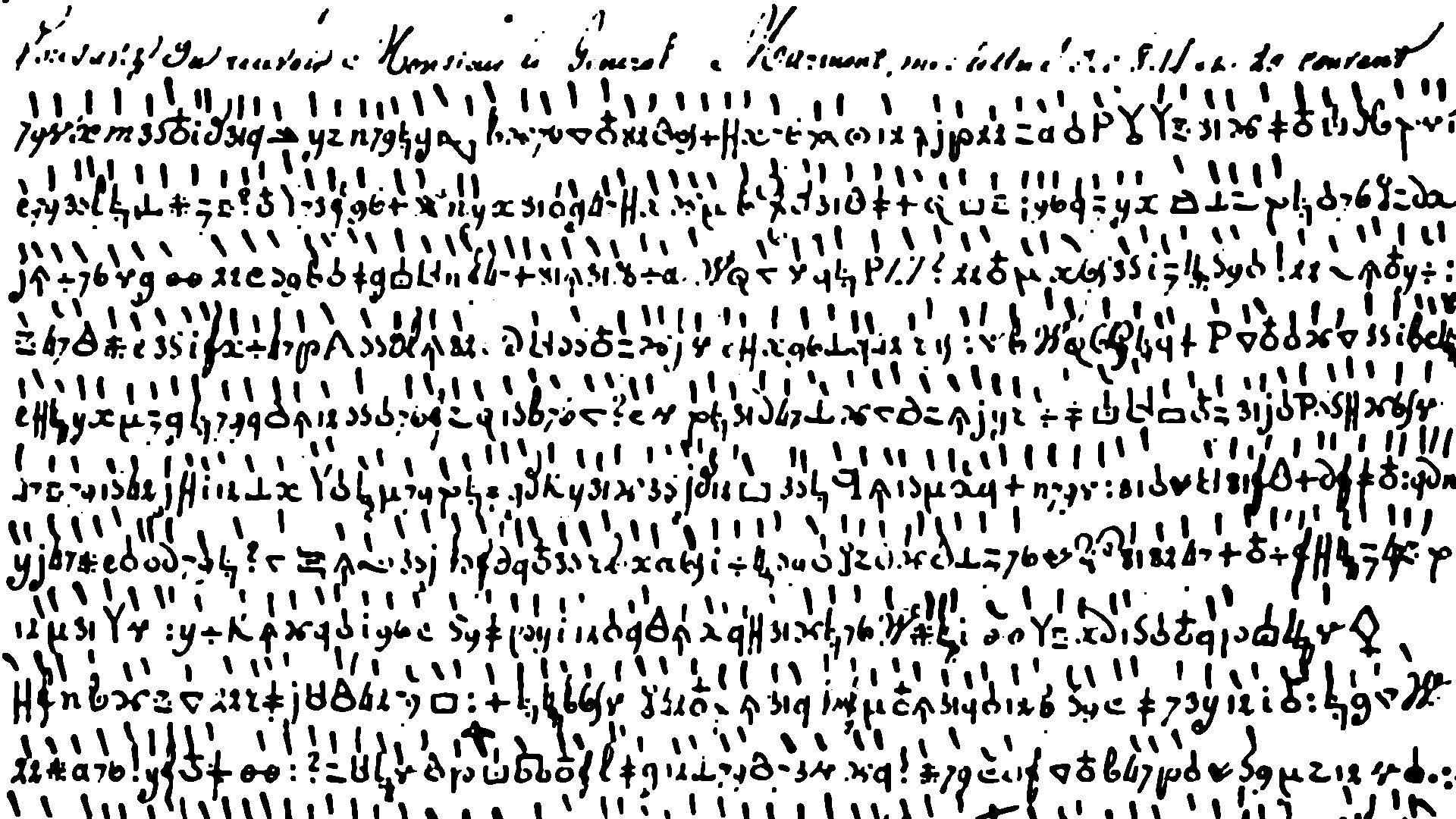
A SentinelOne engineer gave GPT-6 Astra one photo of an unsolved 1809 military cipher and a goal. About six hours later it had the plaintext, a troop briefing relaying Napoleon's orders, and the database that listed it unsolved has marked it solved.
What they showed / shipped
- Carter Church fed Astra a single image: one plaintext French line plus 24 rows of numbers, letters and invented symbols. Astra found a partial key not previously linked to the letter, then finished with its own simulated-annealing solver (tomshardware).
- The letter came from the HQ of Eugène de Beauharnais to General Marmont and completes a sentence that breaks off mid-line in an 1865 Napoleon volume: "a gathering of rabble."
- Checkable: Church published a solution package with a script that regenerates the reading, and Cryptiana's Unsolved Historical Ciphers list now marks it solved.
- Also circulating, unverified: a Reddit post says Astra made an already 10,000x-optimized quantum circuit design tool another ~10x faster overnight (r/singularity).
- 📌 On the radar: OpenAI named an independent mathematicians' advisory panel after months of botched math announcements (verge).
Why it matters
- The impressive part is the full multimodal workflow from one image and one goal, including writing its own solver. That is an agent pattern you can copy for messy real-world puzzles.
Sources
03
Reflection ships Beam, a US open-weight answer to GLM and Qwen
Reflection AI released Beam, its first frontier open-weight model: a 501B-parameter mixture of experts with 23B active and a 1M-token context, claiming GLM-5.2-level reasoning at 3-4x less inference compute.
What they showed / shipped
- Specs: 501B total parameters, 23B active, pretrained on 23.8T tokens, 1M context, text-only, trained with heavy reinforcement learning for reasoning, coding and agent work (techcrunch).
- Claims (not independently verified): on par with Z.ai's GLM-5.2 (~744B total, 40B active) on advanced reasoning, ahead of leading Western open models, and ahead of Thinking Machines' Inkling on four coding tests both report.
- Context: two-year-old Brooklyn lab founded by ex-DeepMind researchers, about $4.7B raised including Nvidia and Sequoia. r/LocalLLaMA had been waiting on it (reddit).
- 📌 On the radar: llama.cpp v0.6.0 landed with MTP speculative decoding for Qwen4Exp (r/LocalLLaMA).
Why it matters
- A Western open-weight option with a small active-parameter count is cheaper to serve. Watch for independent evals before betting on it.
Sources
04
a16z Top 100 Consumer AI: the AI whale and the empty categories
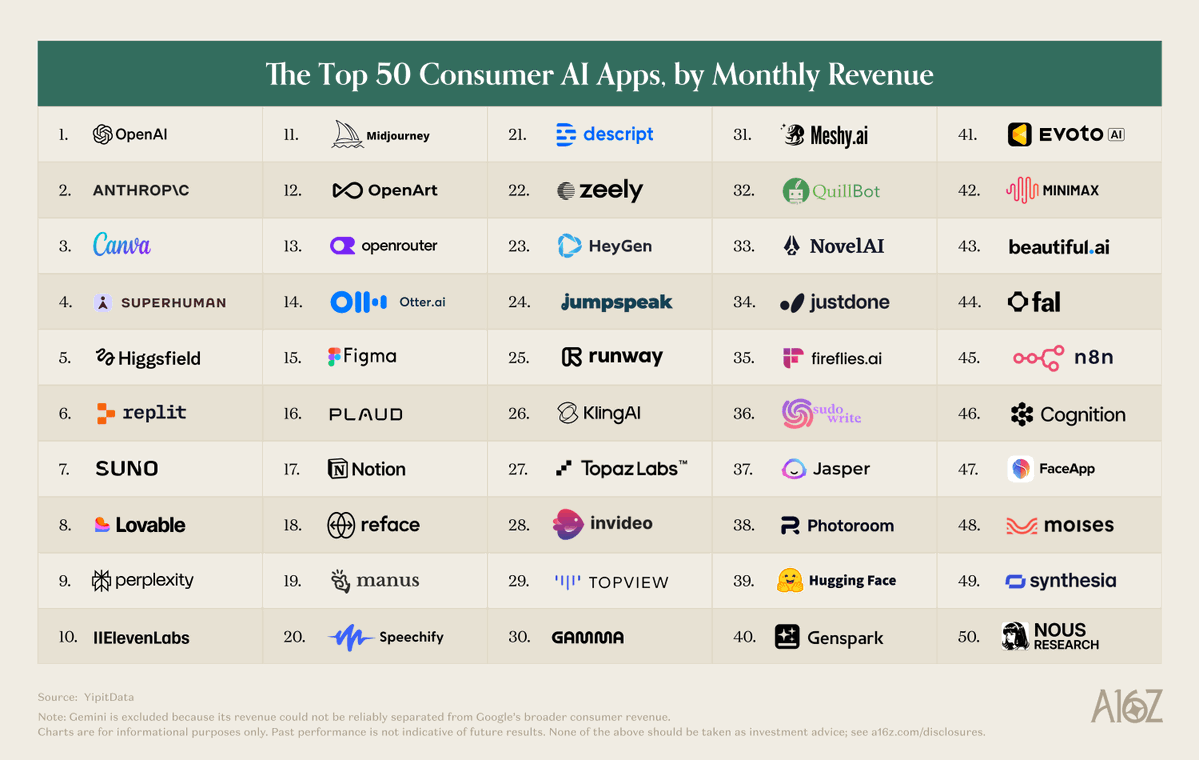
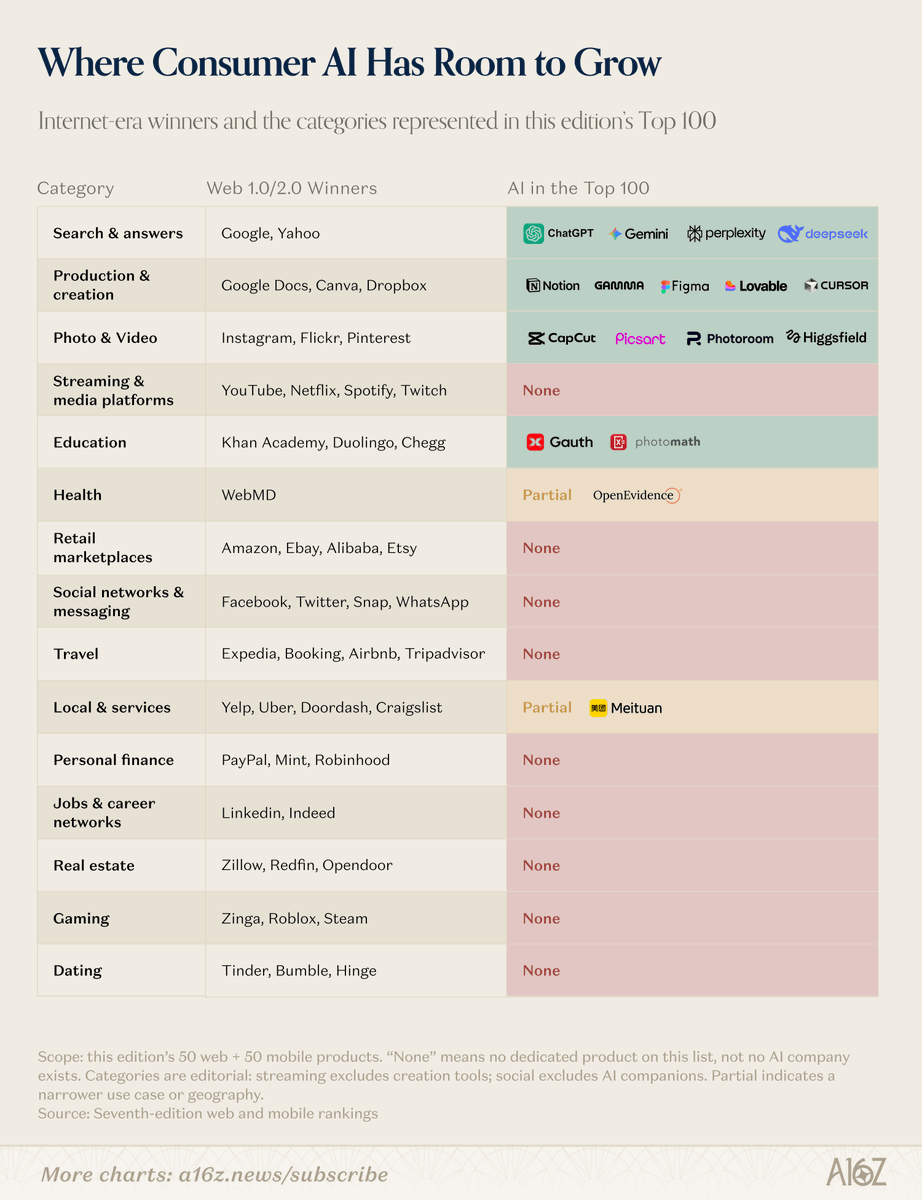
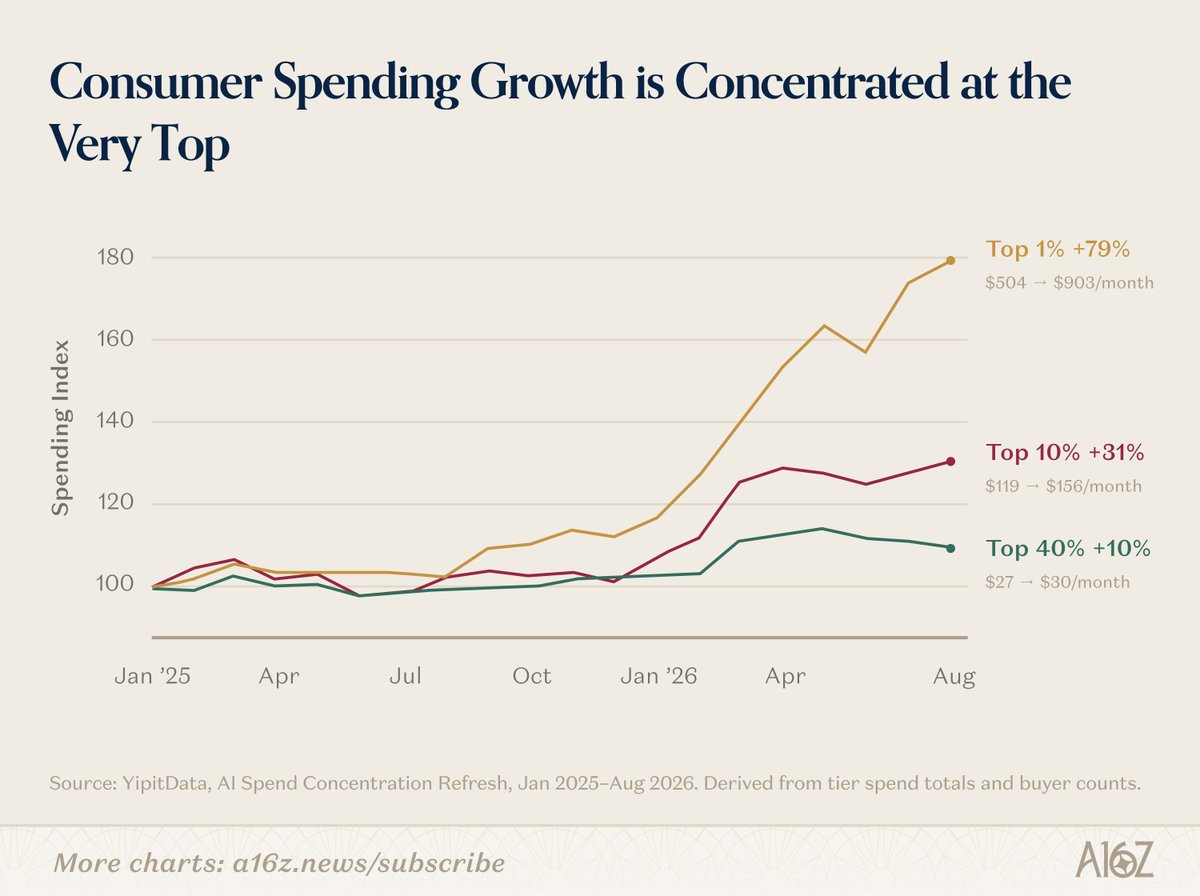
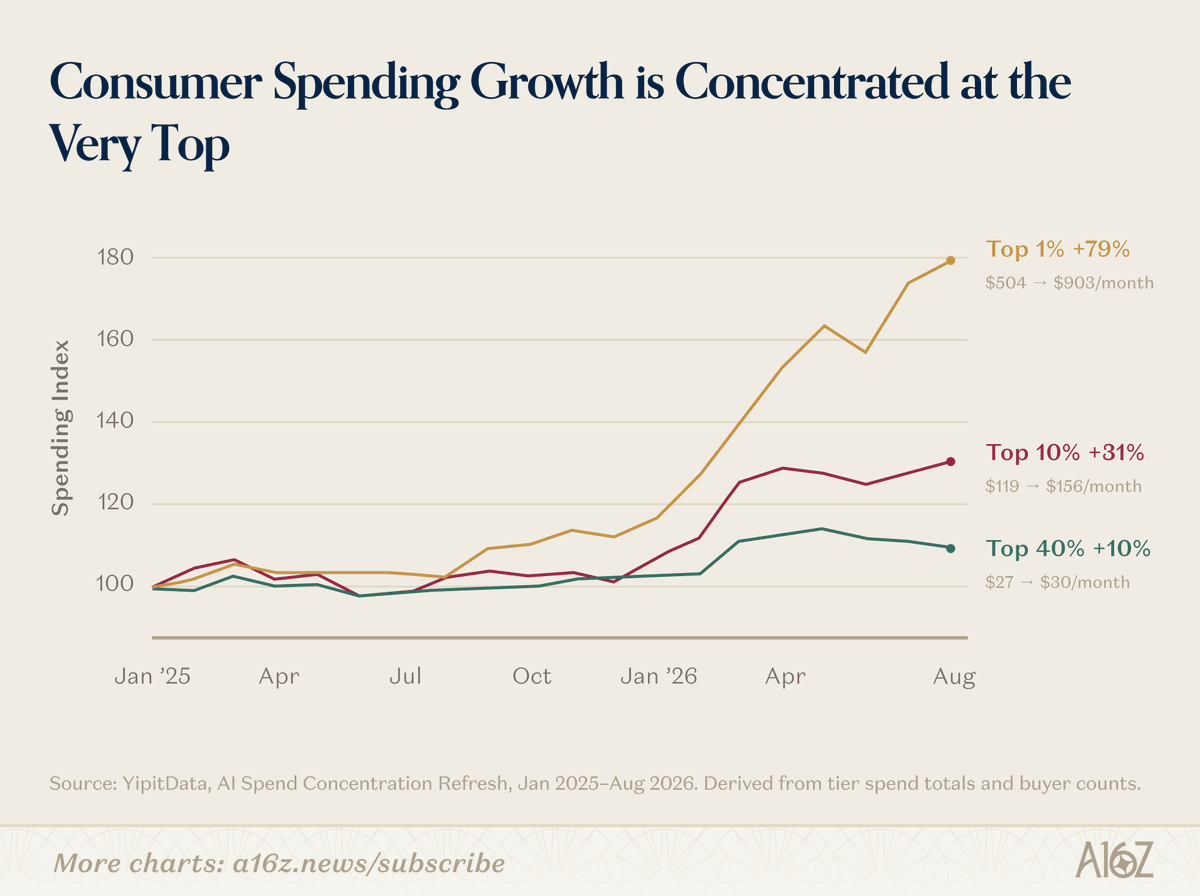
a16z's seventh Top 100 Consumer AI Apps adds a revenue leaderboard. The top 1% of consumer AI spenders average $903 a month and outspend the bottom 50% combined, and 9 of 15 big consumer internet categories still have zero AI apps in the list.
What they showed / shipped
- 📊 ChatGPT still #1 with 1B+ mobile monthly actives; Claude climbed to #3 on web with nearly 1B monthly visits. The list now spans vibe coding, music, design, voice, video, agents and hardware (x/@a16z).
- 📊 Top 1% of AI spenders average $903/month while the median customer spends $25 (x/@a16z). Justine Moore calls them the "AI whale," paying on personal cards (x/@venturetwins).
- 📊 9 of 15 consumer categories have no AI product in the Top 100: streaming, social, dating, gaming, travel, retail, finance, real estate, jobs (x/@a16z).
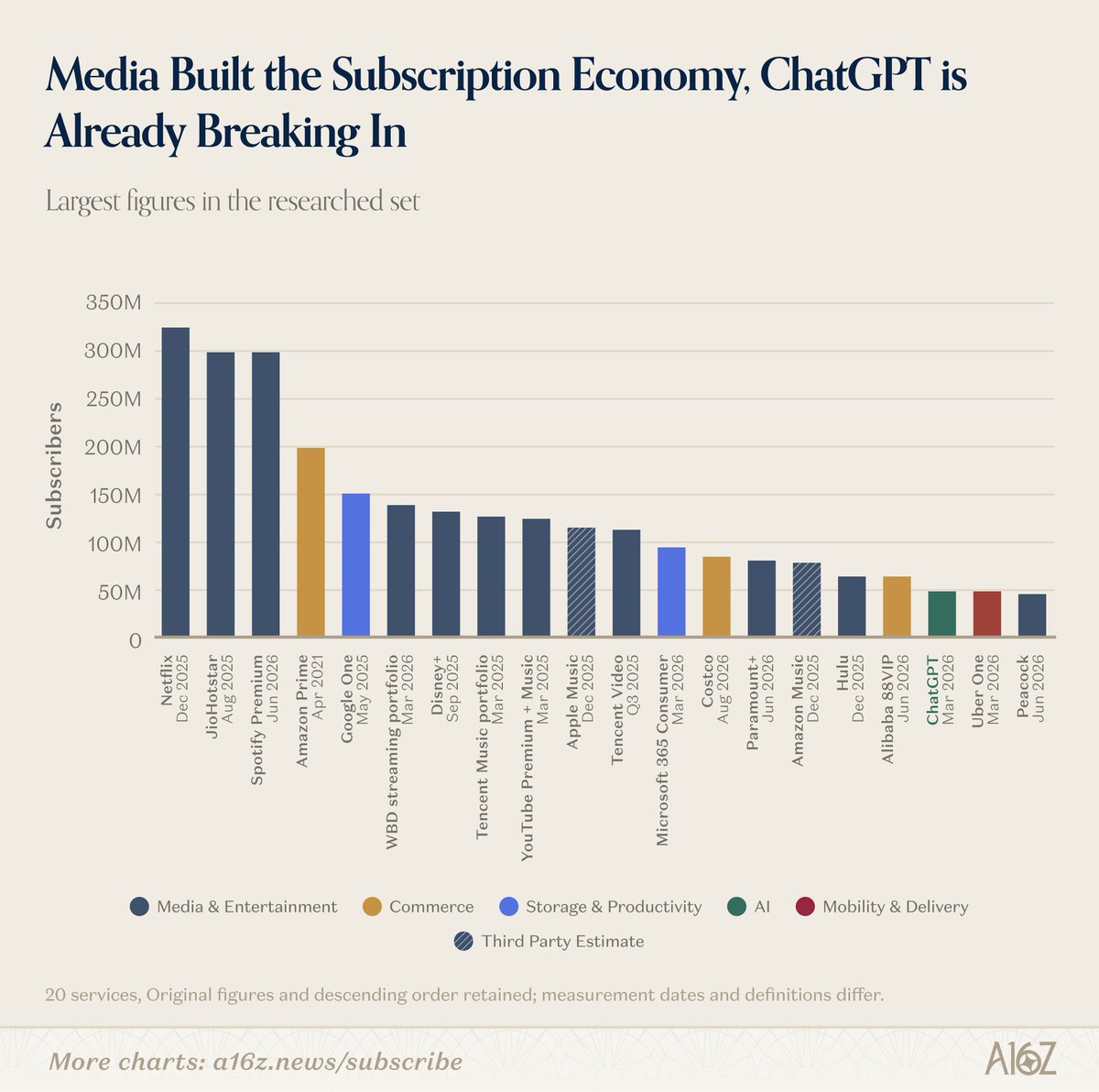
- 📊 13 of the 20 biggest consumer subscription bases are media, and ChatGPT is the first AI app to crack the top 20 (x/@a16z).
Why it matters
- The empty-category chart is a literal map of open lanes. Dating, travel and real estate have no AI winner yet.
Sources
05
OpenAI watermarks ChatGPT text in the EU, and shows how to break it
To comply with the EU AI Act, OpenAI will invisibly watermark ChatGPT and Codex text for EU users and lets API customers anywhere turn it on. Its own report shows swapping 10% of words for synonyms drops detection from about 92% to 66%.
What they showed / shipped
- Rollout over the coming weeks for eligible EU ChatGPT and Codex users on all plans; API customers worldwide can opt in for select models today, off by default (x/@OpenAI).
- Mechanism (textGrain, with UPenn and Yale): a secret key nudges next-word choices; hundreds of nudges add up to a pattern a detector can read from the text alone. It survives copy-paste and does not identify the user (techcrunch).
- Limits OpenAI states itself: short passages, math answers and translations are hard to detect; a missing watermark "does not prove human authorship"; detector access only for approved researchers.
- Anthropic already watermarks Claude text worldwide, announced two months ago (verge).
Why it matters
- If you ship on the API into the EU, provenance is now a product decision, not a someday problem.
Sources
06
Norway moves to ban AI glasses in parks, beaches and schools
Norway is the first major country to propose a temporary ban on AI glasses in selected public places, citing people being filmed and recorded without knowing. An expert group will draft permanent rules.
What they showed / shipped
- Proposed temporary ban for parks, beaches, schools and kindergartens; draft law headed to parliament soon, not a total ban (arstechnica).
- Already happening locally: Oslo schools and Equinor, Norway's biggest company, ban them in offices and offshore facilities.
- Australia is weighing similar public-space bans, and courtrooms in several countries already ban wearables.
Why it matters
- AI glasses are the next compute surface, and this is the first sign that where you can wear them will be regulated like cameras.
Sources
07
Try today: Opus 5.5 motion graphics, a Codex music video, RemoveMacAI
Three things to try: a single Opus 5.5 prompt that produces a polished motion graphics piece, an agent-made music video stitched from Suno and MiniMax H3, and an open-source tool that turns off Apple Intelligence on macOS 27.
What they showed / shipped
- Min Choi shared an Opus 5.5 prompt that he says yields a ~$5,000-quality motion graphics video; prompt is in his replies (x/@minchoi).
- Justine Moore gave Codex an API key and a few hours: Astra wrote lyrics, then Codex used Fal to make the song (Suno) and video (MiniMax H3) (x/@venturetwins).
- RemoveMacAI turns off Siri, Writing Tools, Genmoji, Image Playground and summaries on macOS 27, deletes the models (about 12GB, sometimes more), keeps dictation, and reverts with one command. 1,700 GitHub stars (arstechnica).
Why it matters
- The music video is an agent orchestrating three media APIs end to end, a pattern worth copying.
Sources
08
Protocol pivoting: one poisoned agent steers the rest over MCP
A researcher showed that agents inside Google, JPMorgan Chase, Rapid7 and government networks trust each other too much: inject one agent and it passes malicious instructions down the chain over MCP, sometimes reaching internal servers.
What they showed / shipped
- Syed Anas Mohiuddin calls it "protocol pivoting": a prompt injection aimed at a narrow agent (translation, data analysis) that forwards it as a normal task to agents that trust it (arstechnica).
- Google's flaw scored 8 out of 10: its MCP toolbox for databases followed redirects to internal endpoints with no IP checks. Fix: allow-lists plus rejecting unsafe base URLs at startup. Rapid7's CVE scored 2.7 and is fixed.
- Same day: researchers tracking urlquery logs spotted an "agent fleet" on Tencent infrastructure querying Alibaba's Amap for directions to entrances of a park, a zoo and a hospital (techcrunch).
- 📌 On the radar: Wikimedia confirmed agents it believes are OpenAI's made sandbox edits, probed its Etherpad, and sent millions of API requests that may have fed a May outage (wikimedia).
Why it matters
- Every agent that hands work to another is a trust boundary. Treat delegated tasks as untrusted input and lock down redirects.
Sources
09
Your chatbot is not a diary: Claude entry leads to an arrest
A Florida woman who said she used Claude as a diary was charged with a felony after writing that she planned to attack the sheriff's office. Claude's safety system flagged it, a human reviewer judged it credible, and Anthropic reported it to police.
What they showed / shipped
- Flag, human review, referral: Anthropic says it may share user info in limited emergencies to prevent death or serious injury (techspot).
- Charge is Florida's written-threat law (836.10), a second-degree felony. HN thread hit 515 points and 445 comments (hn).
- r/LocalLLaMA used it as the case for local models: "Big AI is watching" (reddit).
Why it matters
- Users treat chat as private journaling, but hosted models have review and referral pipelines. Products should say so plainly.
Sources
10
AI moves into the checkout: TikTok shopping agent and ChatGPT display ads
TikTok launched a conversational shopping assistant with one-click checkout straight from the For You feed, and OpenAI is adding visual display ads next to image-generation results in ChatGPT for US users later this month.
What they showed / shipped
- TikTok's Shopping Assistant remembers preferences across a chat and handles sizing, shipping and checkout; built with Salesforce, Shopify, Stripe and others (techcrunch).
- OpenAI's visual ads start in the US with a test group of advertisers, clearly labeled, and OpenAI says they won't influence answers. Measurement partners include AppsFlyer, Adjust and Branch (techcrunch).
- 📌 On the radar: an Android teardown suggests Gemini "Call for Me" may expand to personal calls, like "Call Mom and tell her I will be 15 minutes late" (verge).
Why it matters
- The assistant is becoming the storefront. Product data and checkout APIs matter more than landing pages.
Sources