01
Tavus Griffin passes the video Turing test
Tavus unveiled Griffin, a full-duplex video-to-video Human Interaction Model. In a live one-minute blind study, 48% of people thought they were talking to a real person (prior systems ~2%). It also leads NVIDIA's VideoFDB full-duplex benchmark.
What they showed / shipped
- Tavus: Griffin is the first Human Interaction Model to pass a real-time video Turing test: 26 of 54 participants (48%) believed a Griffin-Lite PAL was human after a one-minute call; prior Tavus stack maxed at ~2.4% (tavus.io/griffin, reddit/r/singularity).
- Full-duplex video-to-video: perception, turn-taking, speech, and scene generation run together so it can nod, interrupt, and react to objects on camera in real time.
- NVIDIA VideoFDB (independent): #1 on generation (3.83 vs next-best 2.80; human ref 3.92) and perception (3.73); ~0.43s audio-to-video latency on H100s.
- Griffin-Lite is a research preview for selected testers only; wider release held for safety/disclosure work.
Why it matters
- The cascade (ASR to LLM to TTS to face) is the bottleneck. End-to-end duplex A/V is the new interface primitive.
Sources
02
Decision models go open: Amazon Strands and Perplexity API
A new model class for cheap workflow routing landed in the open. Amazon open-sourced Strands Decider 2B (local Jev-style picks with confidence scores). Perplexity open-sourced multimodal pplx-decider-27b and priced a Decisions API at $0.04/M input with free output.
What they showed / shipped
- AWS Strands Labs released Strands Decider 2B on a Qwen3.5-2B torso: open weights, runs locally, built for closed-domain next-step picks with confidence scores instead of full LLM cost (techcrunch).
- Arav: "We're open sourcing a state of the art multimodal Decision Model, pplx-decider-27b, and are offering it in a new Decisions API at 4 cents per million input tokens and free output tokens" (x/@AravSrinivas).
- Context: TypeSafe's Jev sparked a wave of small decider models for agent workflow steps; Amazon's Marc Brooker says customers need reliable, low-latency "what next?" without paying frontier rates.
Why it matters
- Agent stacks should not call Opus for every branch. A cheap decider with a confidence score is the missing glue.
Sources
03
Project Continuum: real-time video as the desktop OS
Runway Labs shared Project Continuum, an OS research app built around real-time video interfaces: Portals, Visual Thinking, Responsive Video Interfaces, and Interactive Worlds. Interface world models like Solaris are the bet. Separate from yesterday's Praxis-1 robot weights.
What they showed / shipped
- Runway: "Introducing Project Continuum by @runwayml_labs, a new operating system research application built around real-time video interfaces" with four interaction modes plus Interface World Models like Solaris (x/@runwayml).
- Trajectory echo: Brian Chesky argues agents need their own OS, not apps bolted onto phones (techcrunch).
- Odyssey PROWL-2: agents and their world model improve via recursive learning when imagination errors get repaired (x/@odysseyml).
Why it matters
- Continuum points world models at the desktop UI, not robot control (that was Praxis-1 yesterday).
Sources
04
Ataraxos beats the Stratego world champ on a shoestring
Academic team Ataraxos beat four-time world champion Pim Niemeijer 15-1-4 at Stratego, the long-horizon imperfect-info game that stumped DeepMind. Training cost: about 16 GPUs and a few thousand dollars, not millions.
What they showed / shipped
- Ars: Ataraxos (CMU/MIT/NYU/Stanford) beat Niemeijer 15 wins to 1 with 4 draws over 20 games; also 38/40 at the 2025 Stratego World Championship (arstechnica).
- Key trick: a second belief network that guesses hidden piece identities, plus search over sampled worlds. Trained on ~163M self-play games.
- Cost contrast: DeepNash-era run estimated $3M to $4.5M on 1,024 TPUs; Ataraxos used 16 GPUs for a week plus 4 GPUs for the belief model. Same approach also mastered Barrage Stratego, Hanabi, and dou dizhu bots.
- Published in Nature (DOI 10.1038/s41586-026-11036-y).
Why it matters
- Imperfect-info plus long horizon used to mean hyperscaler budgets. A belief model plus fast simulator collapses that.
Sources
05
Shopify Canvas: chat Sidekick builds your real store
Shopify launched Canvas: merchants chat with Sidekick and watch the live store (real theme code, not a static mock) update in real time. Click-to-edit still works; third-party themes and mobile are later.
What they showed / shipped
- Shopify Canvas lets merchants build a store by chatting with Sidekick while a live render of the actual theme files updates in real time across screen sizes (techcrunch).
- Sidekick got direct theme-file access and a simplified theme architecture. Merchants can still click elements to edit.
- Gaps at launch: no third-party themes, app blocks, markets, translations, or mobile app yet. Desktop-only v1.
- Related consumer ship: ChatGPT global virtual try-on plus Favorites, powered by ChatGPT Images 2.5 (upload a selfie or item screenshot) (techcrunch).
Why it matters
- Vibe-coding hits commerce with real code under the chat, not a disposable preview.
Sources
06
Legato Frames: AI hearing glasses you can buy today
Hearing startup Legato launched Frames: AI glasses that amplify voices and cut background noise for up to moderate hearing loss. Starts at $999, 34g, 10 to 12 hour battery, fully on-device with no cameras or recording.
What they showed / shipped
- Legato Frames available for purchase: AI hearing assistance in eyewear arms, from $999, for adults with up to moderate hearing loss (techcrunch).
- On-device voice-vs-noise separation, dual speakers that drop leaked sound ~99% a few inches away, Bluetooth for calls/music, prescription lenses supported. Founders from Bose Frames and Meta Ray-Ban teams.
- Emerged from stealth weeks ago with $12M from Neotribe, Listen, and Village Global. Sold via Legato site and select US eye care providers (vision insurance eligible).
Why it matters
- AR/wearables surface category. Hearing is a clear AI-on-the-face job that is not another camera demo.
Sources
07
OpenAI and Synopsys team up on GPT-Synopsys chip design
OpenAI and Synopsys signed a multi-year deal for GPT-Synopsys: a specialized frontier model that operates Synopsys EDA tools for semiconductor design workflows, with shared go-to-market and revenue. Early customer engagements underway.
What they showed / shipped
- Joint announcement: GPT-Synopsys will reason about chip design/verification and directly run Synopsys EDA tools to iterate PPA, timing, and verification for engineer review (synopsys, hn).
- OpenAI licenses Synopsys EDA for training the specialist; offering runs on OpenAI-hosted infra, interoperates with customer agent harnesses, integrates Synopsys.ai Autopilot.
- Enterprise claims: customer design data not used to train the model; encrypted at rest/in transit with retention and audit controls.
Why it matters
- The loop is "AI designs the chips that train the next AI." EDA-native agents are the mechanism, not a slide.
Sources
08
Try today: Janus Vulkan GGUF and a $1.50 house redesign
Two things you can poke now: Janus, a Go binary that runs GGUF models via Vulkan on AMD/Intel/Nvidia, and a ship-it interior redesign that restyles a full Zillow listing for about $1.50 with SAM 3.1 and Ideogram 4.5.
What they showed / shipped
- Show HN Janus: single Go binary runs GGUF via Vulkan across AMD/Intel/Nvidia GPUs (github, hn).
- venturetwins: Zillow listing ingest to full-house finish swaps with SAM 3.1 segmentation and Ideogram 4.5 edits at ~$1.50 setup / $0.06 per edit (x/@venturetwins).
- Google Guided Vision in Gemini Live: point the camera to read fine print and get guided help (verge).
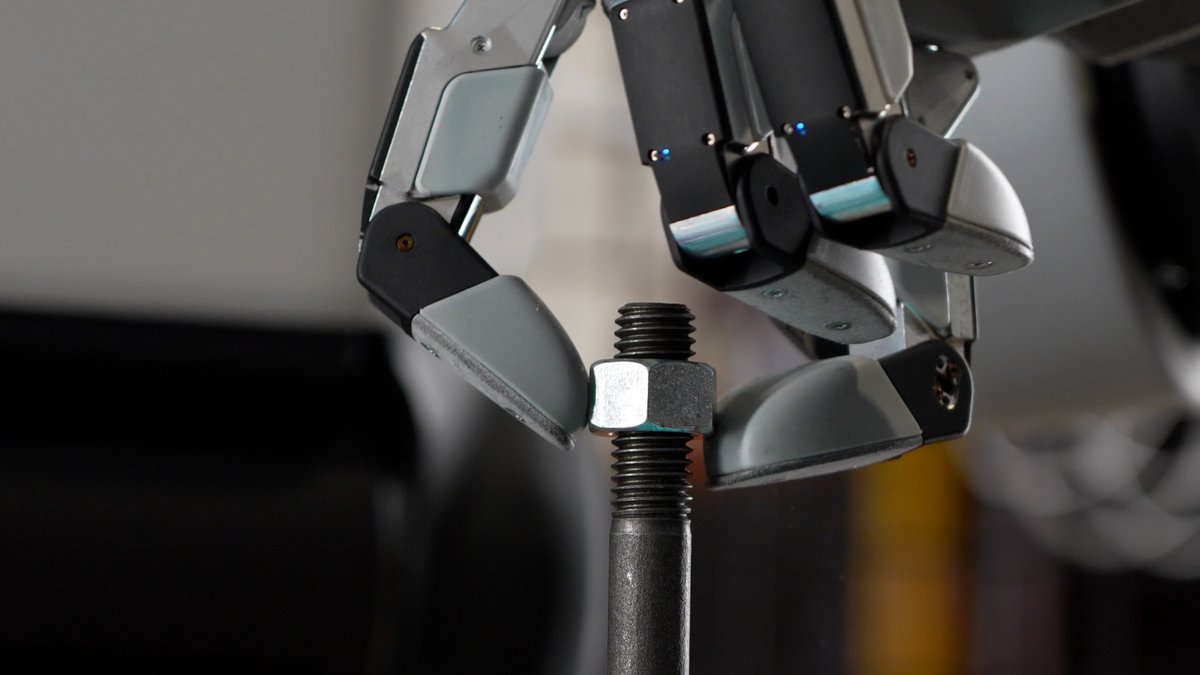
- 📌 On the radar: Boston Dynamics showed new 13-DoF directly actuated Atlas hands built for sim-to-real RL (x/@BostonDynamics) (update to Sep 30 Atlas production beat).
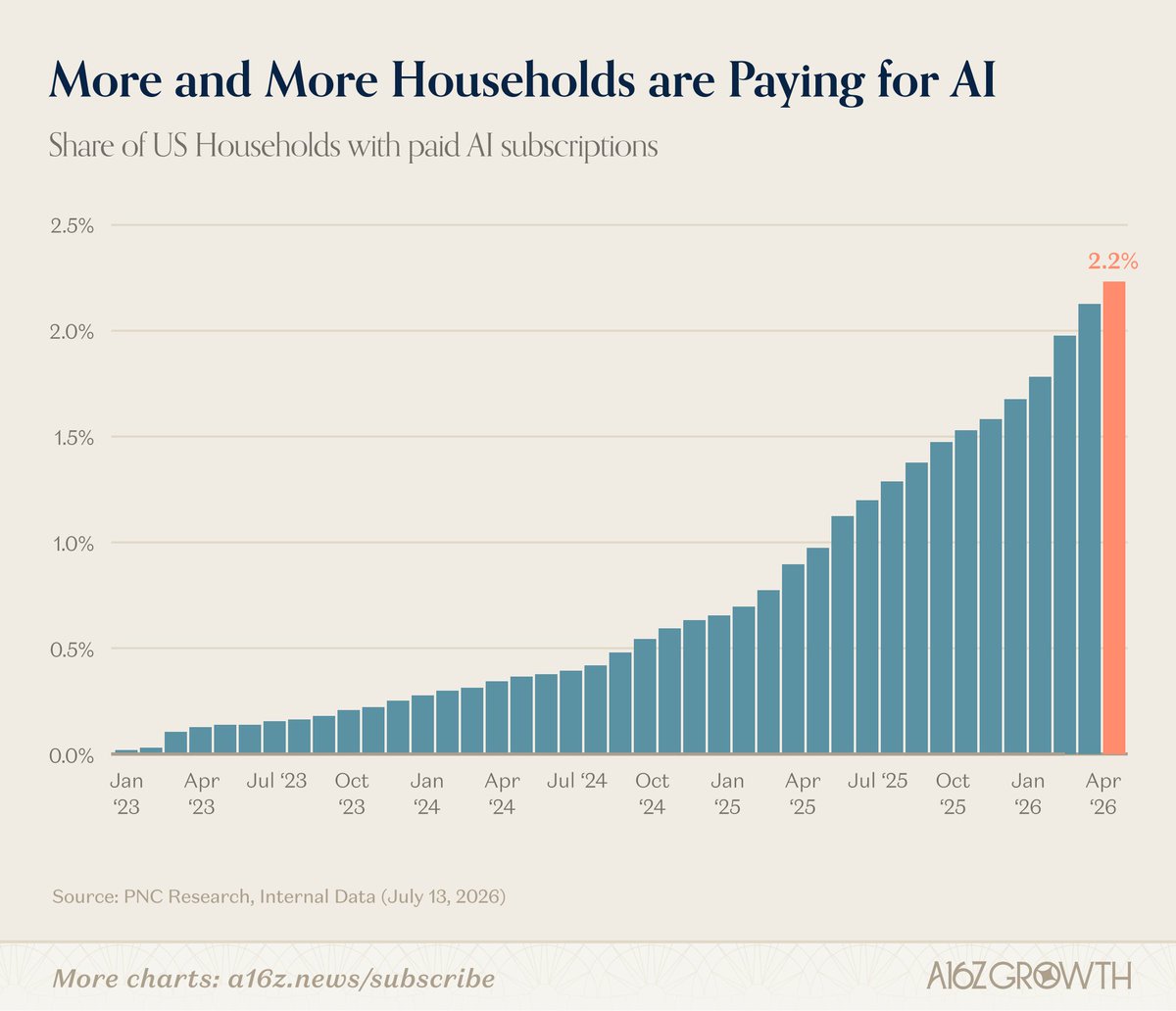
- 📌 On the radar: more State of Markets II charts: of every $100 AI buildout, $50 chips / $20 power / $15 networking / $15 cooling+buildings; 98% of US households still not paying for AI (x/@a16z, x/@a16z).
Why it matters
- Janus is a local inference door today without CUDA lock-in.
Sources