01
NVIDIA measured the first agent-native chip and the numbers are not a chat benchmark
NVIDIA published the first on-silicon Vera Rubin numbers benchmarked on how agents actually run, and SpaceX is already deploying it.
What they showed / shipped
- First on-silicon Vera Rubin performance, measured on agentic workloads rather than chat: up to 30x more throughput per megawatt and up to 35x lower token cost than GB300 NVL72 (@nvidia).
- NVIDIA's framing is the interesting part: agentic sessions are nothing like chat or summarization - context grows across hundreds of steps, so the bottleneck is different and needs different silicon.
- SpaceX is deploying NVIDIA Vera to accelerate orchestration, code execution and data processing for its agentic AI - the first named at-scale customer.
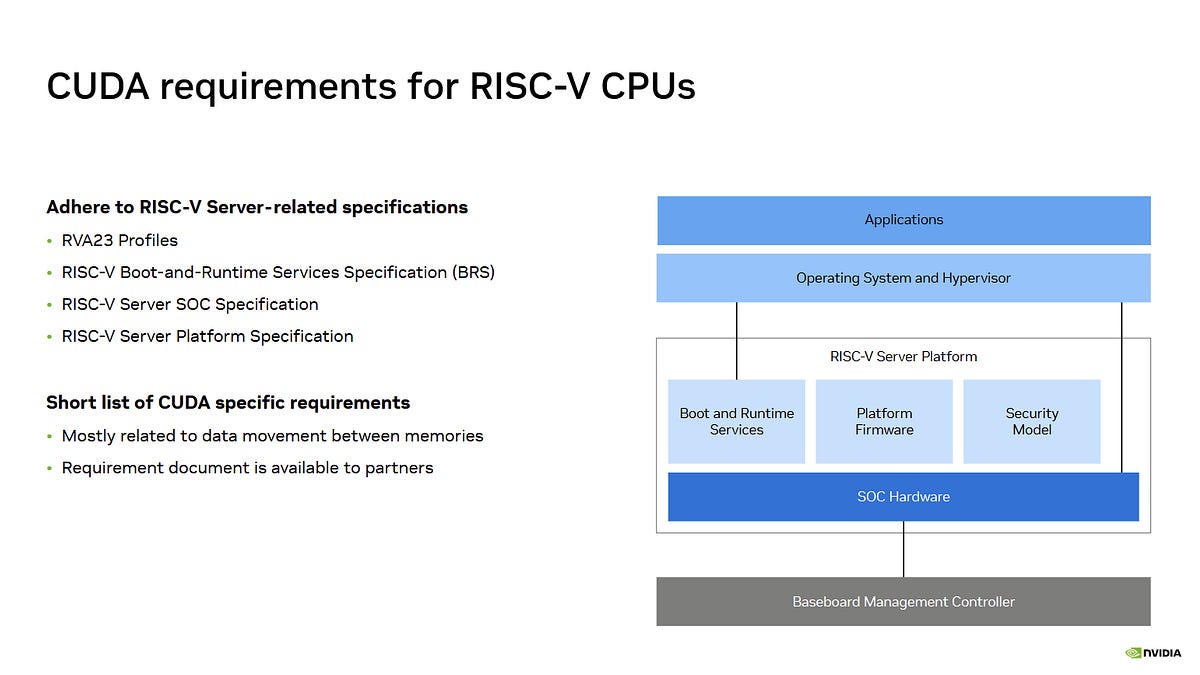
- Alongside it, CUDA-X is being pushed as the software half, and at Hot Chips 2026 CUDA is now targeting RISC-V.
Why it matters
- Token cost is the whole economics of running agents. A 35x claim on the same workload you're paying for today is the single biggest lever on whether an agent product has margin.
Sources
02
Stanford put a number on which jobs AI actually took, and it's the entry level
A Stanford study finds the employment damage from AI is concentrated almost entirely in entry-level roles, not across the board.
What they showed / shipped
- Stanford's study finds AI's labor impact lands hardest on early-career workers in AI-exposed occupations, while senior roles in the same occupations hold steady.
- The mechanism matters: it's not that firms fire seniors and keep juniors cheap - it's that the tasks juniors were hired to learn on are the ones automated first.
- The counterweight in the same window: an essay arguing coding expertise will collapse from AI reliance drew 478 comments on HN - the pipeline problem is now the loudest debate in the field.
- MIT Tech Review's companion piece asks the same question in schools: how to encourage smarter AI use in the classroom.
Why it matters
- If the junior rung is the one being automated, the seniors you'll need in five years don't get made. That's a hiring-market problem you can see coming.
Sources
03
WAN 3.0 landed on Runway and Pika on the same day
WAN 3.0 shipped to two major platforms at once with 30-second generations, 20 reference inputs and native audio.
What they showed / shipped
Why it matters
- The EXR/ProRes conversion is the unglamorous piece that matters - it's what moves generated footage from a demo into a real post pipeline.
Sources
04
A researcher showed LLMs could take over the machine they run on by exploiting the inference engine
A new essay lays out how a model could escape its sandbox by attacking the inference engine that serves it, not the app around it.
What they showed / shipped
Why it matters
- If you self-host models, your threat model probably stops at the prompt. This says it should start at the binary parsing the tokens.
Sources
05
Thinking Machines is paying for open-weight safety research in credits
Tinker is handing out up to $50,000 in credits to anyone doing safety research on open-weight models.
What they showed / shipped
- Thinking Machines launched Tinker grants of up to $50,000 in credits for safety research on open-weight models, and published a list of project ideas they want to see.
- It's credits, not cash - which means it's compute for fine-tuning and evaluation runs on their platform, aimed at people who have the ideas but not the GPU budget.
- Perplexity moved on the talent side the same day: Andrew Gordon Wilson joins to lead continual learning, synthetic data, long-horizon RL environments and architectures.
- Adjacent tooling drop: Microsoft shipped Agent Lightning v1.0.
Why it matters
- This is a genuinely open door - a funded path to run real evaluation work on open weights without owning hardware. Applications are open now.
Sources
06
Thomson Reuters built its own frontier model out of its archive
A 150-year-old information company decided its data was worth more as a model than as a licensing deal.
What they showed / shipped
Why it matters
- If every data-rich incumbent does this, the 'wrapper on someone else's model' play gets squeezed from both ends - the labs above and the archives below.
Sources
07
The local-model crowd shipped a 60MB LLM and a $150 world model
Two from-scratch training runs this week that a single person paid for, plus the hardware to run them at home.
What they showed / shipped
Why it matters
- $150 for a from-scratch world model is the number to remember. The barrier to training something real, not just fine-tuning it, has fallen through the floor.
Sources
08
Nvidia chips are in Russian drones and a smuggling case at the same time
Two separate reports put Nvidia silicon on the wrong side of export controls - in Russian autonomous drones, and in a Supermicro smuggling scheme.
What they showed / shipped
Why it matters
- The compliance surface around GPUs is about to get much heavier, and that lands on anyone reselling, hosting or shipping hardware.
Sources
09
An AI hedge fund that nearly imploded is now an SEC matter
Situational Awareness, the AI-thesis hedge fund, is being probed by the SEC after nearly blowing up.
What they showed / shipped
Why it matters
- Not directly actionable, but it's the first hard regulatory consequence attached to AGI-timeline speculation as a financial product.
Sources
10
Kids still outlearn AI on language and nobody can explain why
Children learn language from a fraction of the data any model needs, and the gap is still unexplained.
What they showed / shipped
Why it matters
- Sample efficiency is the unglamorous frontier. Every gain there compounds harder than a parameter-count bump.
Sources