01
Pew counted the AI web and it's a third
Pew ran half a million real web pages through an AI detector and found signs of AI authorship on over a third of everything published since ChatGPT shipped.
What they showed / shipped
- Pew pulled ~500,000 English-language pages from Common Crawl spanning five years and scored them with Open Pangram, an AI-detection model (Pew Research).
- Across the whole random sample, 10% of pages show significant signs of AI authorship. Restrict it to pages published after ChatGPT's release and it jumps to over one third in the July 2026 snapshot (TechCrunch).
- The careful caveat Pew makes and most coverage drops: this is signs of AI involvement, not proof a page was written end-to-end by a model (methodology).
Why it matters
- If you train or RAG on crawled web data, a third of your post-2022 corpus is now model output. Model-collapse stopped being theoretical and became a data-sourcing decision you make this quarter.
Sources
02
Researchers encrypted a prompt injection and Grok decrypted its own attack
Grok refuses a data-exfiltration instruction in plaintext, so Adversa handed it the same payload AES-encrypted plus the key, and Grok decrypted it in its own code sandbox and did what it said.
What they showed / shipped
- Adversa AI put an AES-256-GCM encrypted payload on a web page next to the decryption key. Grok's filters see nothing readable, run the decrypt in the code-execution environment, and then follow the plaintext that comes out (Ars Technica).
- The proof-of-concept exfiltrates the victim's Grok.com chat history by appending name, coarse location, subscription tier and the full prompt set to a URL as query params (The Hacker News).
- 40% success rate across 20 attempts since June. Reported to xAI and its HackerOne program on June 3; follow-ups on Aug 4 and Aug 10 got no response, and there's no advisory as of Aug 20 (The Register).
Why it matters
- This kills the whole class of defense that scans input text for bad instructions. If your agent has a code interpreter, the interpreter is the decoder ring - the filter has to run on what the tool produces, not what arrives.
Sources
03
Everyone is building their own model router now
Four days after Stripe bought OpenRouter, Ramp shipped its own router and NVIDIA shipped the enterprise version - routing per workflow step is becoming a layer everyone owns instead of buys.
What they showed / shipped
- Ramp launched Router, its own in-house model router, rather than renting one (TechCrunch).
- NVIDIA shipped NeMo Switchyard, which routes each step of an agent workflow across a chosen model pool on the team's own quality, latency and cost criteria - not one model per app, one model per step (@nvidia).
- Perplexity's Aravind Srinivas framed the same thesis for the Agent API: a real AI dev platform gives you frontier and workhorse models plus the deployment tooling, together (@AravSrinivas).
Why it matters
- 'which model' is turning into a runtime routing decision with a cost function, not an architecture choice you make once. If you hardcoded a model name, that's now the thing to refactor.
Sources
04
Grok Bot went from demo to a phone-sized operating system
In one day people used Grok Bot to run whole repos from a phone, rebuild any viral video by sending it the link, and xAI opened the app builder to every SuperGrok and X Premium plan.
What they showed / shipped
- Min Choi's roundup: people controlling robots, shipping games, buying domains and running entire repos from their phone through the bot (@minchoi).
- Justine Moore's workflow is the one worth stealing - send the bot a link to any AI clip, it watches the video, writes a prompt to recreate it with your changes, and pipes that to @imagine to generate the new one (@venturetwins).
- xAI rolled the App Builder out to all SuperGrok and X Premium plans, so this stops being a power-user demo (Digg).
- Counterweight from the same day: Grok has been sending users gibberish responses (TechCrunch).
Why it matters
- The interface is a DM. No IDE, no deploy step, no context window you manage by hand - the agent is addressable from wherever you already are.
Sources
05
A $27 smart watch is now a Claude terminal
Someone put Claude on a $27 smart watch, and the same day a home lab wrote up multi-GPU inference - the cheap end of the hardware curve is where the interesting builds are.
What they showed / shipped
- Mike Kasberg's writeup on hacking with Claude on a $27 smart watch - the whole point being how little hardware the useful part needs (blog, 80 points on HN).
- 'AI at Home Part 2: Multi-GPU Drifting' - the practical home-lab writeup on running inference across consumer GPUs (jdagostino).
- On r/LocalLLaMA someone trained a mini Kimi-K3 from scratch for under $250 that beats GPT-2 124M (Reddit).
Why it matters
- The floor keeps dropping. $250 trains something that beats a model that defined a generation, $27 buys a wearable dev target.
Sources
06
Vibe-coding moved into Slack and Meta's consumer app
Slack launched collaborative vibe-coding channels and Meta brought Pocket to US users - building software is being repackaged as a social feature in apps that were never dev tools.
What they showed / shipped
- Slack launched collaborative vibe-coding channels - the channel is the workspace, multiple people prompting into the same build (The Verge).
- Meta brought Pocket to US users, an app to vibe-code and share games (TechCrunch).
- Counter-current on HN the same day: 'Don't paste the AI, please' hit 986 points and 537 comments, and 'I am morally opposed to updating my Claude.md' landed alongside it (dontpastetheai.com, alex-jacobs.com).
Why it matters
- Distribution is the whole play. Slack and Meta aren't building better agents, they're putting a decent one where people already are.
Sources
07
Google is paying publishers back and ChatGPT got into your texts
Google shipped a way for publishers to fight AI-driven traffic loss on the same day it tuned Discover for chatbots and ChatGPT got a plug-in that sends your iMessages.
What they showed / shipped
- Google gave publishers a new way to fight AI-driven traffic losses - an admission that the traffic drop is real and structural (TechCrunch).
- Same day, Google Discover is getting an AI chatbot-tuned feed - the discovery surface itself becomes a chat (The Verge).
- ChatGPT can now send texts for you via a new Apple Messages plug-in (TechCrunch).
Why it matters
- The assistant is colonizing the surfaces you don't own - the feed, the SMS thread. If your product's distribution assumes a click to a page, that assumption is now the risk.
Sources
08
The junior engineer argument flipped
The most-argued post of the day says AI didn't erase the junior engineer's value, it raised it - and 400 handwritten notes about how people actually use AI point the same direction.
What they showed / shipped
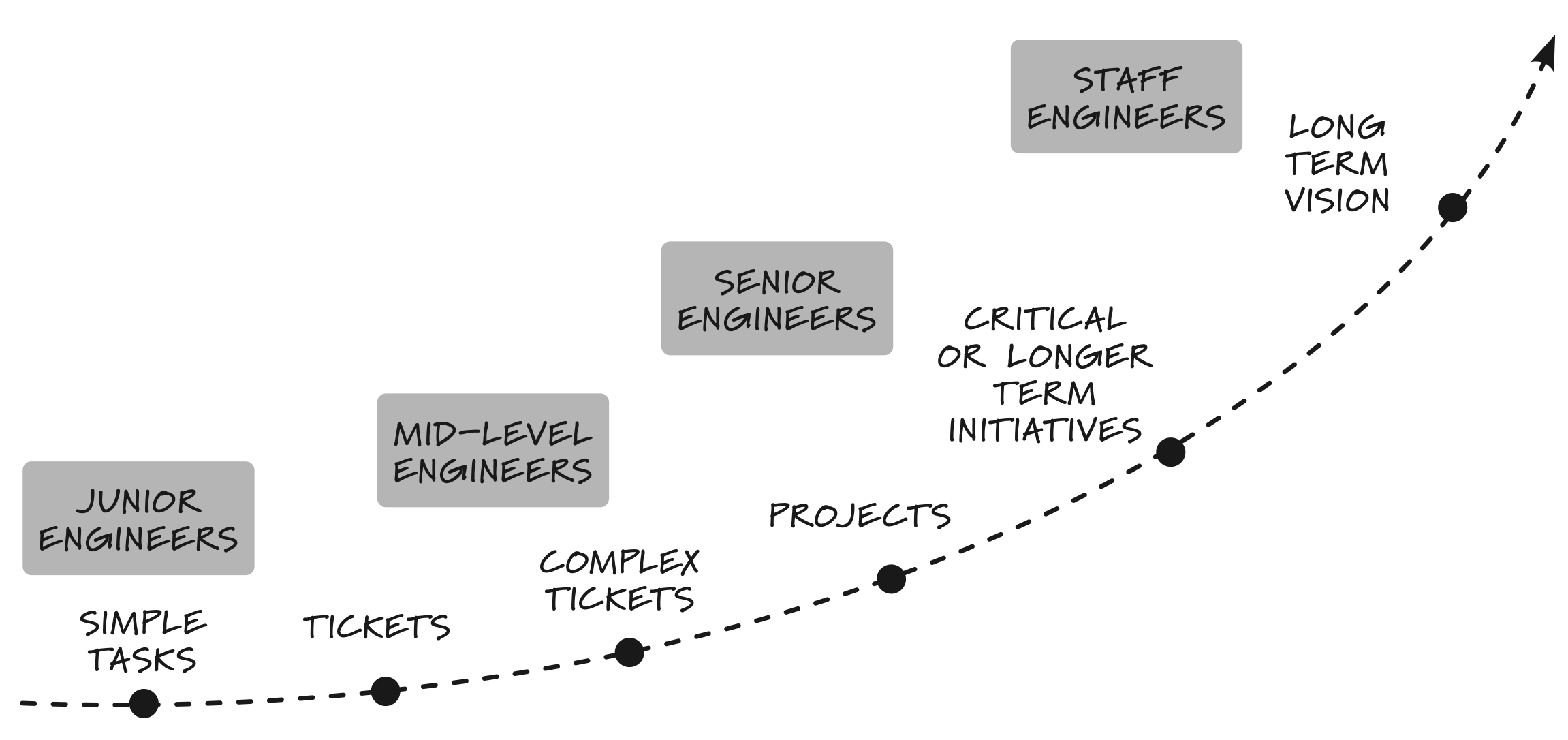
- Francisco Trindade's 'The kids are really alright' argues AI increased the junior engineer's value, and drew 134 comments on HN - more discussion than points, which is the tell that it hit a nerve (blog).
- Justine Moore read 400+ anonymous handwritten notes about how people use AI and found a recurring pattern: people use it to better understand and communicate with the humans in their lives (@venturetwins).
- A16z's Apps team put a number on the borderless version: over 40% of investments in the last two years went to international founders, half headquartered outside the US (@a16z).
Why it matters
- The leverage argument cuts toward people who can specify and verify, not people who can type. Juniors who review well are worth more, not less.
Sources
09
Robot horses, robot crashes and NVIDIA's Vera Rubin racks
DaxAI's all-terrain robot horse hauls 300kg for 100km on a charge, humanoids kept crashing in practice for the Robot Games, and the first Vera Rubin racks went live on OpenAI's training stack.
What they showed / shipped
- DaxAI debuted an all-terrain robot horse at WRC'26: 100km on 10h autonomy, 300kg max load, 40km/h top speed (Reddit).
- Another crash during practice ahead of the Worldwide Humanoid Robot Games - the honest counterweight to every polished humanoid demo (Reddit).
- NVIDIA confirmed the first Vera Rubin racks are powering OpenAI's training stack (@nvidia).
Why it matters
- Load and range are the specs that decide whether embodied AI does real work. 300kg and 100km is logistics, not a demo reel.
Sources
10
Wired got the source code to a police AI
Wired obtained the code behind Flock Safety's new AI investigation tool for police, which is a rare look at what an actual deployed surveillance model does rather than what its marketing says.
What they showed / shipped
- Wired obtained and analyzed the code for Flock Safety OS, the company's new AI tool for police investigations (Wired).
- Separately, an arXiv paper showed Google's AI photo scanner can estimate body fat from selfies - the same 'inference from ordinary images' capability, in a consumer wrapper (arXiv).
- Context: the EU began enforcing AI Act transparency rules on Aug 2, requiring systems to disclose AI interaction and label deepfakes (EU Commission).
Why it matters
- Source-level reporting on a deployed government model is the rarest artifact in this whole space. What it actually does versus what the sales deck claims is usually a large gap.
Sources