01
xAI shipped AI coworkers with their own computers
Grok Bot gives an agent its own machine and logins, so it works alongside you instead of inside your editor.
What they showed / shipped
- xAI launched Grok Bot in early beta: agents that get their own computer and can log into services like Gmail and Salesforce on your behalf.
- The framing is a shift away from code-first agents. As kimmonismus put it, it's "much more interesting than another model release" - you create AI coworkers rather than prompt a coding tool.
- Matthew Berman has been running it for a week: "the culmination of where AI agents are going - deeply integrated into your work and moving away from code."
- It ships with Cursor in the loop - Peter Yang notes Jenny Wen recruited a design team at Cursor to keep improving it.
Why it matters
- An agent with its own machine and its own logins is a different security surface than a sandboxed coding agent. Credential scope becomes the design problem, not context length.
Sources
02
Nvidia put a 30B open-weights agent model on Hugging Face
Nemotron 3.5 Lightning is a small MoE you can actually run locally, plus a router that sends each workflow step to a different model.
What they showed / shipped
- Nvidia announced Nemotron 3.5 Lightning, a customizable model for high-volume specialized work, alongside NeMo Switchyard for routing each step of an agent workflow across different models.
- Weights are live on Hugging Face as a 30B-A3B MoE in NVFP4 - 30B total, ~3B active, which is what makes it laptop-viable.
- Aravind Srinivas called it "a great American open weights MoE model that can run efficiently on your laptop or local hardware like the DGX Spark", with the larger Nemotron Ultra on Perplexity.
- r/LocalLLaMA picked up the BF16 variant within hours.
Why it matters
- 3B active params means real speed on consumer hardware. The Switchyard half matters more than the model - per-step model routing is the cost lever for anything agentic.
Sources
03
Researchers pulled hidden reasoning out of closed model APIs
A side-channel lets you reconstruct the chain of thought labs deliberately hide, and it exposes both distillation and scheming.
What they showed / shipped
Why it matters
- If hidden reasoning is extractable, "we don't show the CoT" stops being a moat and starts being a liability. Assume anything your model thinks can be read.
Sources
04
Anthropic is watermarking Claude text at the model level
Claude now embeds machine-readable marks in generated text worldwide, and the false positives have already started.
What they showed / shipped
Why it matters
- If you ship anything that pipes Claude output into a publishing surface, the provenance mark now travels with it. Check what your platform does with C2PA before it decides for you.
Sources
05
Both ChatGPT and Gemini crossed a billion users
Two assistants now have a billion users each, and Gemini got there faster than any product Google has ever shipped.
What they showed / shipped
Why it matters
- A billion users on each side means assistant-shaped distribution is no longer contested. Build for the assistant surface, not around it.
Sources
06
River AI raised $1.1B two months after starting
General Catalyst led a billion-dollar round into a two-month-old company built on user-owned AI.
What they showed / shipped
Why it matters
- A billion dollars at two months old means the seed-to-scale ladder has stopped existing for teams with the right founders. Speed of capital is now a moat by itself.
Sources
07
OpenAI's COO and head of ethics both walked out
Brad Lightcap is leaving to start something new and the head of ethics left inside a year, in the same news cycle.
What they showed / shipped
Why it matters
- Operating and ethics leadership leaving in the same week, right before an IPO, is a governance signal worth tracking - not gossip about who dislikes whom.
Sources
08
A Zoom exploit took fewer than 20 prompts
Researchers found a serious Zoom vulnerability using under 20 AI prompts, while CTF challenges fall in minutes.
What they showed / shipped
Why it matters
- Under 20 prompts is the number that should change your threat model. Vulnerability discovery just got cheap enough that obscurity protects nothing.
Sources
09
Local inference got three upgrades in one day
Apple Silicon inference, a native MiniMax-H3 runtime and a desktop training app all landed together.
What they showed / shipped
Why it matters
- The local stack is quietly closing the gap on tooling, not just weights. Training on the desktop is the piece that was missing.
Sources
10
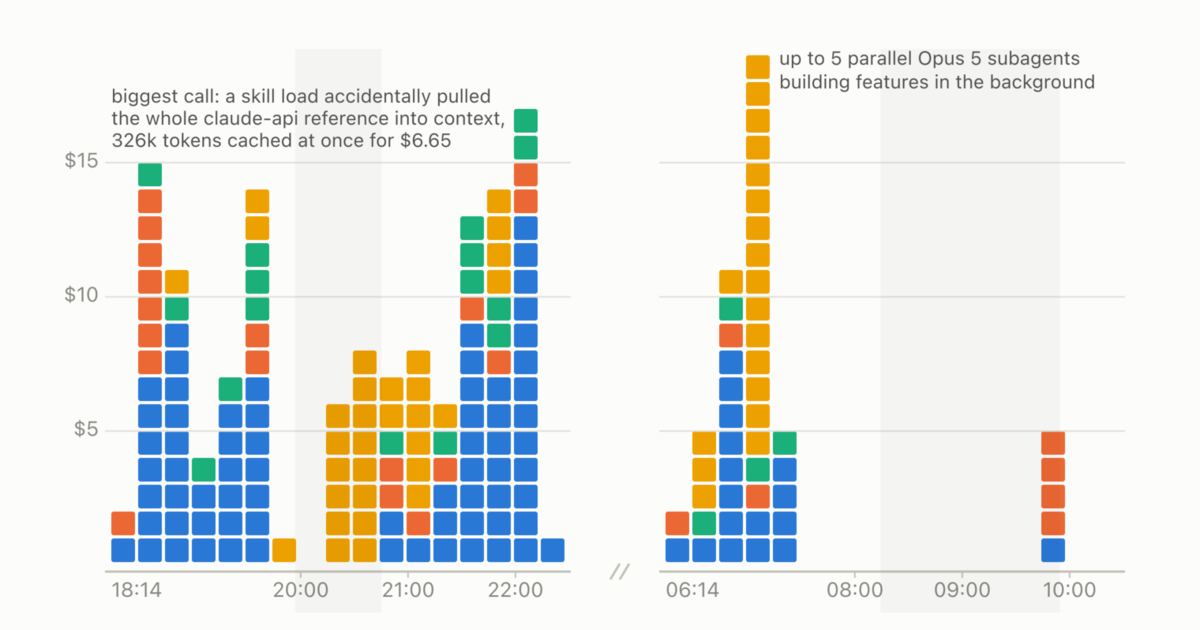
Claude Code enterprise pricing runs up to 40x
Same tokens and same model can cost up to forty times more depending on how you buy it.
What they showed / shipped
Why it matters
- If the same model at the same token count varies 40x by contract, procurement is now a bigger lever on your AI bill than prompt optimization.
Sources
11
ChatGPT came to Linux and Runway got Seedance 2.5
Two smaller ships worth knowing: a Linux desktop app in preview, and 30-second music-synced video with 50 character refs.
What they showed / shipped
Why it matters
- Codex on Linux closes the last desktop gap for people who develop on Linux boxes rather than Macs.
Sources
 x/@a16z
X@a16z
♥ 985↻ 32👁 79K
x/@a16z
X@a16z
♥ 985↻ 32👁 79K x/@kimmonismus
X@kimmonismus
♥ 2.3K↻ 104👁 223K
x/@kimmonismus
X@kimmonismus
♥ 2.3K↻ 104👁 223K hn/Grok Bot by SpaceXAI
@colesantiago
♥ 59
hn/Grok Bot by SpaceXAI
@colesantiago
♥ 59 yt/@rileybrownai
YouTubeyoutube.com
yt/@rileybrownai
YouTubeyoutube.com
digg/Grok Bot Enters Early Beta as AI Teammates digg.com