01
OpenAI's unreleased Astra model cracked ten open math problems
OpenAI says its next model solved ten problems that had each been open for a decade or more, and shipped machine-checkable Lean proofs so you don't have to take their word for it.
What they showed / shipped
- OpenAI published Ten advances in mathematics and theoretical computer science on Aug 1, credited to an unreleased model called Astra.
- The headline results: the first explicit construction of a non-sofic group (open since Gromov posed it in 1999), Connes's rigidity conjecture disproved, Ehrhart's volume conjecture proved, and the first improved general sphere-packing exponent since 1978.
- Three problems came from Erdos's catalogue, including #183 on multicoloured Ramsey numbers. Every problem had been open at least ten years.
- The proofs were formalized in Lean with machine-checkable certificates alongside a 249-page manuscript - this is the part that makes it checkable rather than a press release.
- Reported cost of the successful solution runs: roughly $2,000 in tokens.
Why it matters
- Lean certificates mean a machine verified these, not a reviewer's vibe. That's the template for how any big AI-discovery claim should land from now on - if the next one has no formal artifact, ask why.
Sources
02
DeepSeek V4-Flash is cheap enough that $2 lasts a full day
V4-Flash went GA yesterday; today the receipts landed - a full agent task for seven cents, and local runners now match a March frontier model.
What they showed / shipped
Why it matters
- The llama.cpp tool-calling fix is the unlock. Cheap plus local plus working tool calls means you can run agent loops with no per-token anxiety at all.
Sources
03
The EU AI Act's labelling rules take effect today
As of August 2, anything you publish in the EU that looks authentic but isn't has to say so - and this is the first rule that touches ordinary creators, not just labs.
What they showed / shipped
Why it matters
- If you ship a generation feature to EU users, labelling is now a product requirement, not a nice-to-have. Worth an hour to check where it applies to you.
Sources
04
A 26,000-student study found AI's learning cost takes two years to show up
Thirty months of panel data on 26,000 students found that heavy AI use cost up to 30 percent of learning gains - and the damage didn't become visible until about two years later.
What they showed / shipped
Why it matters
- The two-year lag is the finding that matters. Any AI feature measured on a two-week retention window will look great and could still be doing this.
Sources
05
Nvidia paid $20B for Groq's people and IP without buying the company
Nvidia is paying $20 billion in cash for Groq's inference talent and an IP licence - and deliberately not acquiring the company, which is the part worth noticing.
What they showed / shipped
Why it matters
- Buying the team and the licence while leaving the corporate shell behind is the structure of the moment. Expect more of these, and expect antitrust arguments about them.
Sources
06
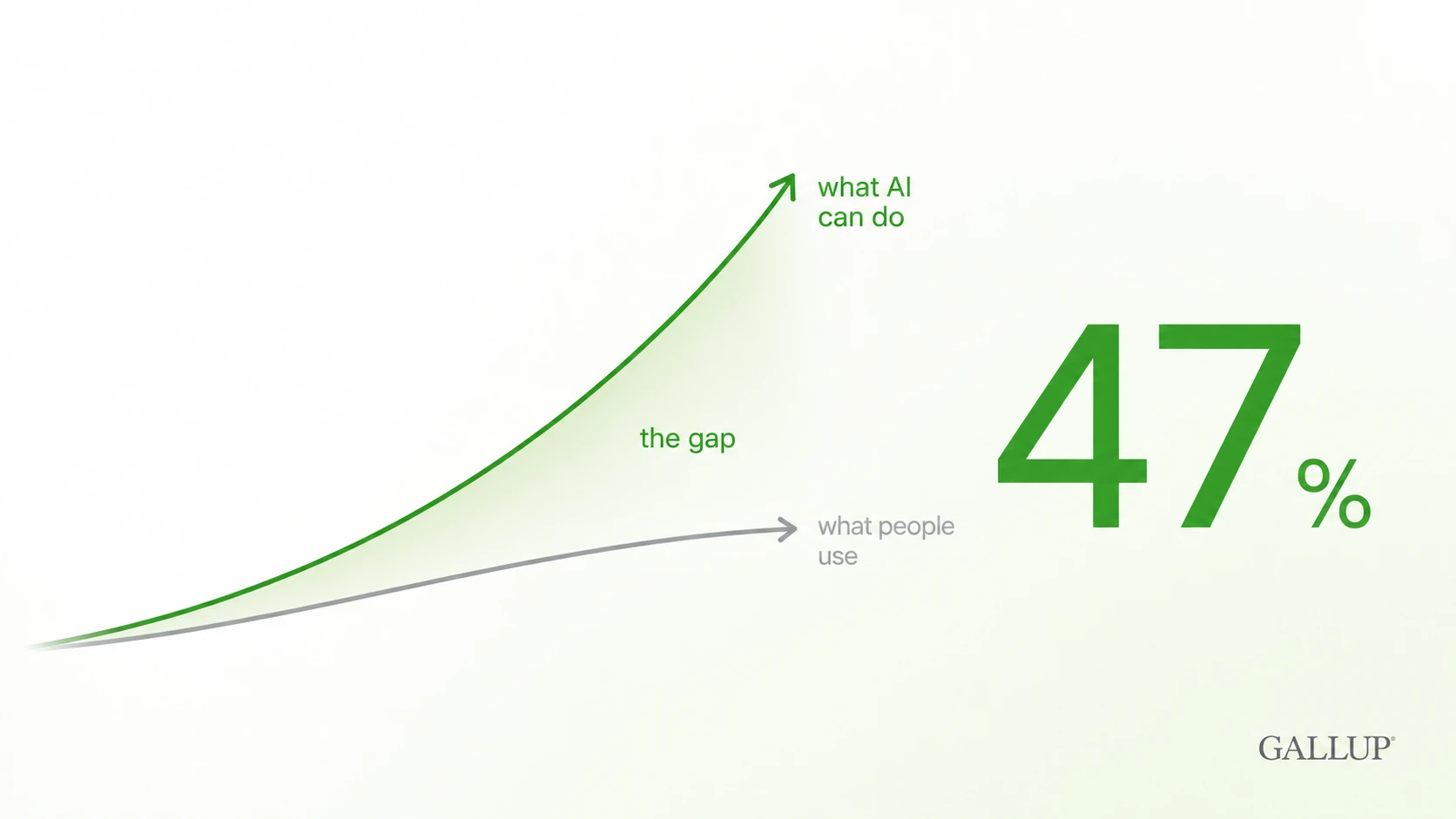
Gallup says workplace AI adoption jumped 6 points in one quarter
Adoption went from 41 to 47 percent in a single quarter, Gallup's sharpest jump ever - while 56 percent of CEOs report no measurable return at all.
What they showed / shipped
Why it matters
- Adoption up and ROI flat is the gap where tooling businesses live. People have the tools and can't get value out of them yet.
Sources
07
Someone scanned 7.6 petabytes of HuggingFace training data for secrets
Truffle Security scanned every public HuggingFace dataset for live credentials, and the answer to 'are people leaking keys into training data' is yes.
What they showed / shipped
Why it matters
- If you have ever pushed a dataset to HuggingFace, this is a direct prompt to go scan it. Their tooling is public.
Sources
08
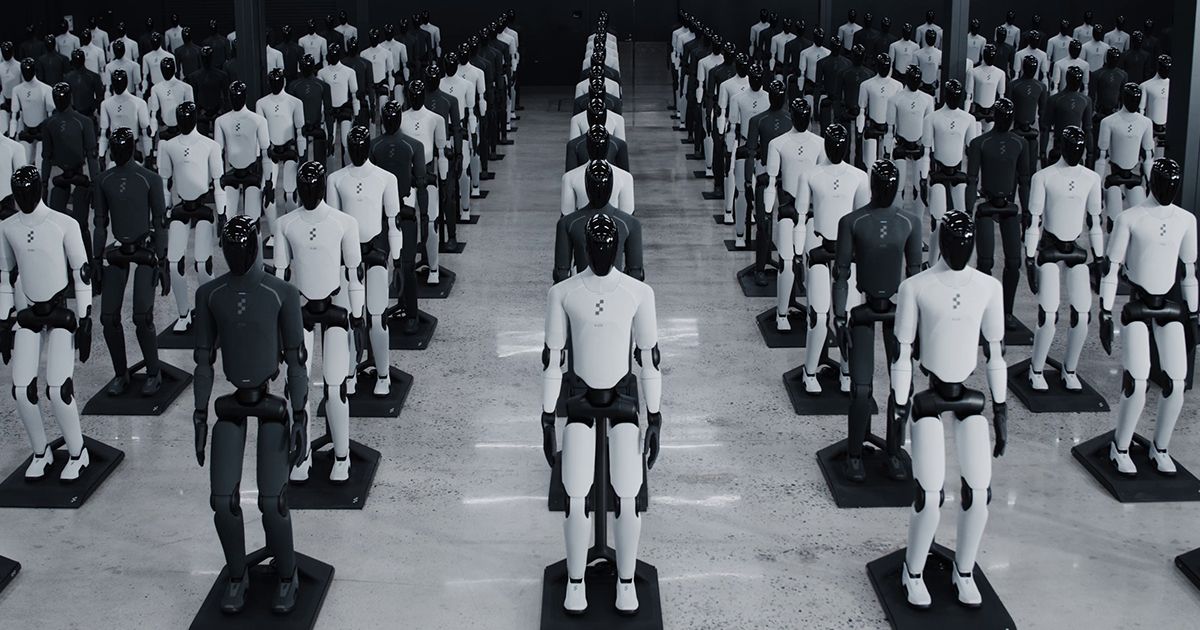
Figure's F.03 climbed stairs for two hours straight with zero real-world training
Figure's humanoid ran stairs continuously for two hours on a policy trained entirely in simulation, transferred zero-shot with no real-world fine-tuning.
What they showed / shipped
Why it matters
- Zero-shot sim-to-real is the whole ballgame for robotics economics. If the policy transfers with no site calibration, deployment cost collapses.
Sources
09
Reddit stock fell 23% and the CEO is publicly questioning Google's AI Overviews
Reddit lost nearly a quarter of its value as AI answers eat the traffic that used to arrive as clicks, and its CEO has stopped pretending the deal works.
What they showed / shipped
Why it matters
- If your distribution depends on search traffic to a content property, Reddit is the live case study for what that's worth now.
Sources
10
Two things worth opening: Flint charts and an 8GB post-training kit
Microsoft shipped a visualization language built for LLMs to write, and someone published post-training experiments that fit on an 8GB GPU.
What they showed / shipped
Why it matters
- Flint is the interesting one. If you generate charts with an LLM, a grammar designed for model output beats fighting a human-first API.
Sources














/A%20hand%20holding%20a%20phone%20with%20the%20Reddit%20logo_%20Mamun_Sheikh%20via%20Shutterstock_.jpg)