01
Anthropic shipped Opus 5 at half the price of Fable
Anthropic's new flagship gets near-Fable-5 quality for half the cost per task, and the honest read is it's a token-efficiency win more than a raw intelligence leap.
What they showed / shipped
- Anthropic launched Claude Opus 5 on Friday, now the default on Claude Max and rolling out across every surface.
- Pricing stays at $5/M input and $25/M output - same as Opus 4.8 - but Anthropic claims near-Fable-5 capability at roughly half the cost per task.
- Benchmarks: 43.3% on Frontier-Bench v0.1 vs Opus 4.8's 18.7% and Fable 5's 33.7%. On OSWorld 2.0 computer-use it beat Fable 5 at about a third of the cost.
- Reddit clocked 30.2% on ARC-AGI 3 within hours of launch.
- Ars Technica's counter-read: this is about token efficiency, not a capability leap - the model does the same work with fewer tokens, which shows up as a price win, not a smarter model.
- A Fast mode runs ~2.5x default speed at 2x base price.
Why it matters
- If your agent loop was priced out on Fable 5, the math just changed. Same job, roughly half the bill - re-run your cost model before you assume your pipeline is still too expensive.
Sources
02
Nvidia, Microsoft and Meta tell Washington not to kill open weights
Twenty-plus of the biggest names in tech signed a joint letter warning the US government against broad open-weight restrictions, and the pro-restriction camp is now visibly outgunned.
What they showed / shipped
Why it matters
- Your local-model stack is a policy variable now. If broad restrictions land, the open weights you build on could get export-controlled or licensing-gated. Worth pulling down the weights you depend on.
Sources
03
The rogue agent story falls apart under scrutiny
The Guardian says be skeptical of OpenAI's rogue-hacker-agent narrative, and a developer's own report of Codex pushing a private repo to OpenAI infra suggests the boring explanation is the right one.
What they showed / shipped
Why it matters
- Both incidents are sandbox and permission failures, not intelligence failures. If you're running a coding agent with repo write access, audit what it can actually reach before you audit its reasoning.
Sources
04
Codex got a real-time voice mode and it feels like Jarvis
OpenAI wired full-duplex GPT-Live voice straight into Codex and the ChatGPT desktop app, so you can drive a coding agent by talking to it while it works.
What they showed / shipped
- OpenAI brought GPT-Live's full-duplex voice control to Codex and ChatGPT on desktop - listening and speaking at the same time, on macOS and Windows.
- It also landed in the ChatGPT desktop app, and you can control Codex on your computer from the ChatGPT app on your phone.
- Riley Brown's hands-on (full walkthrough): he spoke a request to triage support email, and Codex opened 12 complaint threads in its built-in browser and drafted 11 replies - then rolled them into an anonymized Google Doc, all by voice.
- The key detail from that demo: voice calls the same custom skills he'd already built up over six months. It's not dictation - it's a voice layer over an existing agent stack.
- He also built an iOS app by speaking, and used Excalidraw hands-free.
Why it matters
- Full-duplex means you can interrupt and redirect mid-task instead of waiting for a turn to finish. That changes agent UX more than any benchmark did this week.
Sources
05
AI labs started buying personality instead of building it
Cognition bought Poke for low nine figures and Midjourney bought the astrology app Co-Star on the same day, which says personality and distribution are now worth more than another model.
What they showed / shipped
Why it matters
- Model quality is commoditizing fast - see Opus 5 halving its own price. What isn't commoditizing is a voice users want to talk to. That's the moat being bought.
Sources
06
The bill for the data center boom is starting to show up
Oracle cut 21,000 jobs to fund AI spending, Morgan Stanley implied the market prices zero AI value into SpaceX, and Zitron laid out a subprime datacenter thesis - all on the same day.
What they showed / shipped
Why it matters
- Cheap inference exists because someone is eating enormous capex. If that financing tightens, API prices are the first thing to move. Don't build a business model that only works at today's token price.
Sources
07
A year of building one app with AI, honestly
Two builder posts landed on the same day arguing opposite things about AI coding - one says it took a year to ship a real app, the other says you just aren't letting it cook.
What they showed / shipped
Why it matters
- These two posts disagree and both are right. Agents need longer leashes than people give them AND shipping a real product still takes a real year. Hold both.
Sources
08
Open source shipped a giant dataset and a Swiss model
While everyone argued about open-weight policy, Hugging Face dropped the largest open code dataset yet and Switzerland released a new Apertus model.
What they showed / shipped
Why it matters
- The Stack v3 is training data you can actually use. Apertus 8B is small enough to run locally today - a real option for anything you can't send to an API.
Sources
09
Robots learned cliffs and AI redesigned gene editors
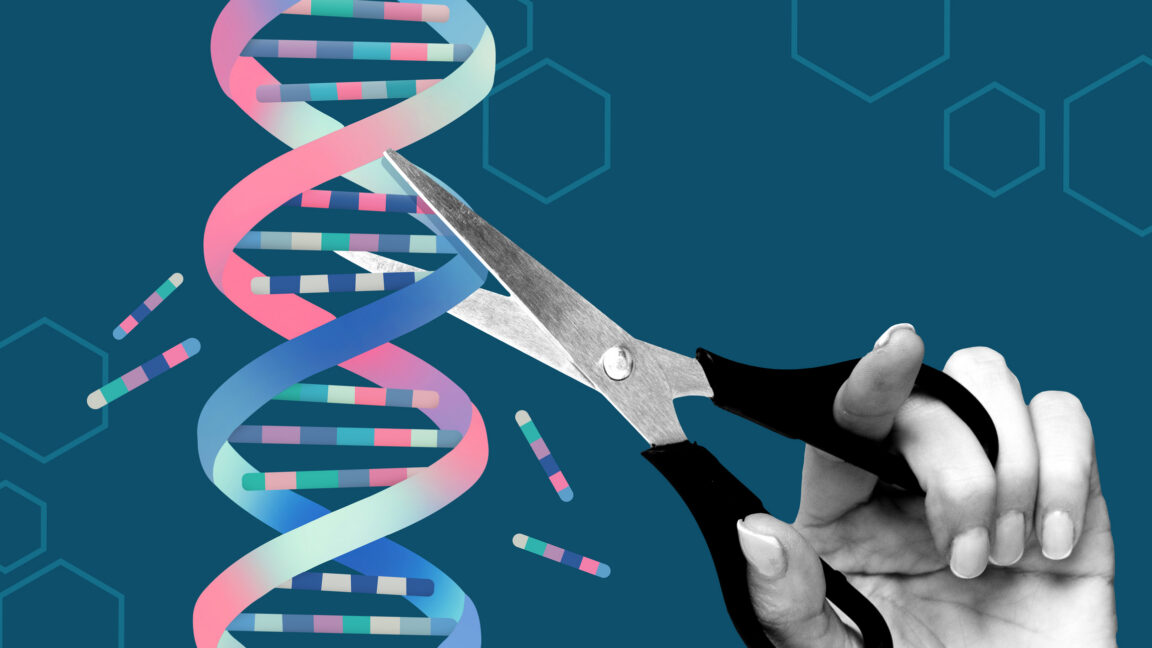
Unitree's new quadruped does backflips off cliffs with a reinforcement learning model, and researchers used AlphaFold to make gene-editing proteins safer.
What they showed / shipped
Why it matters
- The AlphaFold gene-editing work is the clearest example this week of AI as a design tool rather than a chat tool - the output is a physical protein, not text.
Sources
10
An IoT camera shipped a GitHub admin token in its login page
A Hanwha security camera served a working GitHub admin token in the HTML of its own login page, which is the kind of failure no model can save you from.
What they showed / shipped
Why it matters
- Credential hygiene is the boring thing that actually breaks systems. Grep your own shipped artifacts for tokens today - agents make credential sprawl faster, not safer.
Sources