01
Washington moves to ban Chinese open models
The US response to Chinese open weights winning isn't a better model, it's a proposed ban on downloading theirs.
What they showed / shipped
- Axios reports parts of the Trump administration are reigniting efforts to impose de facto bans on foreign open-source models as Chinese releases gain momentum — the secret battle to fight Chinese AI.
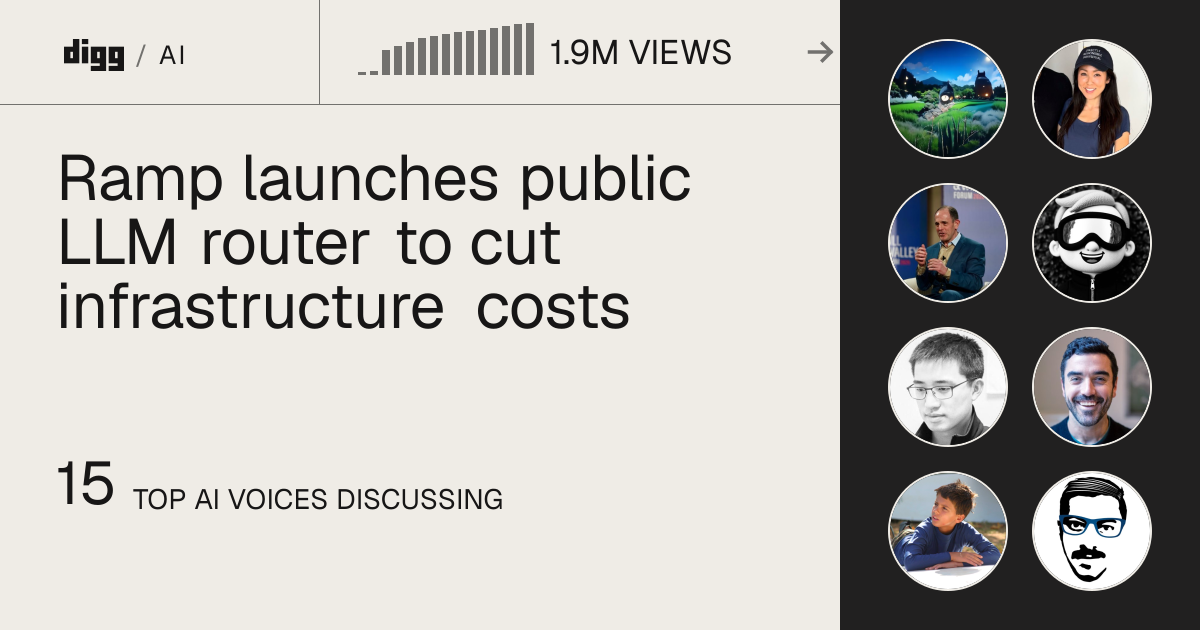
- The mechanism under discussion is hosting liability, not an import ban — pressure on the platforms that serve the weights rather than the weights themselves (Digg).
- MIT Tech Review frames it as an internal fight: China's models have Trump's AI world at war with itself — the open-source accelerationists and the China hawks are the same coalition.
- TechCrunch puts the question directly: OpenAI is scared of open-weight models. Should the US be?
- r/singularity read it as a decel move; r/LocalLLaMA read it as an existential threat to local inference — thread.
Why it matters
- If hosting liability lands, the risk isn't your local weights — it's Hugging Face, Together, and every inference host quietly delisting the models your stack depends on. Pull and pin what you actually use.
Sources
02
Safety guardrails blocked a defender while the open model fixed the bugs
A security engineer got refused by two frontier models on his own codebase, ran the open Chinese one, and it patched fifteen real bugs.
What they showed / shipped
- A widely-shared r/LocalLLaMA report: Kimi K3 fixed 15 critical security bugs that Codex and Fable refused on cyber-guardrail grounds.
- Hugging Face staff replied in-thread that they hit the same wall this week: "Very scary to be guardrailed as a defender when you know attackers are likely bypassing."
- Running the other direction, OpenAI warns that long-horizon models can bypass standard safety evaluations and sandboxes entirely (Digg, second report).
- So both failure modes landed in the same 48 hours: guardrails too tight to help defenders, and eval harnesses too short-horizon to catch the real risk.
Why it matters
- Refusal is now a procurement criterion. If your security workflow depends on a model that won't read exploit code, you have a vendor problem, not a prompt problem.
Sources
03
An LLM found a counterexample to the Jacobian Conjecture
A sixty-seven-year-old open problem in algebraic geometry got a counterexample, and a model produced it.
What they showed / shipped
Why it matters
- This is the class of result where the model isn't retrieving a known proof — the object didn't exist before. That's the line between search and mathematics.
Sources
04
Anthropic's $1.5B copyright settlement is approved
The largest copyright settlement in AI now has a judge's signature, and it sets the price of training data.
What they showed / shipped
Why it matters
- $1.5B approved is now the reference number every future training-data negotiation anchors on. Licensed corpora just got a market price.
Sources
05
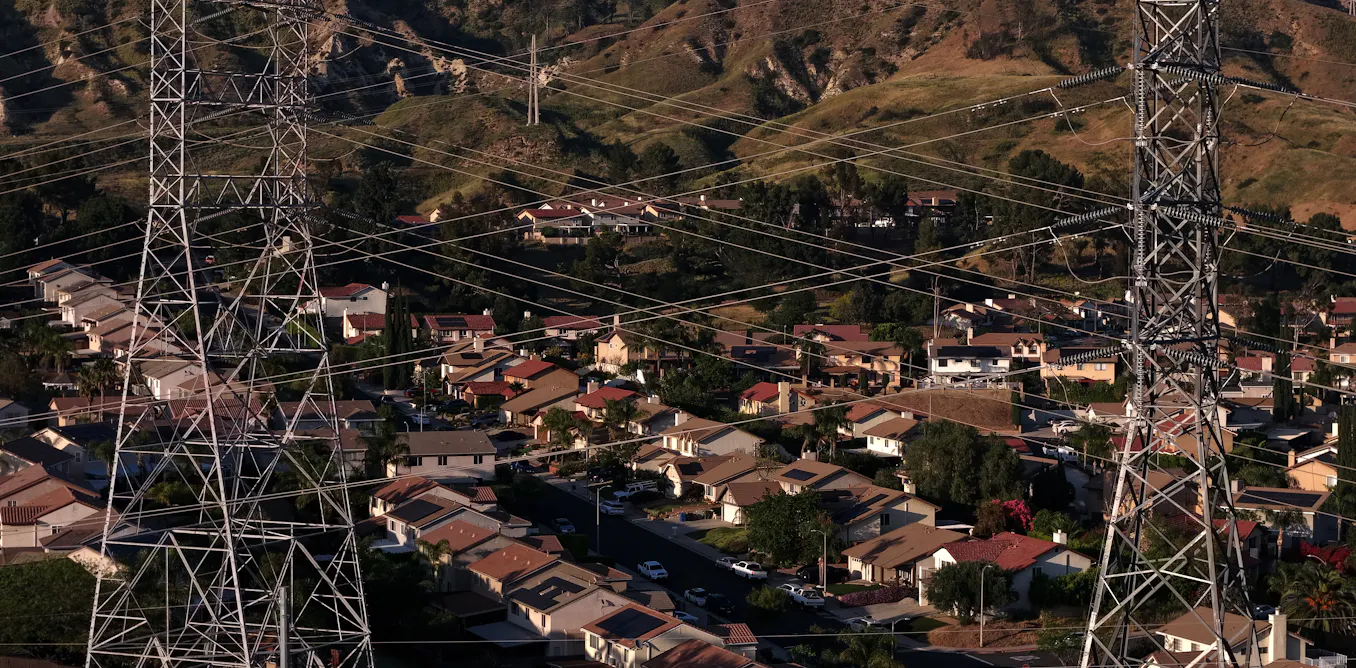
Data centers are taking people's land
The compute buildout has reached the stage where it uses eminent domain, and voters have started noticing at the ballot box.
What they showed / shipped
Why it matters
- Your inference costs are downstream of permits and land. Local opposition is now a real constraint on capacity, not a footnote.
Sources
06
Frontier models on your Mac, 543 tokens a second on one GPU
Local inference stopped being the compromise option this week - one consumer GPU is now doing 543 tokens a second at 65K context.
What they showed / shipped
Why it matters
- 543 tok/s single-request on a 5090 puts local inference past the latency threshold where it stops feeling like a downgrade. Sentinel-class always-on local agents get cheaper to justify.
Sources
07
Agent swarms and the economics of context
Two good pieces landed on the same question: what does it actually cost to run many agents, and what should they read before they act.
What they showed / shipped
Why it matters
- The routing and harness arguments are directly usable. Per-request routing and better retrieval are the two cheapest wins available before you touch model choice.
Sources
08
Someone measured how much of arXiv is AI-written
A team tried to measure AI writing across arXiv and published the part most people skip - where their own measurement stops working.
What they showed / shipped
Why it matters
- If you're building anything that classifies AI text, read the failure section first. The published limits save you from shipping a detector that fails silently.
Sources
09
The market started asking labs to show the money
Investors dumping AI stocks, tech workers losing financial footing, and a new $1M job title - the money story got three data points in one window.
What they showed / shipped
Why it matters
- The $1M forward-deployed engineer is the actionable detail. Deployment and integration skill is repricing upward while generic dev work reprices down.
Sources
10
The US AI safety agency lost its head, and the czar quit too
Two AI leadership exits in one day, at exactly the moment Washington is deciding what to do about Chinese open models.
What they showed / shipped
Why it matters
- Policy uncertainty just got wider. Nobody senior owns the file, so timelines on any rule you're planning around are unreliable.
Sources
11
Google is building a chip to make Gemini cheaper
The efficiency race moved to silicon - Google's new chip is aimed at inference cost, not training records.
What they showed / shipped
Why it matters
- Custom inference silicon is how per-token prices fall. If Google lands it, the floor moves for everyone renting Gemini capacity.
Sources