01
OpenAI turns Codex into a vuln-patching machine
OpenAI expanded its 'Daybreak' security push into a Codex Security plugin plus a full GPT-5.5-Cyber model, so the same agent you code with now finds, validates, and fixes vulnerabilities inline.
What they showed / shipped
- OpenAI shipped a Codex Security plugin (find, validate, and fix vulnerabilities right inside Codex) and released the full GPT-5.5-Cyber model for defenders, via @OpenAI.
- Paired with Trail of Bits, the program auto-patched open-source software and merged 37 fixes in its first week.
- Framed as a broader initiative to find and patch open-source bugs at machine speed (TechCrunch).
Why it matters
- Security stops being a separate tool and a separate hire - it lives in the same agent loop as your code. The plugin is the actionable bit: try it on your own repo.
Sources
02
Nvidia says AI's water problem is mostly a myth
Nvidia dropped a hard number into the data-center water panic - centers use 0.2% of US daily water - and says its new design runs hotter on purpose to use far less, though skeptics say that's not the whole story.
What they showed / shipped
- 📊 Nvidia: per the Manhattan Institute, data centers use 0.2% of US daily water, and that share has dropped recently via new cooling - @nvidia (15K+ likes).
- The Rubin design runs hotter on purpose so liquid cooling needs far less water (The Verge).
- Skeptic beat: cutting a data center's direct water use isn't the same as fixing AI's water footprint, since the power plants behind it still drink (TechCrunch). Aravind Srinivas makes the same split: marginal cooling water is ~zero, power water is the real line.
Why it matters
- The number to keep in your pocket when someone says 'AI is boiling the planet' - 0.2%, and falling, for direct use. But know the rebuttal so you don't oversell it.
Sources
03
Google DeepMind puts $75M behind A24 to court filmmakers
DeepMind and indie studio A24 announced a research partnership - reportedly a $75M bet - to shape AI creative tools around the people who actually make films, not the other way around.
What they showed / shipped
- Google DeepMind announced a research partnership with A24 to 'ensure the tools of the future are shaped by the creators who use them' - @GoogleDeepMind.
- Reported as a $75M commitment (TechCrunch).
- Picked up across the community as the studio-meets-lab signal of the week (r/singularity).
Why it matters
- A door opening - when A24's taste informs DeepMind's models, the bar for 'usable AI film tools' moves up. Watch what ships out of this.
Sources
04
The next AI jump might be orchestration, not a bigger model
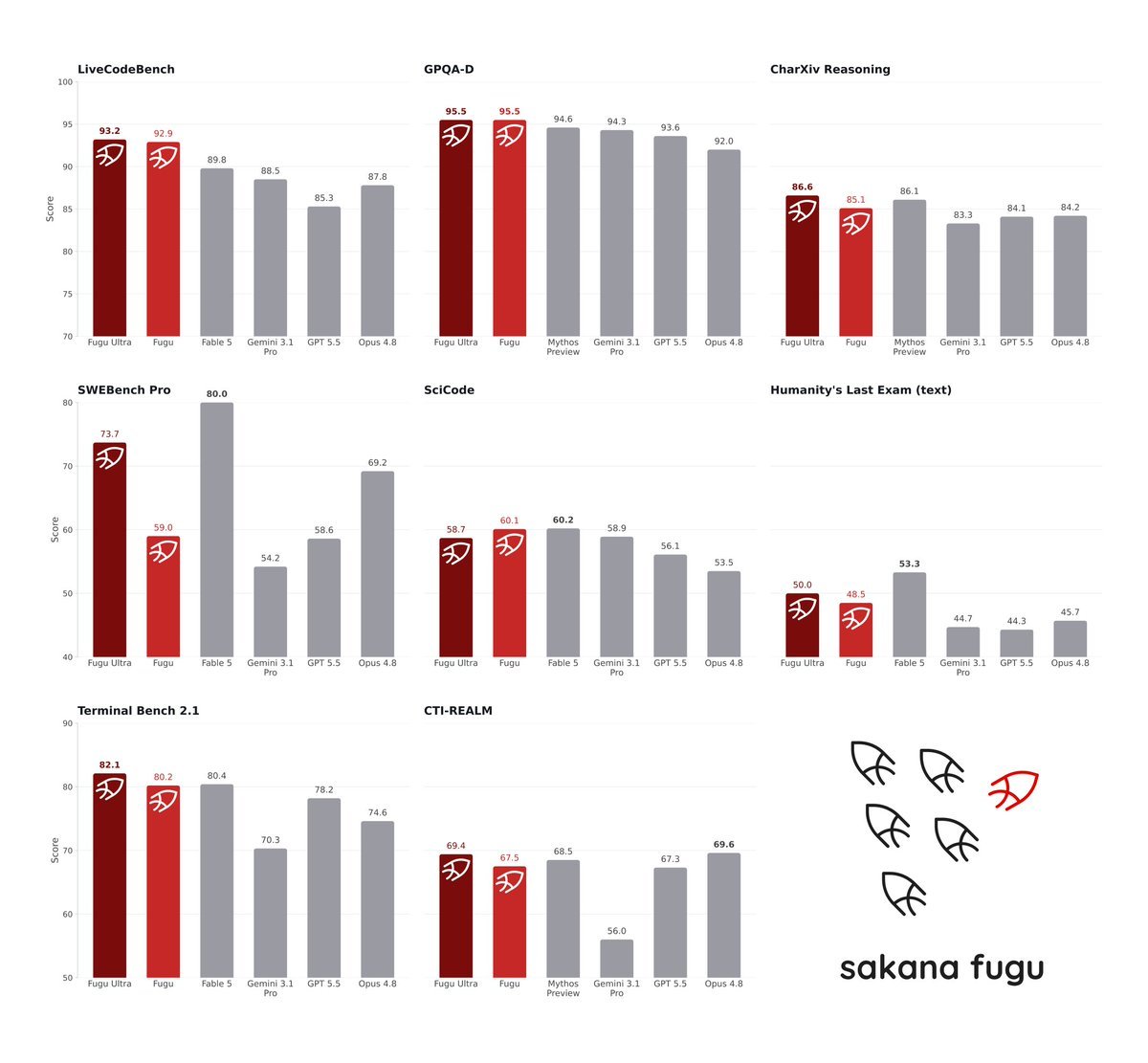
Sakana's new Fugu Ultra isn't a frontier model - it's a learned layer that turns several models into one coordinated agent team, and the claim is it matches Fable 5, though critics are pushing back on the benchmark.
What they showed / shipped
- Sakana AI unveiled Fugu (multi-agent system + Fugu Ultra model) - 'a learned orchestration layer that turns multiple frontier models into a coordinated agent team,' per @kimmonismus.
- The framing: the next capability jump may come from coordination, not a single bigger model.
- Skeptic beat: critics dispute the frontier-level performance claims - so treat 'on par with Fable 5' as a claim, not a result.
Why it matters
- If orchestration beats scale, the leverage is in how you wire models together - exactly the agent/loop muscle builders are already growing.
Sources
05
A guy built a 1,800-bot Warcraft server with zero coding
Someone with no coding background used AI to build a World of Warcraft server populated by 1,800 AI bots that talk to you, talk to each other, level up, and roam - Dead Internet Theory, but as a thing you can log into.
What they showed / shipped
- A builder with zero coding experience used AI to stand up a WoW server with 1,800 AI bots that converse with players and each other, level up, and walk around like real players - @minchoi.
- 'Dead Internet Theory is now playable' - a population of agents living in a shared world, built solo.
Why it matters
- A vivid proof of what one person + agents can now ship - a whole multi-agent world, not a toy script.
Sources
06
The AI jobs reckoning is showing up in the numbers
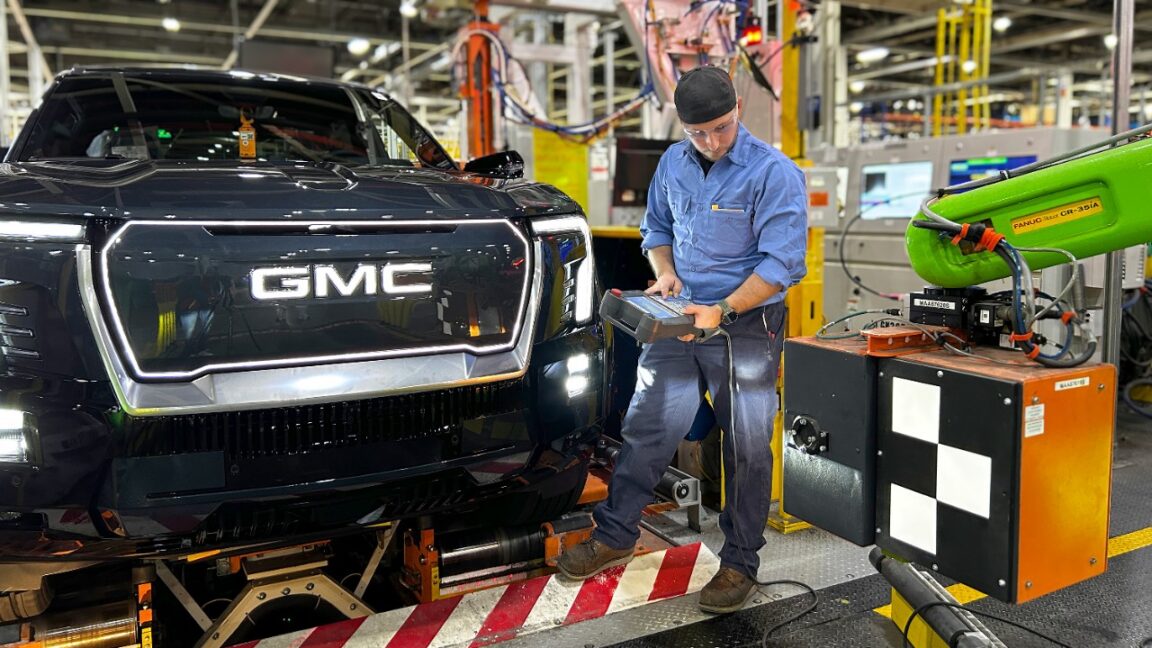
This week the 'AI is coming for jobs' story stopped being abstract - Oracle's headcount fell ~21,000, GM put robots on a flagship line after cutting 1,300 workers, and the running tally of AI-cited layoffs keeps growing.
What they showed / shipped
Why it matters
- The macro backdrop to every 'agents do the work' pitch - the displacement is now landing in named headcounts, not forecasts.
Sources
07
The public mood on AI is turning - even among its heaviest users
Two fresh data points worth a beat: Americans are souring on AI in big numbers, and Gen Z is the most anti-AI generation yet while also being its biggest consumer - the trust gap is widening even as usage climbs.
What they showed / shipped
- 'Americans have turned against AI in incredible numbers' - sentiment is sliding sharply (r/singularity).
- 'Gen Z is the most anti-AI generation yet - yet remains its biggest consumer' - the use-it-but-distrust-it split (r/singularity).
Why it matters
- Distrust-but-use is the real adoption curve right now - the opportunity is tools that earn trust, not just impress.
Sources
08
Apple's roadmap leaks - and it's all about where AI lives after the phone
A Gurman-sourced product map through 2027-plus leaked, and the headline isn't the iPhone - it's the run of AI-native wearables: AirPods with cameras for Siri, Apple Smart Glasses, and true AR glasses after that.
What they showed / shipped
- 📊 Mark Gurman's leaked Apple roadmap (via @_TheJasonC): Fall 2027 - AirPods with cameras for Siri AI + Apple Smart Glasses; beyond 2027 - a tabletop robot, a new Vision headset, and true AR glasses.
- The bigger read: foldables, smart glasses, AI wearables, smart home, and robotics 'viewed together look like a company preparing for its next chapter' (@_TheJasonC).
- Near-term, the AI surface keeps spreading in software too - iOS/iPadOS/macOS/visionOS 27 Beta 2 is already out, plus a much more capable Siri by 2028.
Why it matters
- This is the post-phone surface taking shape - cameras-on-your-face + Siri AI is the platform agents will run on next. Worth designing toward early.
Sources