01
Agents grow a memory
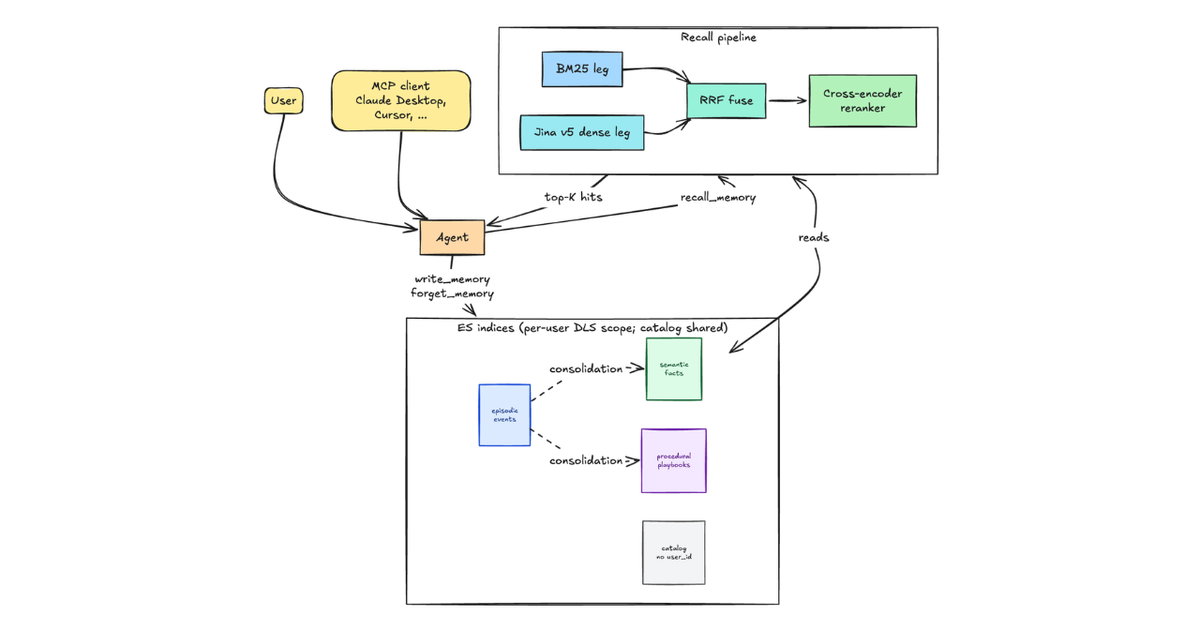
The big shift this week wasn't a smarter model - it was agents getting state: memory that persists across sessions, and outputs you can hand to another agent.
What they showed / shipped
Why it matters
- Persistent memory + shareable artifacts is the jump from stateless prompt-runner to a coworker that remembers context and hands off work. The context graph - not the model - is becoming the moat.
Sources
02
AI walks into medicine
Three labs pointed AI at your body this week, and the most striking one isn't from a health company - it's Midjourney building a spa that ultrasound-maps your insides in 60 seconds.
What they showed / shipped
- Midjourney teased a medical play and ran an AMA: a spa where you sink into a pool ringed by ~500,000 ultrasonic sensors and walk out in ~60s with a sub-millimeter 3D body map - no magnets, no radiation, first SF location in 2027 (@midjourney, vivid breakdown by @kimmonismus). The reported specs: 21 servers, 4 petaflops, scanning at 4cm/sec for one minute (r/singularity).
- OpenAI: GPT-5.5 Instant now matches their frontier Thinking models on health questions and it's free to all ChatGPT users - 230M+ people ask health questions there weekly (@OpenAI).
- OpenAI + Boston Children's + Harvard published in NEJM AI: o3 Deep Research helped clinicians re-solve previously unsolved rare pediatric cases (@OpenAI).
Why it matters
- The moat isn't the model, it's the data-collection wrapper. Midjourney's real trick is solving the show-up problem - make the scan a place you WANT to visit, harvest health data as a side effect.
Sources
03
The agent-loop meta
Builder discourse stopped being about which model and became about which loop - the exact instruction you hand an agent so it grinds unattended.
What they showed / shipped
- Matthew Berman launched Loop Library, a curated, submittable list of agent loops (@MatthewBerman), and shared two favorites: 'refactor until you're happy with the architecture' from Peter Steinberger (loop) and 'optimize until every page loads under 50ms' (loop).
- Peter Yang shared the actual SKILL.md he uses for a personal AI advisor - role, context files (plan.md, learnings.md, eval.md), when to save learnings - kept short so it's shareable (@petergyang). And on Codex: 'Anything you do on a computer codex can do too' (@petergyang).
- OpenAI shipped Record and Replay for Codex - turn a manual task into a reusable automation, the loop idea built into the product itself.
- The token-economics counter-beat: a skeptical, well-argued HN essay on why token-compression claims (RTK) don't hold up (mroczek.dev), and mistral.rs shipping /v1/skills support so you can run Agent Skills locally (Show HN).
Why it matters
- Leverage moved up a level - from prompting to designing the loop and the skill file. A good loop runs unattended; a good SKILL.md is reusable context you write once.
Sources
04
Open source is catching the frontier
China's open models are closing the gap fast, and the week's open-weights flood plus a benchmark brawl say the lag may be months, not years.
What they showed / shipped
- GLM-5.2 is being called the most powerful text-only open-weights LLM, with Simon Willison's hands-on writeup (simonwillison.net); inference went free on Hugging Face for a 6-hour window (r/LocalLLaMA), and zAI's founder says a Mythos-class model lands before Q1 2027 (@kimmonismus, r/singularity).
- The benchmark fight: Weibo's tiny VibeThinker-3B has the AI world arguing over whether small models are gaming benchmarks (VentureBeat), while Artificial Analysis launched AA-Briefcase, a new frontier knowledge-work eval (Show HN).
- More open drops on the timeline: poolside/Laguna-M.1 (225B) and Kwai Keye-VL-2.0 GGUFs (r/LocalLLaMA).
Why it matters
- If open weights trail by months not a year, the build-on-open vs build-on-API math flips - cost, control, and no rug-pull risk start winning. Watch the gap as a number.
Sources
05
Safety & control week at every lab
Every major lab posted alignment work in the same window, and the framing flipped from 'AI will do what we want' to 'assume it won't, then build for that.'
What they showed / shipped
- Anthropic Frontier Red Team: in Project Fetch Phase 2, Opus 4.7 programmed a robodog ~20x faster than last year's best human team (which had Opus 4.1) - though the dog still failed to fetch the beach ball (@AnthropicAI).
- OpenAI published research on training models to stay 'broadly and persistently beneficial' as they take on longer, higher-stakes tasks and keep safe behavior under pressure (@OpenAI).
- Google DeepMind released an AI Control Roadmap built on 'what if AI doesn't do what we intend?' - a framework for deploying advanced AI internally (@GoogleDeepMind).
Why it matters
- '20x faster than humans at programming a robot' is a real benchmark of agent autonomy moving into the physical world - and a reminder it still whiffs the last 5% (the ball).
Sources
06
The money map: a $41B startup in one day
Capital is moving at a startling clip: a new $41B AI startup, OpenAI staffing up for an IPO, and a wave of acquisitions and billion-dollar rounds in a single day.
What they showed / shipped
- Prometheus, Jeff Bezos' ACE AI startup, is now valued at $41 billion (r/singularity).
- OpenAI is bringing on 'big guns' ahead of its IPO (TechCrunch); meanwhile Matthew Berman's worry that 'OpenAI might swallow up every piece of software' captures the wrapper-risk mood (@MatthewBerman).
- The deal flow: Elastic agreeing to buy DeductiveAI for up to $85M (TechCrunch), inference startup Baseten reportedly raising $1.5B (TechCrunch), and Snap spinning its AI video team into a new company, Dotmo, to cut costs (TechCrunch).
- The counter-signal: Accenture stock dropped 20%, lowering its outlook and blaming AI disruption to consulting - AI is starting to eat incumbents' revenue, not just headlines.
Why it matters
- 'OpenAI eats all software' is the wrapper-risk question in one sentence - build where the platform won't, or own the data/distribution it can't. The M&A wave is the platforms buying the gaps.
Sources
07
AI policy gets real
The politics of AI moved from think-pieces to concrete proposals this week: a $7 trillion plan, a fight over retaliatory regulation, and a real export-controls drama with a name attached.
What they showed / shipped
- Bernie Sanders unveiled a $7 trillion plan to 'give Americans control of the AI industry' (Ars Technica); the EFF argued AI regulation should be 'rational, not retaliatory' (EFF).
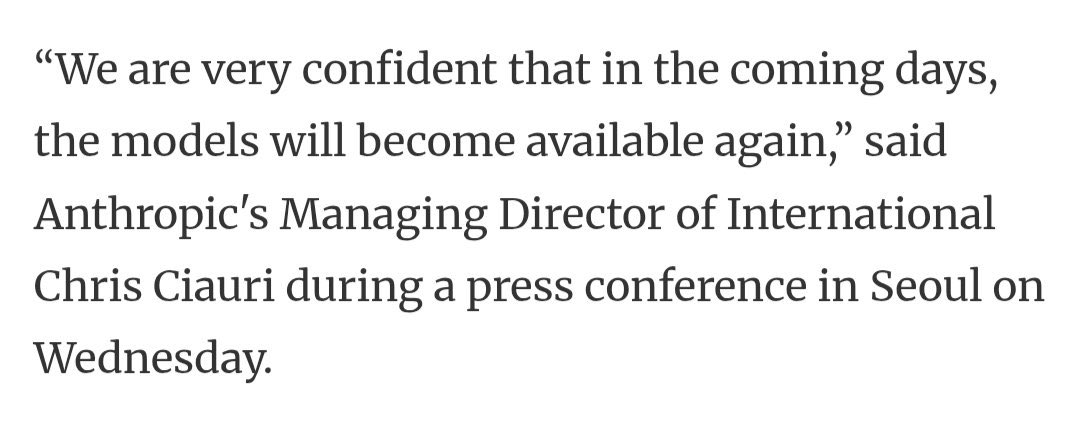
- The Mythos export-controls saga: Wired profiled the Korean telecom (SK Telecom) at its center (Wired), and reporting says Anthropic expects Fable 5 back 'in the coming days' after Trump negotiations (@kimmonismus, r/singularity).
- The startup-chilling fear: venturetwins on a floated 50%-government-equity-over-$200M-revenue idea as 'the fastest way to ensure no one founds a startup here' (@venturetwins).
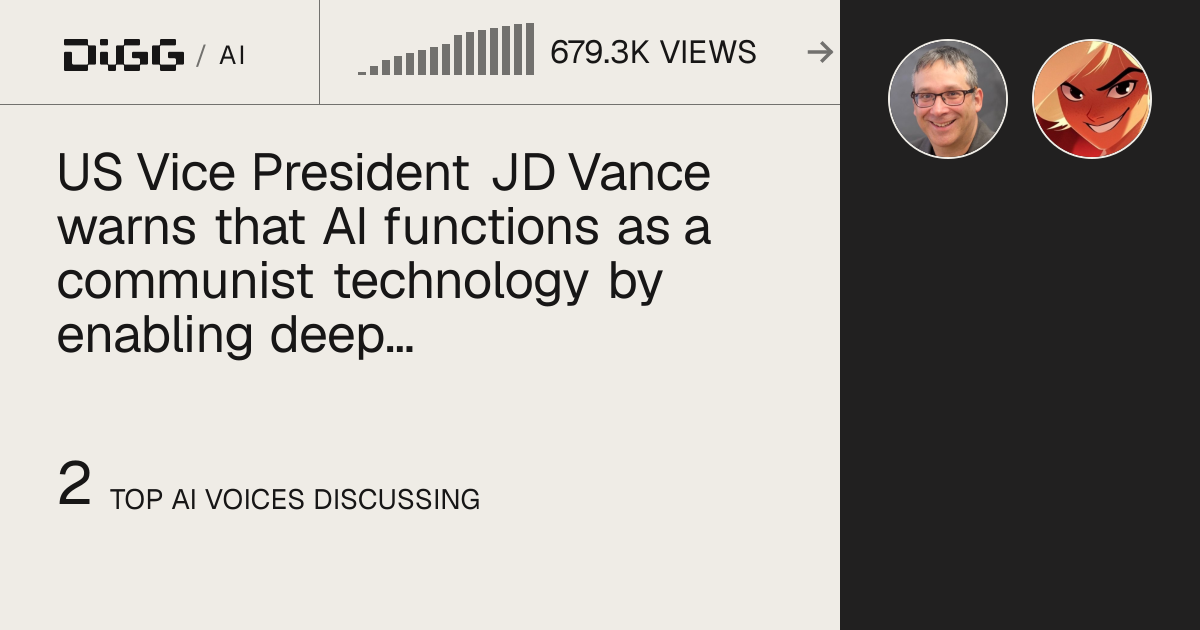
- On the politics: VP JD Vance called AI a 'communist technology' over surveillance fears - a striking framing from the administration.
Why it matters
- The model you build on can be export-banned or pulled (Fable 5 went dark then came back). Regulation is now a real product risk, not background noise.
Sources
08
Creative tools get agentic
Adobe quietly shipped the update that matters most to creators: AI assistants inside Photoshop, Premiere, and Illustrator, plus a Firefly studio that remembers your work.
What they showed / shipped
- Photoshop and Premiere now have AI assistants in beta (The Verge).
- Adobe's redesigned Firefly AI studio now remembers what your creations look like, carrying visual context across projects (The Verge).
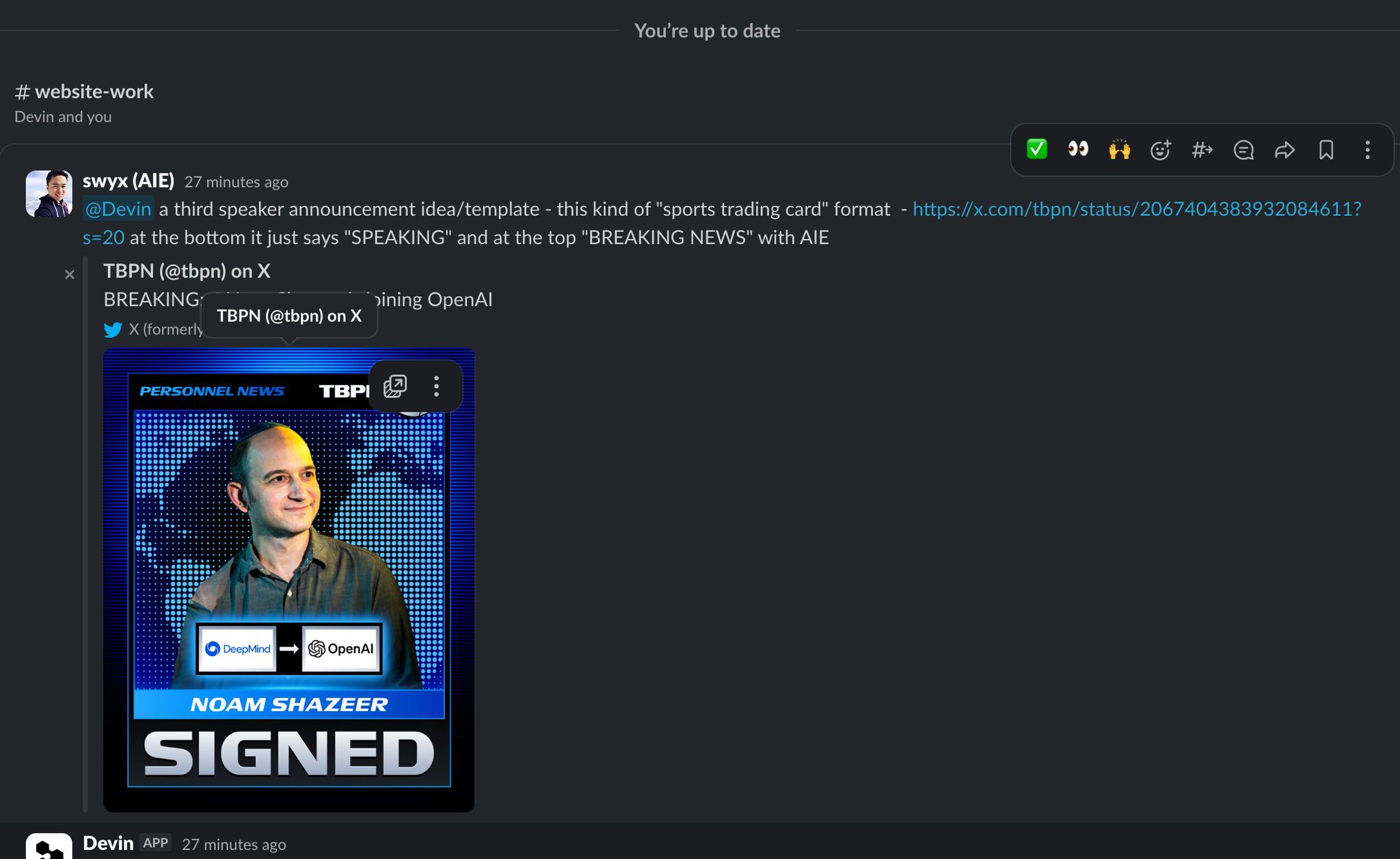
- swyx's data point on how far one-shot creative gen has come: he asked Devin for a TBPN-style breaking-news card, fully expecting it to fail at a heavily visual task, and it one-shotted the whole thing (@swyx).
Why it matters
- The assistant-in-the-tool pattern (vs a separate chat) is where AI gets sticky - it meets users inside the work they already do. Memory across projects is the same context-graph idea, applied to creative.
Sources
09
The talent shuffle
The people behind the models are moving, and one of the biggest names in AI just changed teams.
What they showed / shipped
Why it matters
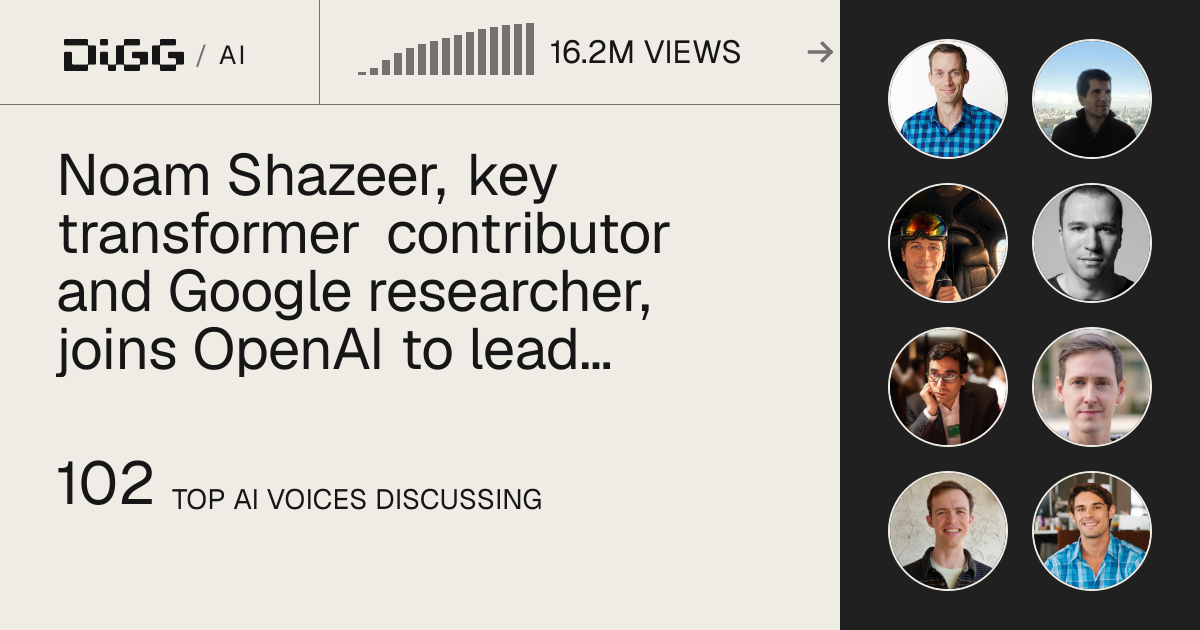
- Where the architecture talent goes, the next breakthrough follows. Shazeer to OpenAI is a real signal, not gossip.
Sources
10
The backlash beat
Under the capability hype, the human pushback got louder - and one of the loudest critics is now inside the company.
What they showed / shipped
- Amazon is investigating engineers who criticized its AI data-center expansion, with employees saying they face termination for backing data-center limits (CNBC, The Verge).
- A widely-discussed essay, 'The AI Hate Progression,' maps how AI opposition escalates - 139 comments on HN (xodium.net).
- The Verge podcast asked the question of the moment head-on: 'Who decides when AI is too dangerous?' (The Verge).
Why it matters
- Data centers are the physical, NIMBY-able face of AI - the compute buildout has real costs (power, water, jobs) now generating dissent from inside the companies building it.
Sources